
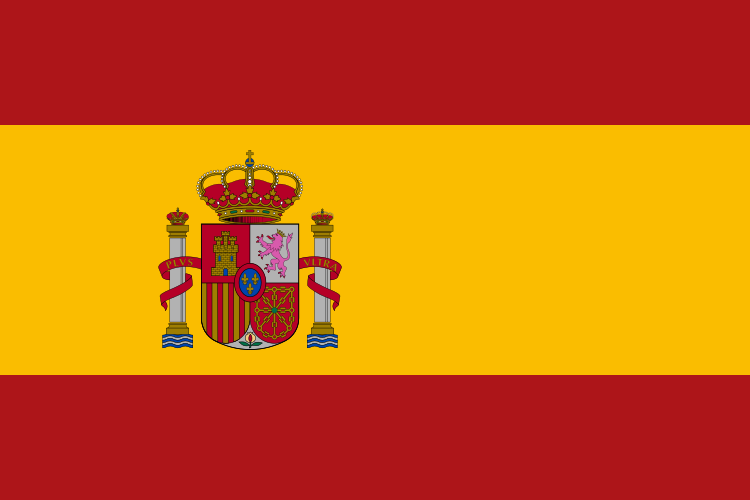
 Spain
SpainSpain as a State Party to the World Heritage Convention
State Party since: May 4, 1982
Status: Acceptance
Mandates to the World Heritage Committee: 1991-1997, 2005-2009, 2017-2021
Total of Mandate Years: 14
Total of Mandates: 3
WHC Electoral Group: I (Western Europe/North America)
World Heritage Sites in Spain (50)
Cultural: 44 | Natural: 4 | Mixed: 2
- Alhambra, Generalife and Albayzín, Granada · Cultural
- Ancient and Primeval Beech Forests of the Carpathians and Other Regions of Europe · Natural (Transboundary)
- Antequera Dolmens Site · Cultural
- Aranjuez Cultural Landscape · Cultural
- Archaeological Ensemble of Mérida · Cultural
- Archaeological Ensemble of Tarraco · Cultural
- Archaeological Site of Atapuerca · Cultural
- Burgos Cathedral · Cultural
- Caliphate City of Medina Azahara · Cultural
- Catalan Romanesque Churches of the Vall de Boí · Cultural
- Cathedral, Alcázar and Archivo de Indias in Seville · Cultural
- Cave of Altamira and Paleolithic Cave Art of Northern Spain · Cultural
- Cultural Landscape of the Serra de Tramuntana · Cultural
- Doñana National Park · Natural
- Garajonay National Park · Natural
- Heritage of Mercury. Almadén and Idrija · Cultural (Transboundary)
- Historic Centre of Cordoba · Cultural
- Historic City of Toledo · Cultural
- Historic Walled Town of Cuenca · Cultural
- Ibiza, Biodiversity and Culture · Mixed
- La Lonja de la Seda de Valencia · Cultural
- Las Médulas · Cultural
- Monastery and Site of the Escurial, Madrid · Cultural
- Monuments of Oviedo and the Kingdom of the Asturias · Cultural
- Mudejar Architecture of Aragon · Cultural
- Old City of Salamanca · Cultural
- Old Town of Cáceres · Cultural
- Old Town of Segovia and its Aqueduct · Cultural
- Old Town of Ávila with its Extra-Muros Churches · Cultural
- Palau de la Música Catalana and Hospital de Sant Pau, Barcelona · Cultural
- Palmeral of Elche · Cultural
- Paseo del Prado and Buen Retiro, a landscape of Arts and Sciences · Cultural
- Poblet Monastery · Cultural
- Prehistoric Rock Art Sites in the Côa Valley and Siega Verde · Cultural (Transboundary)
- Pyrénées - Mont Perdu · Mixed (Transboundary)
- Renaissance Monumental Ensembles of Úbeda and Baeza · Cultural
- Risco Caido and the Sacred Mountains of Gran Canaria Cultural Landscape · Cultural
- Rock Art of the Mediterranean Basin on the Iberian Peninsula · Cultural
- Roman Walls of Lugo · Cultural
- Routes of Santiago de Compostela: Camino Francés and Routes of Northern Spain · Cultural
- Royal Monastery of Santa María de Guadalupe · Cultural
- San Cristóbal de La Laguna · Cultural
- San Millán Yuso and Suso Monasteries · Cultural
- Santiago de Compostela (Old Town) · Cultural
- Talayotic Menorca · Cultural
- Teide National Park · Natural
- Tower of Hercules · Cultural
- University and Historic Precinct of Alcalá de Henares · Cultural
- Vizcaya Bridge · Cultural
- Works of Antoni Gaudí · Cultural
Map of World Heritage Sites
This interactive map shows the location of all UNESCO World Heritage Sites in Spain.
World Heritage Inscription Timeline
Tentative World Heritage Sites (35)
- The Geode of Pulpí · submitted: March 17, 2025
- Universidad Laboral de Gijón/Xixón · submitted: March 17, 2025
- Rock engravings on the island of La Palma · submitted: March 17, 2025
- European Paper Mills (from the era of hand-made paper) · submitted: April 11, 2024
- Carmona’s cultural landscape · submitted: December 26, 2023
- Sigüenza and Atienza Sweet and Salty Landscape · submitted: January 20, 2022
- Les témoignages matériels de la construction de l’État des Pyrénées : la Co-principauté d’Andorre · submitted: January 25, 2021
- The Hadrianic city of Italica · submitted: February 1, 2019
- Group of Mozarabic buildings on the Iberian Peninsula · submitted: February 1, 2019
- The Episcopal See of Egara and its pictorial decoration (5th-8th centuries) · submitted: February 1, 2019
- The Wine in Iberia · submitted: February 5, 2018
- Cíes Islands–Atlantic Islands of Galicia National Park · submitted: February 5, 2018
- Church of San Salvador de Valdediós · submitted: January 27, 2017
- The Olive Grove Landscapes of Andalusia · submitted: January 27, 2017
- Turó de la Seu Vella de Lleida · submitted: January 29, 2016
- Monastery of Santa María de La Rábida and the Columbus Memorial Places in Huelva · submitted: January 29, 2016
- Le Portail du Monastère de Ripoll · submitted: January 27, 2015
- Priorat-Montsant-Siurana paysage agricole de la montagne méditerranéenne · submitted: February 7, 2014
- La Rioja and Rioja Alavesa Vine and Wine Cultural Landscape · submitted: January 29, 2013
- Jaén Cathedral (extension of the Renaissance Monumental Ensembles of Úbeda and Baeza) · submitted: January 27, 2012
- Valle Salado de Añana · submitted: January 27, 2012
- Plasencia - Monfragüe - Trujillo : Paysage méditerranéen · submitted: February 3, 2009
- Mesta Livestock trails · submitted: April 27, 2007
- Roman Ways. Itineraries of the Roman Empire · submitted: April 27, 2007
- Ancares – Somiedo · submitted: April 27, 2007
- Loarre Castle · submitted: April 27, 2007
- El Ferrol of the Illustration Historical Heritage · submitted: April 27, 2007
- Mining Historical Heritage · submitted: April 27, 2007
- The Mediterranean Facet of the Pyrenees (France-Spain) · submitted: November 22, 2004
- Greek Archaeological ensemble in Empúries, l'Escala, Girona · submitted: December 20, 2002
- Romanesque Cultural Enclave in the North of Castile-Leon and the South of Cantabria · submitted: June 26, 1998
- Bulwarked Frontier Fortifications · submitted: June 26, 1998
- The Silver Route · submitted: June 26, 1998
- Mediterranean Wind Mills · submitted: June 26, 1998
- The Ribeira Sacra, Lugo and Orense · submitted: July 16, 1996
Country Profile Spain
Official Name: Kingdom of Spain
Continent: Europe
Subregion: Southern Europe
UNESCO Region: Europe and North America
Capital: Madrid
Population (2024): 48,807,137
Land Area: 499,730 km²
Currency: Euro (EUR)
About States Parties
States Parties are countries that have joined the World Heritage Convention. They commit to identifying, nominating, and protecting properties of outstanding cultural or natural value on their territory. States Parties are also expected to monitor and report on the condition of inscribed sites.