
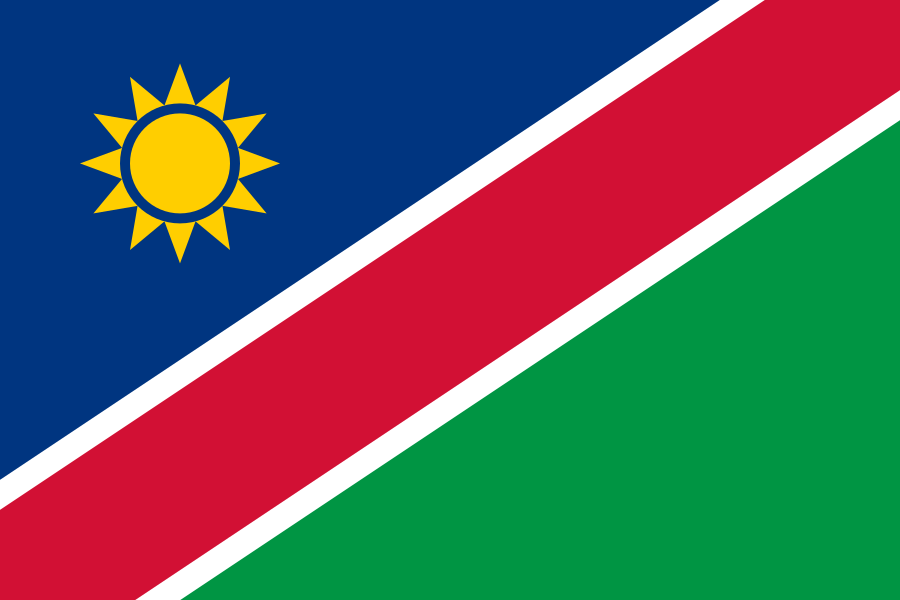
Flag of Namibia Namibia


Since 2000, Namibia has participated in the World Heritage Convention. It is home to two World Heritage Sites. Namibia ranks 30th worldwide and 9th in Africa by number of World Heritage Sites. Its inscriptions include cultural and natural properties, representing a diverse heritage portfolio.

Namibia as a State Party to the World Heritage Convention

State Party since: April 6, 2000

Status: Acceptance

Mandates to the World Heritage Committee: None

Total of Mandate Years: 0

Total of Mandates: 0

WHC Electoral Group: V(a) (Africa)

World Heritage Sites in Namibia (2)

Cultural: 1 | Natural: 1 | Mixed: 0

Map of World Heritage Sites

This interactive map shows the location of all UNESCO World Heritage Sites in Namibia.

World Heritage Inscription Timeline

2007
Twyfelfontein or /Ui-//aes
2013
Namib Sand Sea

Tentative World Heritage Sites

No tentative sites yet.

Country Profile Namibia

Official Name: Republic of Namibia

Continent: Africa

Subregion: Southern Africa

UNESCO Region: Africa

Capital: Windhoek

Population (2024): 3,030,131

Land Area: 823,290 km²

Currency: Namibian dollar (NAD;ZAR)

Country Data Sources

About States Parties

States Parties are countries that have joined the World Heritage Convention. They commit to identifying, nominating, and protecting properties of outstanding cultural or natural value on their territory. States Parties are also expected to monitor and report on the condition of inscribed sites.

World Heritage Insights

How Politics and Institutions Shape the UNESCO World Heritage List

The UNESCO World Heritage List is usually seen as a catalogue of the world’s most important cultural and natural places. Yet behind every inscription there is a structured decision process: countries must first join the Convention, run for a seat on the World Heritage Committee, prepare nominations through a fixed procedure, and finally obtain enough votes for inscription.

World Heritage Info

Background

Learn about UNESCO, the World Heritage Convention, Tentative Lists, and how World Heritage Sites are selected and preserved. Explore the history, structures, and processes that protect humanity’s cultural and natural treasures.

Last updated: August 20, 2026

Portions of this page are based on data from UNESCO — World Heritage List Dataset. Changes made. Original content by World Heritage Explorer (WHE) is licensed under CC BY-SA 4.0. WHE is not affiliated with UNESCO or the World Heritage Committee. Legal Notice. Privacy Policy.

Open Data for an Open World