
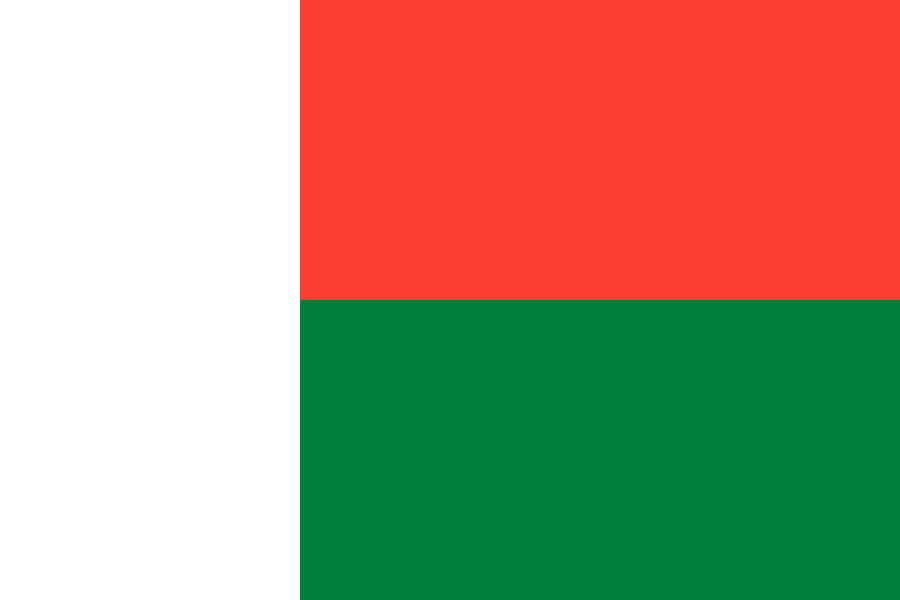
 Madagascar
Madagascar as a State Party to the World Heritage Convention
State Party since: July 19, 1983
Status: Ratification
Mandates to the World Heritage Committee: 2005-2009
Total of Mandate Years: 4
Total of Mandates: 1
WHC Electoral Group: V(a) (Africa)
World Heritage Sites in Madagascar (3)
Cultural: 1 | Natural: 2 | Mixed: 0
- Andrefana Dry Forests · Natural
- Rainforests of the Atsinanana · Natural
- Royal Hill of Ambohimanga · Cultural
Map of World Heritage Sites
This interactive map shows the location of all UNESCO World Heritage Sites in Madagascar.
World Heritage Inscription Timeline
Tentative World Heritage Sites (7)
- Ancien site industriel de Mantasoa · submitted: February 15, 2018
- Eglise catholique d’Ambodifotatra de Sainte Marie · submitted: February 15, 2018
- Nosy Lonjo d’Antsiranana · submitted: February 15, 2018
- NOSYnakà (Sahamalaza, Nosy Hara, Nosy Tanikely, Lokobe, Ambodivahibe, Ankarea, Ankivonjy) · submitted: February 15, 2018
- La Haute Ville d’Antananarivo · submitted: February 2, 2016
- Réserve Spéciale d’Anjanaharibe-Sud (extension des forêts humides de l’Atsinanana) · submitted: March 14, 2008
- Sud-Ouest Malgache, Pays Mahafaly · submitted: November 14, 1997
Country Profile Madagascar
Official Name: Republic of Madagascar
Continent: Africa
Subregion: Eastern Africa
UNESCO Region: Africa
Capital: Antananarivo
Population (2024): 31,964,956
Land Area: 581,800 km²
Currency: Malagasy ariary (MGA)
Related Resources
About States Parties
States Parties are countries that have joined the World Heritage Convention. They commit to identifying, nominating, and protecting properties of outstanding cultural or natural value on their territory. States Parties are also expected to monitor and report on the condition of inscribed sites.