
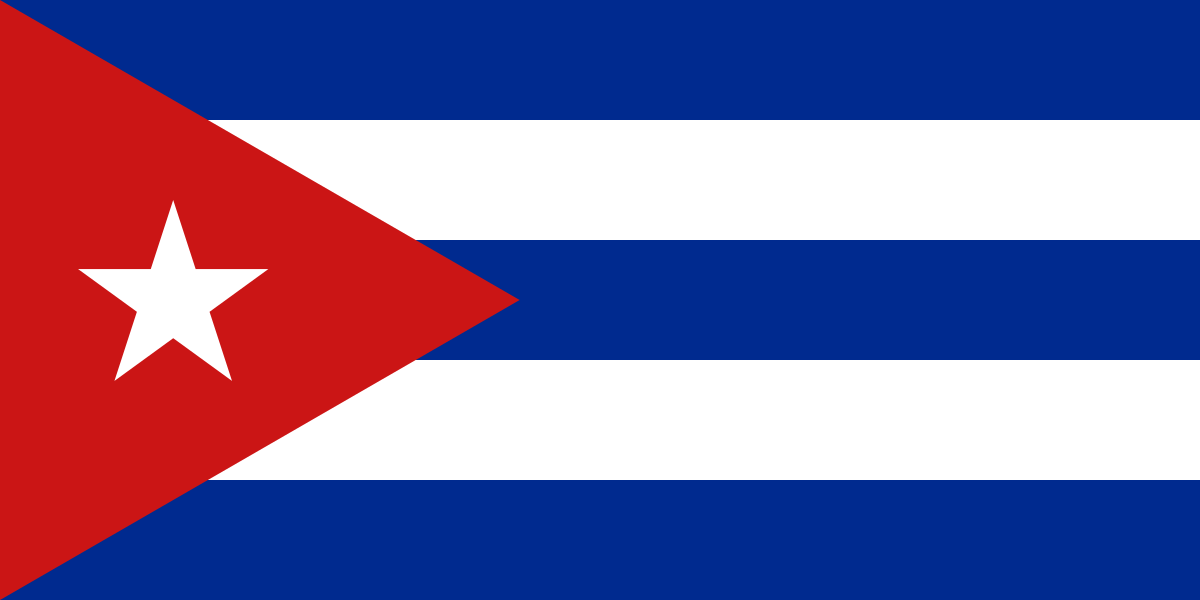
 Cuba
CubaCuba as a State Party to the World Heritage Convention
State Party since: March 24, 1981
Status: Ratification
Mandates to the World Heritage Committee: 1987-1993, 1995-2001, 2005-2009, 2015-2019
Total of Mandate Years: 20
Total of Mandates: 4
WHC Electoral Group: III (Latin America/Caribbean)
World Heritage Sites in Cuba (9)
Cultural: 7 | Natural: 2 | Mixed: 0
- Alejandro de Humboldt National Park · Natural
- Archaeological Landscape of the First Coffee Plantations in the South-East of Cuba · Cultural
- Desembarco del Granma National Park · Natural
- Historic Centre of Camagüey · Cultural
- Old Havana and its Fortification System · Cultural
- San Pedro de la Roca Castle, Santiago de Cuba · Cultural
- Trinidad and the Valley de los Ingenios · Cultural
- Urban Historic Centre of Cienfuegos · Cultural
- Viñales Valley · Cultural
Map of World Heritage Sites
This interactive map shows the location of all UNESCO World Heritage Sites in Cuba.
World Heritage Inscription Timeline
Tentative World Heritage Sites (14)
- Escuelas Nacionales de Arte de Cubanacán · submitted: March 12, 2024
- Tropicana · submitted: March 12, 2024
- El Vedado, ciudad jardín temprana · submitted: March 12, 2024
- Central Campus of the University of Havana · submitted: March 12, 2024
- Triolet French Drugstore (Pharmacy Museum) · submitted: March 12, 2024
- Santiago de Cuba, sus escenarios históricos · submitted: March 12, 2024
- Sites of Memory of Slavery in Cuba · submitted: March 12, 2024
- Parque Nacional Caguanes · submitted: March 12, 2024
- The National Park Ciénaga de Zapata and the Speleological-Lacustrine System · submitted: March 12, 2024
- Sistema Arrefical del Caribe Cubano · submitted: March 12, 2024
- The Aqueduct of Albear · submitted: March 12, 2024
- National Schools of Art, Cubanacán · submitted: February 28, 2003
- Ciénaga de Zapata National Park · submitted: February 28, 2003
- Reef System in the Cuban Caribbean · submitted: February 28, 2003
Country Profile Cuba
Official Name: Republic of Cuba
Continent: Americas
Subregion: Caribbean
UNESCO Region: Latin America and the Caribbean
Capital: Havana
Population (2024): 10,979,783
Land Area: 103,800 km²
Currency: Cuban convertible peso (CUC;CUP)
About States Parties
States Parties are countries that have joined the World Heritage Convention. They commit to identifying, nominating, and protecting properties of outstanding cultural or natural value on their territory. States Parties are also expected to monitor and report on the condition of inscribed sites.