
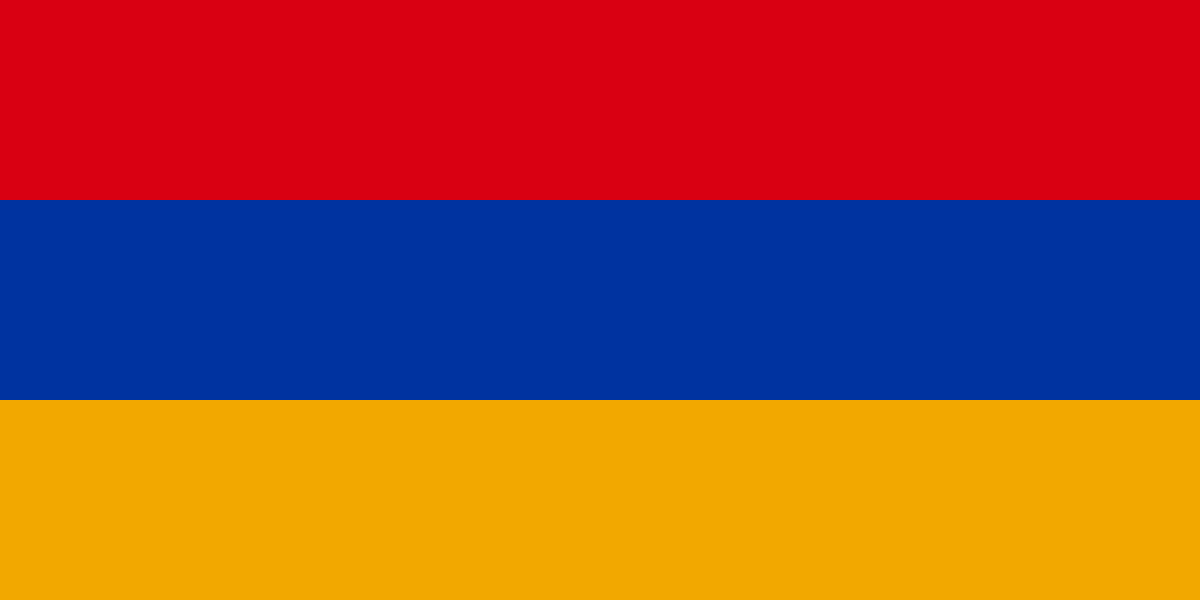
 Armenia
Armenia as a State Party to the World Heritage Convention
State Party since: September 5, 1993
Status: Succession
Mandates to the World Heritage Committee: 2025-2029
Total of Mandate Years: 4
Total of Mandates: 1
WHC Electoral Group: II (Eastern Europe)
World Heritage Sites in Armenia (3)
Cultural: 3 | Natural: 0 | Mixed: 0
Map of World Heritage Sites
This interactive map shows the location of all UNESCO World Heritage Sites in Armenia.
World Heritage Inscription Timeline
Tentative World Heritage Sites (7)
- The Archaeological Complex of Garni and the ‘Basalt Organ’ Columnar Joint · submitted: March 10, 2025
- The Urartian Heritage of Yerevan · submitted: March 10, 2025
- The Vishaps and the Cultural Landscape of Tirinkatar · submitted: January 15, 2024
- The archaeological site of the city of Dvin · submitted: August 25, 1995
- The basilica and archaeological site of Yererouk · submitted: August 25, 1995
- The monastery of Noravank and the upper Amaghou Valley · submitted: August 25, 1995
- The monasteries of Tatev and Tatevi Anapat and the adjacent areas of the Vorotan Valley · submitted: August 25, 1995
Country Profile Armenia
Official Name: Republic of Armenia
Continent: Asia
Subregion: Western Asia
UNESCO Region: Europe and North America
Capital: Yerevan
Population (2024): 3,033,500
Land Area: 28,470 km²
Currency: Armenian dram (AMD)
About States Parties
States Parties are countries that have joined the World Heritage Convention. They commit to identifying, nominating, and protecting properties of outstanding cultural or natural value on their territory. States Parties are also expected to monitor and report on the condition of inscribed sites.