
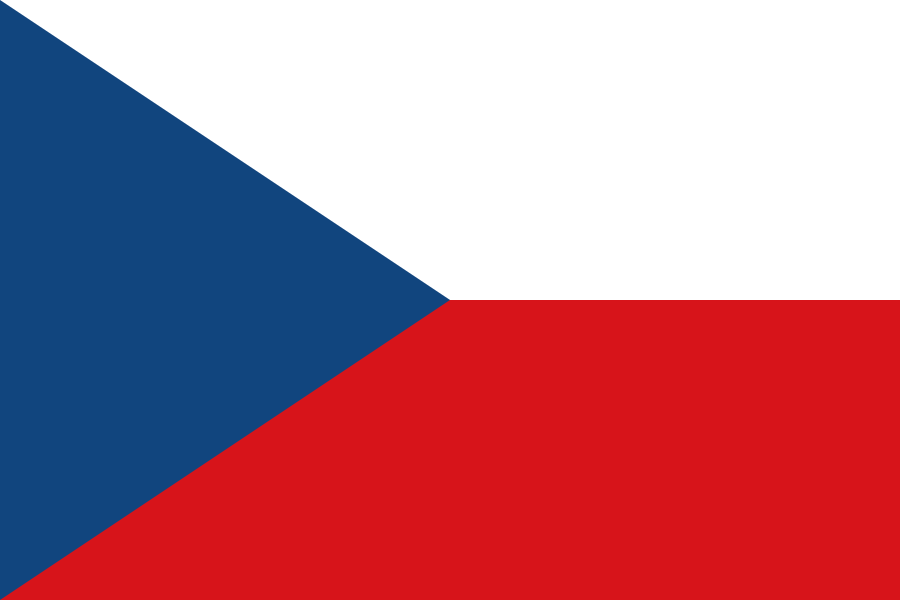
 Czechia
Czechia as a State Party to the World Heritage Convention
State Party since: March 26, 1993
Status: Succession
Mandates to the World Heritage Committee: 2025-2029
Total of Mandate Years: 4
Total of Mandates: 1
WHC Electoral Group: II (Eastern Europe)
World Heritage Sites in Czechia (17)
Cultural: 16 | Natural: 1 | Mixed: 0
- Ancient and Primeval Beech Forests of the Carpathians and Other Regions of Europe · Natural (Transboundary)
- Erzgebirge/Krušnohoří Mining Region · Cultural (Transboundary)
- Gardens and Castle at Kroměříž · Cultural
- Historic Centre of Prague · Cultural
- Historic Centre of Telč · Cultural
- Historic Centre of Český Krumlov · Cultural
- Holašovice Historic Village · Cultural
- Holy Trinity Column in Olomouc · Cultural
- Jewish Quarter and St Procopius' Basilica in Třebíč · Cultural
- Kutná Hora: Historical Town Centre with the Church of St Barbara and the Cathedral of Our Lady at Sedlec · Cultural
- Landscape for Breeding and Training of Ceremonial Carriage Horses at Kladruby nad Labem · Cultural
- Lednice-Valtice Cultural Landscape · Cultural
- Litomyšl Castle · Cultural
- Pilgrimage Church of St John of Nepomuk at Zelená Hora · Cultural
- The Great Spa Towns of Europe · Cultural (Transboundary)
- Tugendhat Villa in Brno · Cultural
- Žatec and the Landscape of Saaz Hops · Cultural
Map of World Heritage Sites
This interactive map shows the location of all UNESCO World Heritage Sites in Czechia.
World Heritage Inscription Timeline
Tentative World Heritage Sites (14)
- Punkevní Caves with the Macocha Abyss and Kateřinská Cave · submitted: December 15, 2025
- European Paper Mills (from the era of hand-made paper) · submitted: April 8, 2024
- Old Wastewater Treatment Plant in Prague-Bubeneč · submitted: July 16, 2020
- Mountain-top Hotel and Television Transmitter Ještěd · submitted: May 29, 2007
- Sites of Great Moravia: Slavonic Fortified Settlement at Mikulcice - Church of St.Margaret at Kopčani · submitted: July 6, 2001
- The Industrial Complexes at Ostrava · submitted: July 6, 2001
- The Fortress of Terezín · submitted: July 6, 2001
- The Spa at Luhacovice · submitted: July 6, 2001
- The Betlém Rock Sculptures near Kuks · submitted: July 6, 2001
- The Karlstejn Castle · submitted: July 6, 2001
- Extension of the World Heritage Site "Historic Centre of Prague" with the important Monuments in its Vicinity · submitted: July 6, 2001
- Renaissance Houses at Slavonice · submitted: January 19, 2001
- Fishpond Network in the Trebon Basin · submitted: January 19, 2001
- Český ráj (Czech Paradise) Rock Cities · submitted: January 19, 2001
Country Profile Czechia
Official Name: Czech Republic
Continent: Europe
Subregion: Central Europe
UNESCO Region: Europe and North America
Capital: Prague
Population (2024): 10,882,164
Land Area: 77,190 km²
Currency: Czech koruna (CZK)
About States Parties
States Parties are countries that have joined the World Heritage Convention. They commit to identifying, nominating, and protecting properties of outstanding cultural or natural value on their territory. States Parties are also expected to monitor and report on the condition of inscribed sites.