World Heritage Identification Number: 875
World Heritage since: 2000
Category: Cultural Heritage
WHE Type: Archaeological Sites
Transboundary Heritage: No
Endangered Heritage: No
Country: 🇪🇸 Spain
Continent: Europe
UNESCO World Region: Europe and North America
Map
The Archaeological Ensemble of Tarraco: A Roman Provincial Capital Preserved in Time
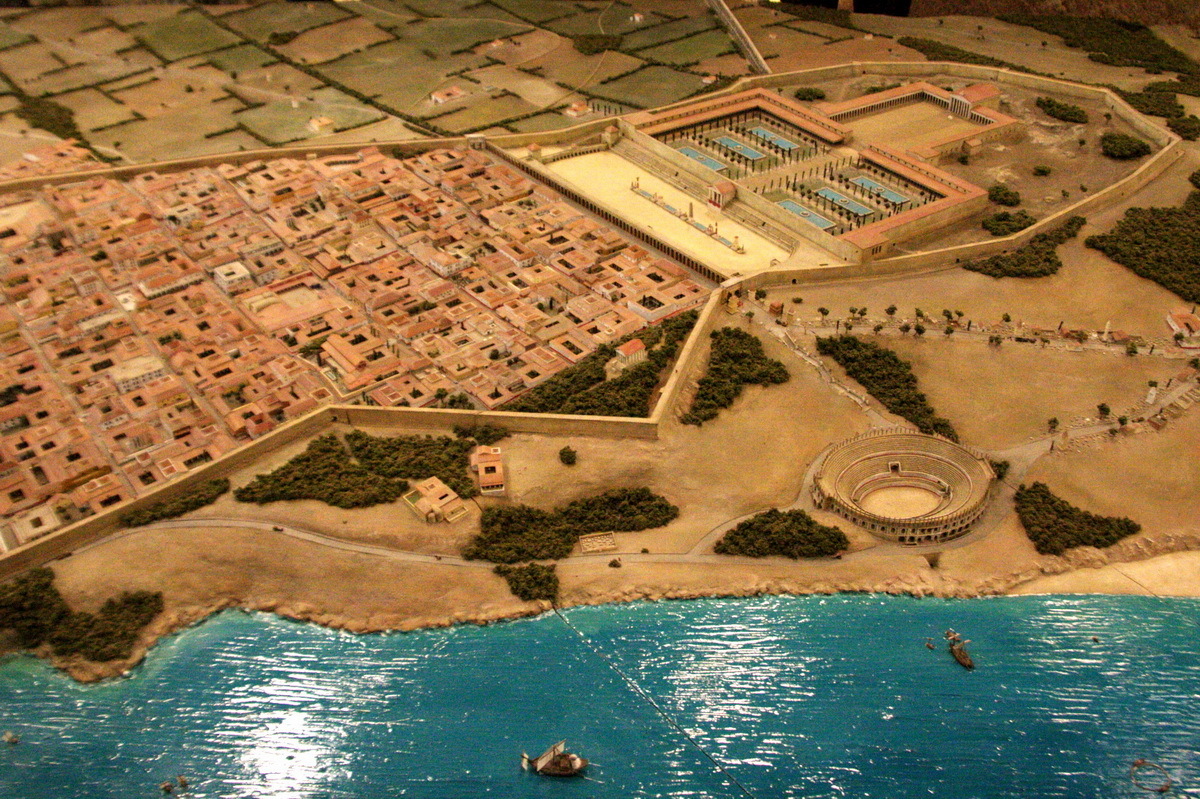
The Archaeological Ensemble of Tarraco, located in modern-day Tarragona, Spain, stands as a testament to the grandeur and significance of Roman rule in the Iberian Peninsula. Inscribed as a UNESCO World Heritage Site in 2000, this archaeological site offers a unique glimpse into the rich history and culture that once thrived within its boundaries.
More to come…UNESCO Description of the World Heritage Site
Tarraco (modern-day Tarragona) was a major administrative and mercantile city in Roman Spain and the centre of the Imperial cult for all the Iberian provinces. It was endowed with many fine buildings, and parts of these have been revealed in a series of exceptional excavations. Although most of the remains are fragmentary, many preserved beneath more recent buildings, they present a vivid picture of the grandeur of this Roman provincial capital.
UNESCO Justification of the World Heritage Site
Criterion (ii): The Roman remains of Tarraco are of exceptional importance in the development of Roman urban planning and design and served as the model for provincial capitals elsewhere in the Roman world.
Criterion (iii): Tarraco provides eloquent and unparalleled testimony to a significant stage in the history of the Mediterranean lands in antiquity.
Encyclopedia Record: Archaeological Ensemble of Tárraco
Archaeological Ensemble of Tárraco is inscribed as UNESCO world heritage site since 2000. It is situated in Tarragona.Additional Site Details
Area: 32.65 hectares
Number of Components: 14
(iii) — Unique or exceptional testimony to a cultural tradition
Coordinates: 41.11472222 , 1.259305556
World Heritage Research
Discover scientific research and academic studies that deepen our understanding of Archaeological Ensemble of Tarraco from its history and significance to its conservation, management, and contemporary challenges.
-
El fenómeno de la imitación de moneda en época bajo-imperial: consideraciones generales y tipologías a partir del ejemplo del territorium gerundesis.
Archaeological evidence from the Territorium Gerundensis reveals distinct typologies of imitated Roman coins during the Late Imperial period, offering new insights into their economic implications. The study challenges conventional definitions of imitation coinage by analyzing its nature and impact, supported by stratified archaeological data. Chronological frameworks for these typologies are proposed based on contextual findings, suggesting that counterfeit currency may have played a more significant role in local economies than previously understood.
Bouzas Sabater, M. (2025). The phenomenon of imitation coinage in the Late Imperial Roman period: general considerations and typologies based on the example of the territorium gerundesis. Vegueta: Anuario de La Facultad de Geografía E Historia, 25(2), 885–904. https://doi.org/10.51349/veg.2025.2.14
View Publication Record | Read Publication -
Reflexiones y cuestiones de un fenómeno económico en la antigüedad: el comercio del vino del noreste de la Tarraconensis.
A groundbreaking analysis of ancient wine trade in the Tarraconensis region reveals how new amphora types, such as Pascual 1 and Dressel 3-2, reshaped Mediterranean commercial networks during the 1st century BCE to 1st century CE. Using a comprehensive dataset of over 14,000 amphorae from more than 700 sites, researchers mapped trade routes, production adaptations, and redistributive economic patterns, highlighting the region's resilience amid shifting economic demands. This study not only reconstructs logistical innovations in wine commercialization but also sheds light on how social and economic needs drove the emergence of complex trade systems in antiquity.
Palacín Copado, C. (2025). Reflexiones y cuestiones de un fenómeno económico en la antigüedad: el comercio del vino del noreste de la Tarraconensis. SPAL. Revista de Prehistoria Y Arqueología de La Universidad de Sevilla, 2(34), 143–175. https://doi.org/10.12795/spal.2025.i34.17
View Publication Record | Read Publication -
Processional liturgy in the urban space of seventh-century Tarragona
A groundbreaking analysis of the Verona Orational, a liturgical text copied in Tarragona in the early eighth century, reveals that processional rituals on Carnes Tollendas Sunday—marking the start of Lent—were deeply intertwined with the city's urban architecture. The study identifies three key locations—Holy Jerusalem, Saint Fructuosus's, and Saint Peter's—and situates these processions within the topographical context of Visigothic Tarragona. By combining textual analysis with architectural evidence, researchers reconstruct the spatial and sonic experience of these ceremonies, demonstrating how they Christianized urban space. The findings also draw parallels between the Verona Orational texts and later preserved chants, offering new insights into the liturgical practices of seventh-century Iberia.
Carrero Santamaría, E., Hornby, E., & Maloy, R. (2023). Processional liturgy in the urban space of seventh-century Tarragona. Journal of Medieval Iberian Studies, 15(2), 240–269. https://doi.org/10.1080/17546559.2023.2214139
View Publication Record | Read Publication -
La decoración pictórica de la estancia 11 de la casa de Salvius (Cartagena)
A unique and comprehensive pictorial decoration from the last quarter of the 1st century AD has been identified in Room 11 of the House of Salvius in Cartagena, Spain. This ensemble, part of a well-preserved domus with an atrium and peristile, features a lower section mimicking opus sectile wallwork and a middle zone depicting a seasonal cycle—one of the most complete of its kind in Hispano-Roman contexts. The study reveals a blend of traditional Italian artistic motifs with local provincial influences, suggesting continuity and adaptation in regional workshops. Technical analysis underscores its significance as a rare example of late 1st-century AD decorative art, offering insights into cultural exchange and artistic evolution during the Roman period.
Castillo Alcántara, G., Fernández Díaz, A., & Madrid Balanza, M. J. (2023). La decoración pictórica de la estancia 11 de la casa de Salvius (Cartagena). Archivo Español de Arqueología, 96, e04. https://doi.org/10.3989/aespa.096.023.04
View Publication Record | Read Publication -
A Multianalytical Approach to Identifying the White Marbles Used in Roman Imperial Sculptures from Tarraco (Hispania)
A groundbreaking study challenges long-held assumptions about the marble sources used in Roman Imperial sculptures from Tarraco (modern-day Tarragona, Spain). Using a multimethod approach—combining petrography, cathodoluminescence, carbon and oxygen isotope analysis, and trace element composition—the research identifies two previously underrecognized marble varieties, Göktepe near Aphrodisias and Paros-lychnites, alongside Carrara marble. Contrary to prior beliefs that all sculptures were carved from Luni-Carrara marble, this study reveals a more diverse sourcing, with Göktepe emerging as the dominant material for imperial portraits of Trajan, Hadrian, Lucius Verus, and Marcus Aurelius, dating to the 2nd century AD. Strontium concentration and cathodoluminescence proved critical in distinguishing Göktepe from Carrara marble, while isotopes were pivotal for identifying Cycladic marble. These findings prompt a reevaluation of Roman marble trade networks, workshop practices, and the distribution of high-quality marbles during this period.
Lapuente Mercadal, M. P., Clavería, M., & Rodà, I. (2023). A Multianalytical Approach to Identifying the White Marbles Used in Roman Imperial Sculptures from Tarraco (Hispania). Minerals, 14(1), 19. https://doi.org/10.3390/min14010019
View Publication Record | Read Publication