World Heritage Identification Number: 1618
World Heritage since: 2021
Category: Cultural Heritage
WHE Type: Agriculture Landscapes, Parks & Gardens
Transboundary Heritage: No
Endangered Heritage: No
Country: 🇪🇸 Spain
Continent: Europe
UNESCO World Region: Europe and North America
Map
Paseo del Prado and Buen Retiro, a Landscape of Arts and Sciences: A Testament to Enlightenment and Utopian Ideals
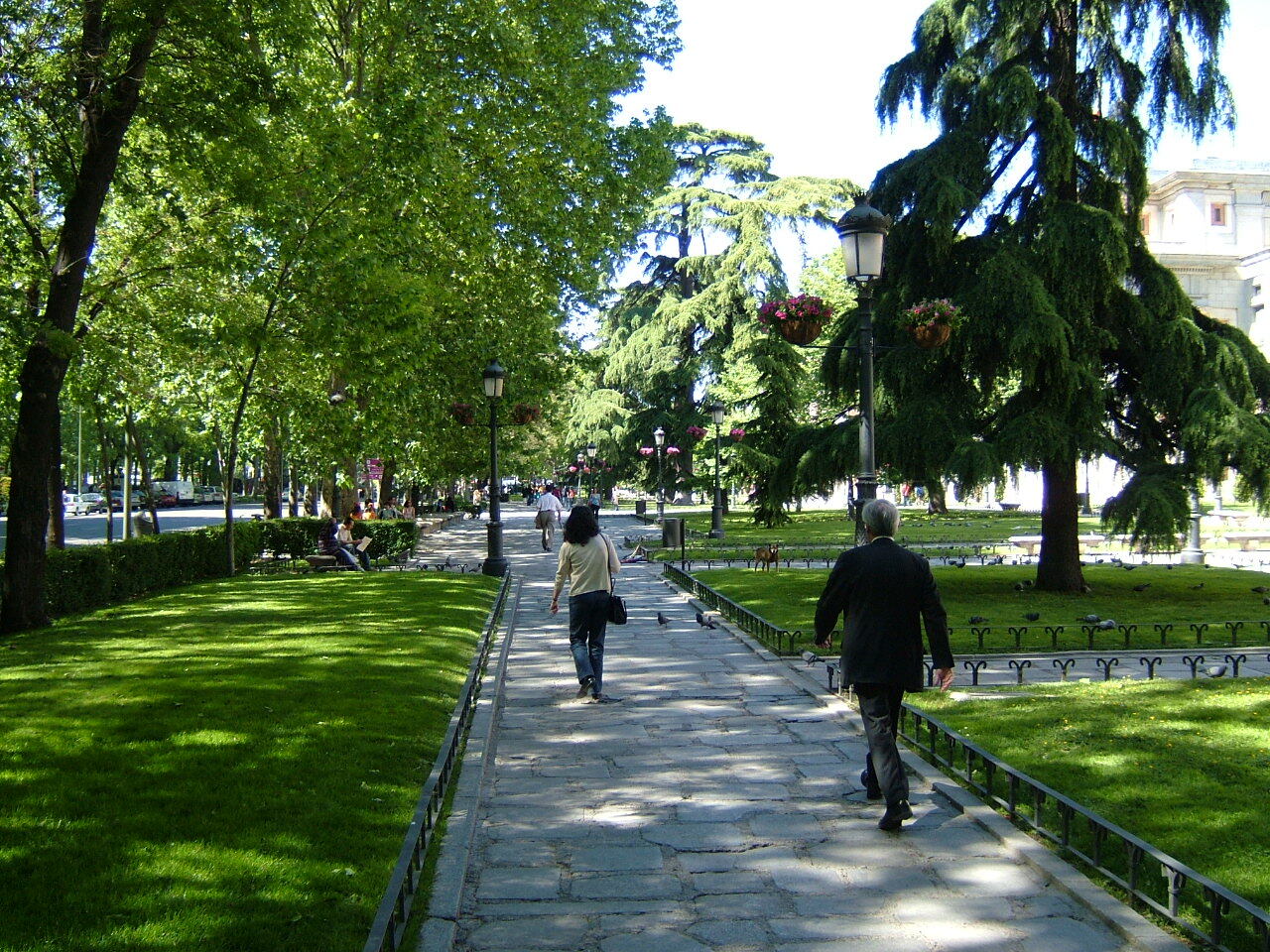
The Paseo del Prado and Buen Retiro, located at the urban heart of Madrid, Spain, form a unique cultural landscape that embodies the spirit of the Age of Enlightenment and serves as a testament to the aspirations for a utopian society during the height of the Spanish Empire. Inscribed as a UNESCO World Heritage Site in 2021, this site offers a fascinating blend of history, art, science, and urban planning, reflecting the ideals of the Enlightenment era and exerting significant influence over Latin America.
More to come…UNESCO Description of the World Heritage Site
Located at the urban heart of Madrid, this cultural landscape evolved since the creation of the tree-lined Paseo del Prado avenue, a prototype of the Hispanic alameda, in the 16th century. The avenue features major fountains, notably the Fuente de Apolo and the Fuente de Neptuno, and the Fuente de Cibeles, an iconic symbol of the city, surrounded by prestigious buildings. The site embodies a new idea of urban space and development from the enlightened absolutist period of the 18th century. Buildings dedicated to the arts and sciences join others in the site that are devoted to industry, healthcare and research. Collectively, they illustrate the aspiration for a utopian society during the height of the Spanish Empire, linked to the enlightened idea of democratization of knowledge, and exercised major influence in Latin America. The 120-hectare Jardines del Buen Retiro (Garden of Pleasant Retreat), a remnant of the 17th-century Buen Retiro Palace, constitutes the largest part of the property. The site also houses the terraced Royal Botanical Garden and the largely residential neighbourhood of Barrio Jerónimos with its rich variety of 19th- and 20th-century buildings that include cultural and scientific venues.UNESCO Justification of the World Heritage Site
Criterion (ii): The Paseo del Prado is believed to be the first public green space designed within a European capital in the early modern period. It is a tree-lined avenue, originating in the 16th century though substantially modified in the 18th century, that had a strong influence in Spanish America as a model contributing to town development. It was the first and an important example of an alameda or paseo.
Criterion (iv): The Paseo del Prado and Buen Retiro is an urban development model, featuring nature and culture, of the enlightened absolutist period, a prototype of a new idea of improvement of urban space with a strong social content guided by rational criteria to enhance ornamentation, hygiene and functionality. It is an important expression of enlightened ideals applied to town development projects with the distinctive addition of the sciences as an essential component, all with a view to making knowledge widely available to citizens. Its different parts are adjacent and linked by the idea of creating a great urban space featuring natural elements (composed of a tree-lined avenue, park and botanical garden) in different stages of history from the Renaissance to the Enlightenment.
Criterion (vi): The Paseo del Prado and Buen Retiro represents a utopian society linked to the arts and the sciences, the paradigm of culture, within a framework of natural elements within the city. It also represents the idea of making knowledge available to citizens, providing access to the sciences and arts, in an area which is otherwise devoted to leisure. It was an idea to improve society that crossed the borders of Spain and extended to Latin America. The arts, sciences, healthcare, industry and research are all part of an exchange of human and scientific values that promote the dissemination of knowledge, and their public and social roles have been preserved with outstanding vitality.
Encyclopedia Record: Paseo del Prado
The Paseo del Prado is one of the main boulevards in Madrid, Spain. It runs north–south between the Plaza de Cibeles and the Plaza del Emperador Carlos V, with the Plaza de Cánovas del Castillo lying approximately in the middle. The Paseo del Prado forms the southern end of the city's central axis. It enjoys the status of Bien de Interés Cultural (BIC), and as part of a combined UNESCO World Heritage Site with Buen Retiro Park.Additional Site Details
Area: 237 hectares
Number of Components: 1
(iv) — Outstanding example of a type of building or landscape
(vi) — Directly associated with events or living traditions
Coordinates: 40.4153333333 , -3.6870555556
World Heritage Research
Discover scientific research and academic studies that deepen our understanding of Paseo del Prado and Buen Retiro, a landscape of Arts and Sciences from its history and significance to its conservation, management, and contemporary challenges.
-
Accesibilidad e inclusión en museos nacionales de arte: estudio de caso en cuatro instituciones del Paisaje de la Luz (Madrid, España)
A reductionist perspective on accessibility, focusing primarily on physical dimensions while overlooking sensory, cognitive, communicative, and social aspects, persists in Madrid's national art museums despite genuine institutional commitment to inclusion. This study, conducted through semi-structured interviews and thematic analysis of four museums—the Prado, Reina Sofía, Thyssen-Bornemisza, and National Museum of Decorative Arts—reveals that external factors such as funding, legal frameworks, staff training, and management dependence hinder progress toward full inclusivity. Notably, the Thyssen Museum stands out for its advanced practices, including AENOR UNE 170001 certification, while digitalization is identified as a critical pathway to more inclusive museum models. The findings underscore the need for shared operational support to address these challenges effectively.
Matesanz Muñoz, A., & Prieto Dávila, P. R. (2026). Accessibility and inclusion in national art museums: a case study of four institutions in the Paisaje de la Luz (Madrid, Spain). Anais Do Museu Paulista: História E Cultura Material, 34, 1–39. https://doi.org/10.11606/1982-02672026v34e39
View Publication Record | Read Publication -
Índices e iconografía política en el traslado de Guernica: del Casón del Buen Retiro al Museo Reina Sofía, julio del 1992
A notable connection between Picasso's Guernica and its political context emerged during its 1992 relocation from the Casón del Buen Retiro to the Museo Reina Sofía, revealing the artwork's enduring symbolic power. The study analyzed media images from this transfer, employing iconographic analysis to demonstrate how Guernica mirrored Spain’s late-1980s political transition and global shifts. This approach highlighted the potential of photographic imagery as a tool for understanding symbolic practices, offering new insights into how art reflects societal change.
Robles-Tardío, R. (2025). Índices e iconografía política en el traslado de Guernica: del Casón del Buen Retiro al Museo Reina Sofía, julio del 1992. Arte, Individuo Y Sociedad, 37(2), 307–315. https://doi.org/10.5209/aris.98610
View Publication Record | Read Publication -
A Service-Learning proposal for Architecture, Building and Urbanism Students: getting involved in Education Tours in Madrid
A Service-Learning approach successfully integrated science, art, history, and architecture in educational tours for Madrid's UNESCO World Heritage Site, Paseo del Prado and Buen Retiro. The methodology, employed by Universidad Politécnica de Madrid, involved students designing and conducting two themed tours: one on the Spanish Enlightenment and chemical discoveries, and another on a culturally significant area during Spain's 'Silver Age.' The initiative not only provided a holistic education but also fostered skills such as data research, teamwork, and creativity. It also aimed to disseminate cultural content widely, deepening public understanding of Madrid's architectural heritage. The study reflects on these experiences, offering insights into urban development, historical cartography, and the intersection between architectural heritage and tourism.
Pinto, G., Alcázar, V., Conde, M. M., Aguero, Á., Arrieta, M. P., Beltrán, F. R., García-Muñoz, P., & Sepulveda, J. A. (2025). Una propuesta de Aprendizaje-Servicio para estudiantes de Arquitectura, Edificación y Urbanismo: implicación en rutas educativas en Madrid. Advances in Building Education, 9(1), 9–30. https://doi.org/10.20868/abe.2025.1.5450
View Publication Record | Read Publication -
Ecosistema Prado
A novel educational framework integrating art and ecofeminist theory demonstrates how reflective artistic practices can drive sustainable change, offering actionable pathways to address the climate crisis. The Prado Ecosystem project, developed by the Museo del Prado's Education Department, leverages selected artworks and contemporary creations to recontextualize narratives through a conservationist lens, fostering public engagement with sustainability. This approach bridges cultural heritage and environmental education, aligning with UNESCO’s Agenda 2030 for sustainable development.
González D’Ambrosio, S., & Ugena Candel, T. (2025). Prado Ecosystem. Ambiente & Educação: Revista de Educação Ambiental, 30(3), 1–26. https://doi.org/10.63595/ambeduc.v30i3.19231
View Publication Record | Read Publication -
Medialab Prado como laboratorio ciudadano en el contexto tecnocultural, urbano y arquitectónico
Medialab Prado stands out as a pioneering model for democratizing technoculture within UNESCO's Paseo del Prado and Buen Retiro landscape. Unlike traditional exhibition spaces, it fostered open, collaborative cultural production, blending architecture, urban design, and citizen engagement. The study reveals how its spatial properties aligned with Richard Sennett’s concept of an 'open city,' emphasizing ethical urban living through participatory processes. By analyzing Medialab Prado’s evolution from a laboratory to a 'citizen lab,' the research highlights its unique role in bridging technological innovation, cultural creation, and civic space, offering key lessons for reimagining public institutions in the digital age.
García-Triviño, F., & Psegiannaki, A. E. (2024). Medialab Prado como laboratorio ciudadano en el contexto tecnocultural, urbano y arquitectónico. Teknokultura. Revista de Cultura Digital Y Movimientos Sociales, Avance en línea, 1–13. https://doi.org/10.5209/tekn.95310
View Publication Record | Read Publication -
La configuración del eje Prado-Recoletos-Castellana (1630-1975).
Madrid's urban core, particularly along the Prado-Recoletos-Castellana axis, underwent profound transformation from 1630 to 1975. This study reveals how the city's growth mirrored broader cultural and scientific shifts, shaping a landscape that became synonymous with art and knowledge. The research employs historical analysis and urban planning documentation to trace the evolution of this central corridor, highlighting its role in Madrid's development as a hub for arts and sciences. By examining architectural, social, and political changes, the study provides insights into how urban design reflects societal progress.
Gavira, C. (2024). La configuración del eje Prado-Recoletos-Castellana (1630-1975). Figshare. https://doi.org/10.6084/M9.FIGSHARE.27997049
View Publication Record | Read Publication -
Primeras representaciones gráficas del Prado de San Jerónimo de Madrid
The earliest known graphic representations of the Prado de San Jerónimo, a public promenade developed during Philip II's reign, have been identified. These visual depictions emerged under Philip III following the court's return from Valladolid. The study focuses on these initial representations, providing insights into the landscape's evolution as an artistic and scientific space in Madrid. By analyzing historical documents and imagery, researchers reconstruct the promenade's early development, contributing to our understanding of its significance during the Spanish Golden Age.
Muñoz de la Nava Chacón, J. M. (2023). Primeras representaciones gráficas del Prado de San Jerónimo de Madrid. Abaton. Revista de Figuración, Representación E Imágenes de La Arquitectura, 1, 77–89. https://doi.org/10.5209/abat.57009
View Publication Record | Read Publication