World Heritage Identification Number: 310
World Heritage since: 1985
Category: Cultural Heritage
WHE Type: Archaeological Sites
Transboundary Heritage: No
Endangered Heritage: No
Country: 🇪🇸 Spain
Continent: Europe
UNESCO World Region: Europe and North America
Map
Cave of Altamira and Paleolithic Cave Art of Northern Spain: A Unique Testimony to Human History
The Cave of Altamira and Paleolithic Cave Art of Northern Spain is a remarkable World Heritage Site, recognized by UNESCO for its exceptional artistic, historical, and cultural significance. This designation encompasses seventeen additional decorated caves spread across the northern region of Spain, extending the original Altamira Cave, which was inscribed in 1985.
Located near the picturesque town of Santillana del Mar in Cantabria, the Cave of Altamira is renowned for its prehistoric cave art. The artwork within these caves offers a unique glimpse into the lives of our ancestors during the Upper Paleolithic era, approximately 35,000 to 11,000 years ago. The caves' deep galleries, isolated from external climatic influences, have contributed to their exceptional preservation.
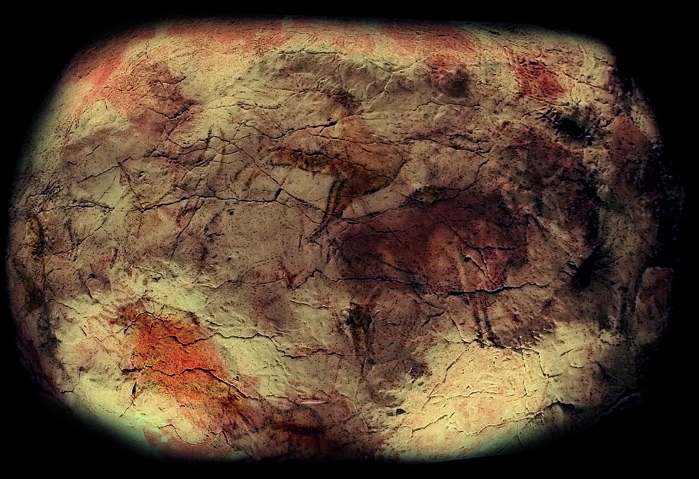
The Cave of Altamira is most famous for its charcoal drawings and polychrome paintings of contemporary local fauna, along with hand motifs. These intricate works of art showcase the creativity and skill of early humans, demonstrating their ability to express themselves through visual means. Some of the earliest artistic activity in the cave may date back to the early Upper Paleolithic, while the famous polychrome paintings are generally dated to around 15,000–13,000 years ago.
The cave was first discovered in 1868 by a local hunter, Modesto Cubillas, and later investigated by Marcelino Sanz de Sautuola. His claim that the paintings were of great antiquity initially met with strong skepticism, as many scholars believed such advanced artwork could only date to historical periods, such as Roman times. It was not until the early 20th century that the Paleolithic origin of the paintings was widely accepted, marking a turning point in the study of prehistoric art.
In addition to the Cave of Altamira, the World Heritage Site includes seventeen other decorated caves scattered throughout northern Spain. These caves, including El Castillo, La Pasiega, and Tito Bustillo, exhibit similar artistic styles and themes, providing a comprehensive representation of Paleolithic cave art in the region.
The Cave of Altamira and Paleolithic Cave Art of Northern Spain is not just a testament to human creativity but also serves as an extraordinary witness to a cultural tradition and a significant stage in human history. These caves offer insights into the symbolic expression related to the beliefs, rituals, and daily life of our ancestors during the Paleolithic era.
Ultimately, the Cave of Altamira and Paleolithic Cave Art of Northern Spain is a vital part of our shared cultural heritage. By preserving these caves and their artwork, we ensure that future generations can continue to learn from and appreciate the accomplishments of our ancient forebears. To ensure the long-term survival of the artwork, access to the original Cave of Altamira is strictly regulated and heavily restricted to the public.
UNESCO Description of the World Heritage Site
Seventeen decorated caves of the Paleolithic age were inscribed as an extension to the Altamira Cave, inscribed in 1985. The property will now appear on the List as Cave of Altamira and Paleolithic Cave Art of Northern Spain. The property represents the apogee of Paleolithic cave art that developed across Europe, from the Urals to the Iberian Peninusula, from 35,000 to 11,000 BC. Because of their deep galleries, isolated from external climatic influences, these caves are particularly well preserved. The caves are inscribed as masterpieces of creative genius and as the humanity’s earliest accomplished art. They are also inscribed as exceptional testimonies to a cultural tradition and as outstanding illustrations of a significant stage in human history.
UNESCO Justification of the World Heritage Site
Criterion (i): The Palaeolithic cave art of the Cantabrian Corniche fully and significantly illustrates some of the earliest human art, over a long period of the history of Homo sapiens. It bears testimony to the creative genius of humans during the different periods of the Upper Palaeolithic.
Criterion (iii): The ensemble bears outstanding and unique testimony to an ancient stage, which vanished more than 10,000 years ago, of the origins of human civilization. This was the period when the hunter-gatherers of the Upper Palaeolithic achieved an accomplished artistic, symbolic and spiritual expression of their human society.
Encyclopedia Record: Cave of Altamira
The Cave of Altamira is a cave complex, located near the historic town of Santillana del Mar in Cantabria, Spain. It is renowned for prehistoric cave art featuring charcoal drawings and polychrome paintings of contemporary local fauna and human hands. The earliest paintings were applied during the Upper Paleolithic, around 36,000 years ago. The site was discovered in 1868 by Modesto Cubillas and subsequently studied by Marcelino Sanz de Sautuola.Additional Site Details
Area: Not available
Number of Components: 18
(iii) — Unique or exceptional testimony to a cultural tradition
Coordinates: 43.38252778 , -4.116166667
World Heritage Research
Discover scientific research and academic studies that deepen our understanding of Cave of Altamira and Paleolithic Cave Art of Northern Spain from its history and significance to its conservation, management, and contemporary challenges.
-
The UNESCO World Heritage List in a Globalized World: The Case of the Paleolithic Caves of Northern Spain (1985–2008)
The Paleolithic cave art of Northern Spain, including the renowned Cave of Altamira, was recognized as a UNESCO World Heritage Site in 1985, with seventeen additional sites added in 2008. This designation highlights its global significance and rich archaeological history. The study examines how narratives surrounding these caves have shaped their international recognition since the late 19th century, particularly during the nomination process. It also analyzes the complex interplay of economic (tourism), conservation (heritage value), and academic (intellectual value) interests that emerged post-designation, revealing a tension between diverse stakeholders in Cantabria. This case underscores the challenges and implications of globalizing Paleolithic rock art through heritage and local communities.
Pérez, E. P. (2024). The UNESCO World Heritage List in a Globalized World: The Case of the Paleolithic Caves of Northern Spain (1985–2008). Deep-Time Images in the Age of Globalization, 207–217. https://doi.org/10.1007/978-3-031-54638-9_14
View Publication Record | Read Publication -
From Chauvet to Lascaux: 15,000 Years of Cave Art
Paleolithic cave art in Western Europe, spanning from Chauvet (36 ka BP) to Lascaux (21 ka BP), reveals significant evolution in symbolic language, animal representation, and spatial layout over 15,000 years. Chauvet's Aurignacian phase (37–33.5 ka BP) showcases early black zoomorphic paintings, while Lascaux, though closed to the public due to tourist-induced microclimate disruption, preserves later artistic expressions. This study identifies key changes in artistic expression during the Upper Paleolithic, linking them to the socio-cultural behavior of anatomically modern humans in glacial environments.
Geneste, J.-M. (2017). From Chauvet to Lascaux: 15,000 Years of Cave Art. Archaeology, Ethnology & Anthropology of Eurasia, 45(3), 29–40. https://doi.org/10.17746/1563-0110.2017.45.3.029-040
View Publication Record | Read Publication