World Heritage Identification Number: 1527
World Heritage since: 2017
Category: Cultural Heritage
WHE Type: Natural Landscapes & Geographic Features
Transboundary Heritage: No
Endangered Heritage: No
Country: 🇩🇪 Germany
Continent: Europe
UNESCO World Region: Europe and North America
Map
Unraveling the Mysteries of the Caves and Ice Age Art in the Swabian Jura
The Caves and Ice Age Art in the Swabian Jura, located in southern Germany, offer a unique glimpse into the lives of early modern humans who inhabited Europe during the Aurignacian period of the Upper Paleolithic, approximately 43,000 to 33,000 years ago. This remarkable collection of six caves has been designated as a UNESCO World Heritage Site due to its exceptional significance in understanding the origins of human artistic development.
This World Heritage Site is especially important because it preserves some of the oldest known examples of figurative art and musical instruments ever discovered, providing rare evidence of the emergence of symbolic thinking, artistic creativity, and cultural expression among early modern humans in Europe.
Nestled within the Swabian Jura mountain range, the caves served as shelters for Ice Age communities living in a harsh glacial environment. During this period, the region was characterized by cold steppe-tundra landscapes inhabited by mammoths, reindeer, horses, and cave lions. Extensive excavations conducted since the 1860s have unearthed a remarkable collection of artifacts that provide valuable insights into the cultural practices, artistic expression, and technological abilities of these early humans.
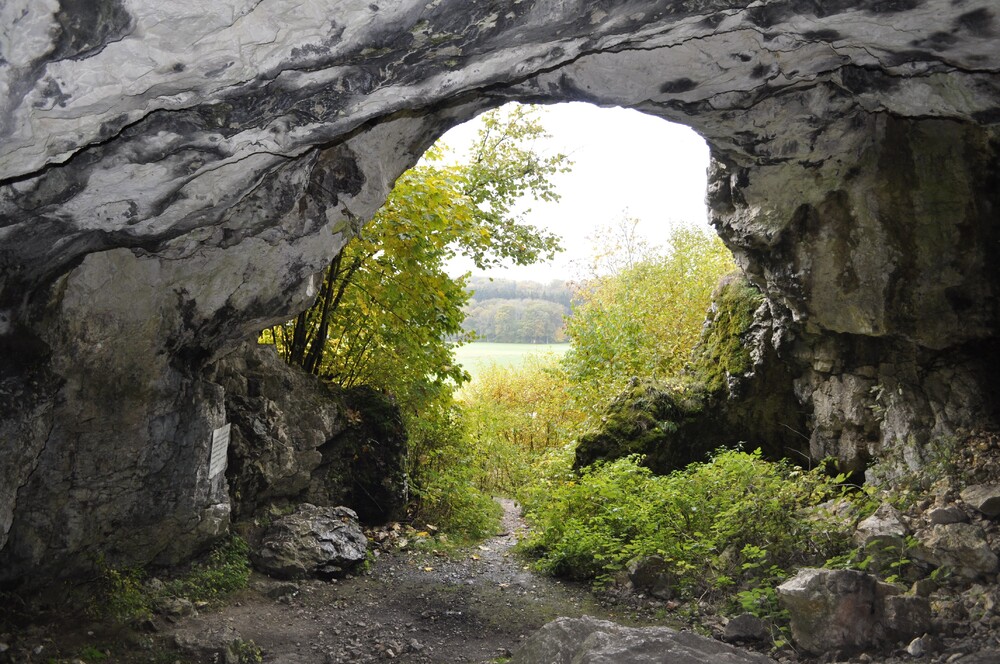
The six caves included in the World Heritage Site are Hohle Fels, Vogelherd Cave, Geißenklösterle, Sirgenstein Cave, Bockstein Cave, and Hohlenstein-Stadel, each of which has yielded discoveries of exceptional archaeological importance.
Among the most important discoveries within these caves are carved figurines made primarily from mammoth ivory and bone. These figurines depict a diverse array of animals, including cave lions, mammoths, horses, and bovids. Some of the figures combine both human and animal characteristics, suggesting a sophisticated symbolic imagination and possibly early mythological thinking.
One of the most remarkable discoveries from the Swabian Jura is the Lion Man found in Hohlenstein-Stadel Cave. Carved from mammoth ivory approximately 40,000 years ago, the figure combines human and cave lion characteristics and is considered one of the earliest known examples of imaginative figurative art. The sculpture demonstrates an advanced capacity for symbolic thought and creative expression among early modern humans.
Perhaps the most captivating find among these artifacts is a statuette of a female form, known as the Venus of Hohle Fels. Carved from a mammoth's tusk, this statuette is considered one of the oldest known representations of the human form and provides extraordinary insight into the symbolic culture of early modern humans. Archaeologists have used radiocarbon dating and stratigraphic analysis to determine the age of the artifacts and the archaeological layers in which they were discovered.
In addition to figurative art, musical instruments have also been uncovered within the caves. Flutes crafted from bird bones and mammoth ivory suggest that music played an important role in the social and cultural lives of these early communities. Some of these instruments are regarded as among the oldest known musical instruments in the world. Personal adornments, including beads, pendants, and perforated shells, have also been discovered, providing evidence of self-expression, social identity, and symbolic communication.
The discovery of these artifacts offers invaluable insights into the cognitive abilities, social structures, and creative capacities of early modern humans. These finds are closely associated with the arrival of Homo sapiens in Europe during the Upper Paleolithic. They stand as a testament to the ingenuity and adaptability of people who survived in the challenging climatic conditions of Ice Age Europe.
Moreover, the concentration of such important archaeological finds in the Swabian Jura suggests that this region was a significant center of symbolic and artistic activity during the Upper Paleolithic. The exceptional preservation of these artifacts has greatly enhanced our understanding of the early development of human culture and creativity.
Altogether, the Caves and Ice Age Art in the Swabian Jura provide extraordinary evidence of the intellectual and cultural development of early modern humans. The artworks, musical instruments, and personal ornaments discovered within these caves reveal that creativity, symbolic thought, and artistic expression were already deeply rooted in human society more than 40,000 years ago. As a result, the site remains one of the world’s most important archaeological locations for understanding the origins of human culture.
UNESCO Description of the World Heritage Site
Modern humans first arrived in Europe 43,000 years ago during the last ice age. One of the areas where they took up residence was the Swabian Jura in southern Germany. Excavated from the 1860s, six caves have revealed items dating from 43,000 to 33,000 years ago. Among them are carved figurines of animals (including cave lions, mammoths, horses and bovids), musical instruments and items of personal adornment. Other figurines depict creatures that are half animal, half human and there is one statuette of a woman. These archaeological sites feature some of the oldest figurative art worldwide and help shed light on the origins of human artistic development.
UNESCO Justification of the World Heritage Site
Criterion (iii): Caves and Ice Age Art in the Swabian Jura provides an exceptional testimony to the culture of the first modern humans to settle in Europe. Exceptional aspects of this culture that have been preserved in these caves are examples of carved figurines, objects of personal adornment and musical instruments. The art objects are among the oldest yet to be found in the world and the musical instruments are the oldest that have been found to date worldwide.
Encyclopedia Record: Caves and Ice Age Art in the Swabian Jura
The Caves and Ice Age Art in the Swabian Jura are a collection of six caves in southern Germany which were used by Ice Age humans for shelter about 33,000 to 43,000 years ago. Within the caves were found the oldest non-stationary works of human art yet discovered, in the form of carved animal and humanoid figurines, in addition to the oldest musical instruments ever found. One statuette of a female form, carved figurines of animals, musical instruments and items of personal adornment have been discovered. Some of the figurines depict creatures that are half animal, half human. Because of their testimony to the development of Paleolithic art and culture, the six caves were inscribed on the UNESCO World Heritage List in 2017.Additional Site Details
Area: 462.1 hectares
Number of Components: 2
Coordinates: 48.3877777778 , 9.7655555556
Image
© Landesamt für Denkmalpflege (LAD) im Regierungspräsidium Stuttgart. Used with permission.
World Heritage Research
Discover scientific research and academic studies that deepen our understanding of Caves and Ice Age Art in the Swabian Jura from its history and significance to its conservation, management, and contemporary challenges.
-
Hohle Fels – A UNESCO Global Geopark Geosite within a UNESCO World Heritage Site: Protection and Cooperation
Hohle Fels Cave, a significant site in the Swabian Jura, offers unparalleled insights into Central European late Middle and early Upper Paleolithic culture. Dating between 42,000 and 35,000 years B.P., the cave contains over 90,000 lithic artifacts, faunal remains, and notable mobile art objects like flutes and beads. As part of UNESCO World Heritage 'Caves and Ice Age Art in the Swabian Jura' since 2017, Hohle Fels also serves as a geosite within the Swabian Alb UNESCO Global Geopark. This dual status fosters collaborative management efforts, integrating cultural heritage with geological significance to develop shared protection programs and monitoring measures.
Meister, C., Bohnacker, I., & Bataille, G. (2021). Hohle Fels – A UNESCO Global Geopark Geosite within a UNESCO World Heritage Site: Protection and Cooperation. Geoconservation Research, 4(2). https://doi.org/10.30486/gcr.2021.1914124.1059
View Publication Record | Read Publication -
Possible or Not: Parietal in the Swabian Jura?
Despite the Swabian Jura's rich archaeological record, including Aurignacian ivory carvings and flutes, no Pleistocene parietal art has been documented there. While ochre traces on mobile artifacts suggest pigment use, their absence on cave walls raises questions about preservation or human activity. Geological processes like karstification may hinder paint longevity, and prolonged cave use could have destroyed any existing artwork, though remnants should persist if this were the case. A research gap persists due to the lack of systematic cave wall analysis. Current efforts leverage 3D cave recordings and advanced imaging techniques to systematically search for parietal art in known and potential new caves within the UNESCO-listed World Heritage Site.
C., M. (2019). POSSIBLE OR NOT: PARIETAL IN THE SWABIAN JURA? Знаки И Образы В Искусстве Каменного Века. Международная Конференция. Тезисы Докладов [Электронный Ресурс]. https://doi.org/10.25681/iaras.2019.978-5-94375-308-4.18-19
View Publication Record | Read Publication