World Heritage Identification Number: 1722
World Heritage since: 2024
Category: Natural Heritage
WHE Type: Natural Landscapes & Geographic Features
Transboundary Heritage: No
Endangered Heritage: No
Country: 🇬🇧 United Kingdom of Great Britain and Northern Ireland
Continent: Europe
UNESCO World Region: Europe and North America
Map
The Flow Country: A Carbon-Rich Blanket Bog Landscape in Northern Scotland
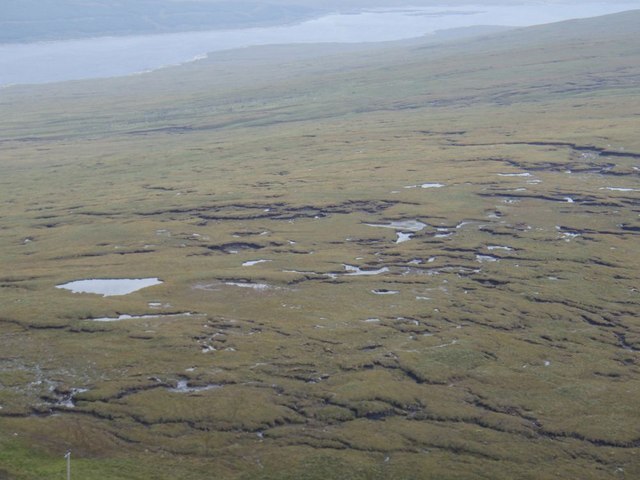
The Flow Country, located in the Highland Region of Scotland, is a unique and significant natural wonder that spans approximately 4,000 square kilometers (1,500 square miles) across Caithness and Sutherland. This expansive region, recognized as the most outstanding example of an actively accumulating blanket bog landscape, was inscribed as a UNESCO World Heritage Site in 2024.
Blanket bogs, such as those found in the Flow Country, are characterized by their thick layers of peat, formed over roughly 9,000 to 10,000 years through the decomposition of mosses, heathers, grasses, and other vegetation. These bogs are particularly notable for their depth, with peat deposits in some areas exceeding 8 meters (over 26 feet) and reaching around 10 meters (over 32 feet) in places. The Flow Country contains the largest continuous area of blanket bog in Europe, making it an exceptional and globally important example of this rare ecosystem.
One of the key features of the Flow Country is its diverse mosaic of peatland habitats, which support a distinctive assemblage of bird species adapted to open, wet landscapes. The region is internationally important for breeding birds such as the golden plover, greenshank, red-throated diver, and dunlin, as well as birds of prey including the golden eagle, merlin, hen harrier, and short-eared owl. The numerous bog pools and wet hollows, or dubh lochans, scattered across the landscape provide essential breeding and feeding grounds for wading birds like the common snipe and redshank.
Another remarkable aspect of the Flow Country is the exceptional variety of peatland forms and hydrological features found within a single, largely intact landscape. The area includes extensive blanket bogs alongside smaller areas of raised bog, interspersed with lochans, pools, wetter flushes, and relatively drier hummocks. This complex pattern of conditions supports a rich range of plant life, dominated by sphagnum mosses and including species such as cotton grasses, heathers, and insectivorous plants like the round-leaved sundew.
Peatlands, including those found in the Flow Country, play a crucial role in mitigating climate change by storing vast amounts of carbon — approximately 400 million tonnes of carbon in the Flow Country peatlands alone. As peat is composed largely of partially decomposed plant material that has accumulated over millennia, it locks away carbon that would otherwise be released into the atmosphere. As a result, these ecosystems act as long-term carbon stores and help reduce greenhouse gas concentrations when they remain healthy and undisturbed.
In recognition of its unparalleled blanket bog habitat and its significance in carbon sequestration, the Flow Country was granted World Heritage status by UNESCO in 2024. The designated World Heritage property covers approximately 190,000 hectares and includes core areas such as the Forsinard Flows National Nature Reserve and the Caithness and Sutherland Peatlands. This designation highlights the importance of conserving this landscape for future generations while maintaining its ecological integrity.
Altogether, the Flow Country stands as a powerful testament to the beauty, scale, and ecological significance of blanket bog landscapes. Its vast extent, complex habitats, and vital role in long-term carbon storage make it an irreplaceable natural treasure. As efforts to address climate change and biodiversity loss continue, the Flow Country serves as a compelling example of the importance of protecting and restoring the world’s peatland ecosystems.
UNESCO Description of the World Heritage Site
The serial property, located in the Highland Region of Scotland, is considered the most outstanding example of an actively accumulating blanket bog landscape. This peatland ecosystem, which has been accumulating for the past 9,000 years, provides a diversity of habitats home to a distinct combination of bird species and displays a remarkable diversity of features not found anywhere else on Earth. Peatlands play an important role in storing carbon and the property’s ongoing peat-forming ecological processes continue to sequester carbon on a very large scale, representing a significant research and educational resource.
UNESCO Justification of the World Heritage Site
Criterion (ix): Since the glaciers receded from Scotland, climatic conditions in combination with the underlying geology, the resultant topography, and the biogeography have led to the formation of a vast and diverse blanket bog landscape that stretches across the north of Scotland. The persistent precipitation-fed waterlogging of the soil has led to an expanse of peat bog that blankets the landscape, including hills, slopes and hollows, and forming a globally rare and significant peatland ecosystem and associated species assemblage. The property represents the most extensive, near-continuous, high quality and near-natural blanket bog landscape found globally. The active processes of blanket bog formation have continued for 9,000 years, and the diversity of blanket bog features is not found anywhere else on Earth. The blanket bog also provides a highly significant record of its formation, preserved as pollen and plant fossils, and telling a story of its past flora, fauna, palaeoecology and human influence. This is important for the understanding of the future evolution of this and other blanket bogs globally. Moreover, the processes of blanket bog formation provide a significant example of carbon sequestration on a large scale. The property holds between 29 and 34 peat forming species of Sphagnum moss, which are themselves home to complex assemblages of unique microorganisms adapted to survive in the low oxygen, cold temperature, acidity, and oligotrophy conditions of bog systems, adding to the biodiversity value of peatland habitats, and which also provide refuge for many breeding bird species. The property hosts a particular biodiversity assembly with specific communities composed of Atlantic, boreal and arctic taxa.
Encyclopedia Record: Flow Country
The Flow Country is a vast area of bog peatland in Caithness and Sutherland, northern Scotland. It is the largest blanket bog in Europe, and covers about 4,000 km2 (1,500 sq mi). It is an area of deep peat, dotted with bog pools, and is a very important habitat for wildlife. As peat is largely made up of the remains of plants, which are themselves made up of carbon, it locks up large stores of carbon for thousands of years. This carbon would otherwise be released to the atmosphere and contribute to global warming. In 2024 the Flow Country was awarded World Heritage status by UNESCO on account of its unparalleled blanket bog habitat. It includes the Forsinard Flows National Nature Reserve and the Caithness and Sutherland Peatlands.Additional Site Details
Area: 187,026 hectares
Number of Components: 7
Coordinates: 58.3991666667 , -4.0461111111
IUCN World Heritage Outlook
The 2025 Conservation Outlook on The Flow Country reports the following assessment:
Source: International Union for Conservation of Nature (IUCN) · View assessment
Image
© Graeme Smith, CC BY-SA 2.0 Resized from original. (This derivative is under the same CC BY-SA license.)