World Heritage Identification Number: 618
World Heritage since: 1993
Category: Cultural Heritage
WHE Type: Historic Cities & Urban Areas
Transboundary Heritage: No
Endangered Heritage: No
Country: 🇸🇰 Slovakia
Continent: Europe
UNESCO World Region: Europe and North America
Map
The Historic Town of Banská Štiavnica and Its Surroundings: A UNESCO World Heritage Site
The Historic Town of Banská Štiavnica and the Technical Monuments in its Vicinity, located in central Slovakia, offers a unique blend of history, culture, and natural beauty that has earned it a place on the prestigious UNESCO World Heritage List since 1993. This small town nestled within the Štiavnica Mountains presents a well-preserved example of a medieval mining center transformed over time into a town adorned with Renaissance architecture, 16th-century churches, elegant squares, and castles.
More to come…UNESCO Description of the World Heritage Site
Over the centuries, the town of Banská Štiavnica was visited by many outstanding engineers and scientists who contributed to its fame. The old medieval mining centre grew into a town with Renaissance palaces, 16th-century churches, elegant squares and castles. The urban centre blends into the surrounding landscape, which contains vital relics of the mining and metallurgical activities of the past.
UNESCO Justification of the World Heritage Site
Criterion (iv): The urban and industrial complex of Banská Štiavnica and the Technical Monuments in its Vicinity is an outstanding example of a medieval mining centre of great economic importance that continued into the modern period and assumed a characteristic and distinctive form.
Criterion (v): Banská Štiavnica and its surrounding area are an outstanding example of mining area which has become vulnerable to the potential erosion of its character and urban fabric, following the cessation of mining activities as well as the removal of the Mining Academy;
Encyclopedia Record: Banská Štiavnica
Banská Štiavnica is a town in central Slovakia, in the middle of an immense caldera created by the collapse of an ancient volcano. For its size, the caldera is known as the Štiavnica Mountains. Banská Štiavnica has a population of less than 10,000. The town was an important medieval mining centre. The surviving urban centre was formed during the 16th century. Because of their historical value, the town and its surroundings were proclaimed by the UNESCO to be a World Heritage Site on December 11, 1993.Additional Site Details
Area: 20,632 hectares
Number of Components: 1
(v) — Outstanding example of traditional human settlement
Coordinates: 48.46111 , 18.9
Image
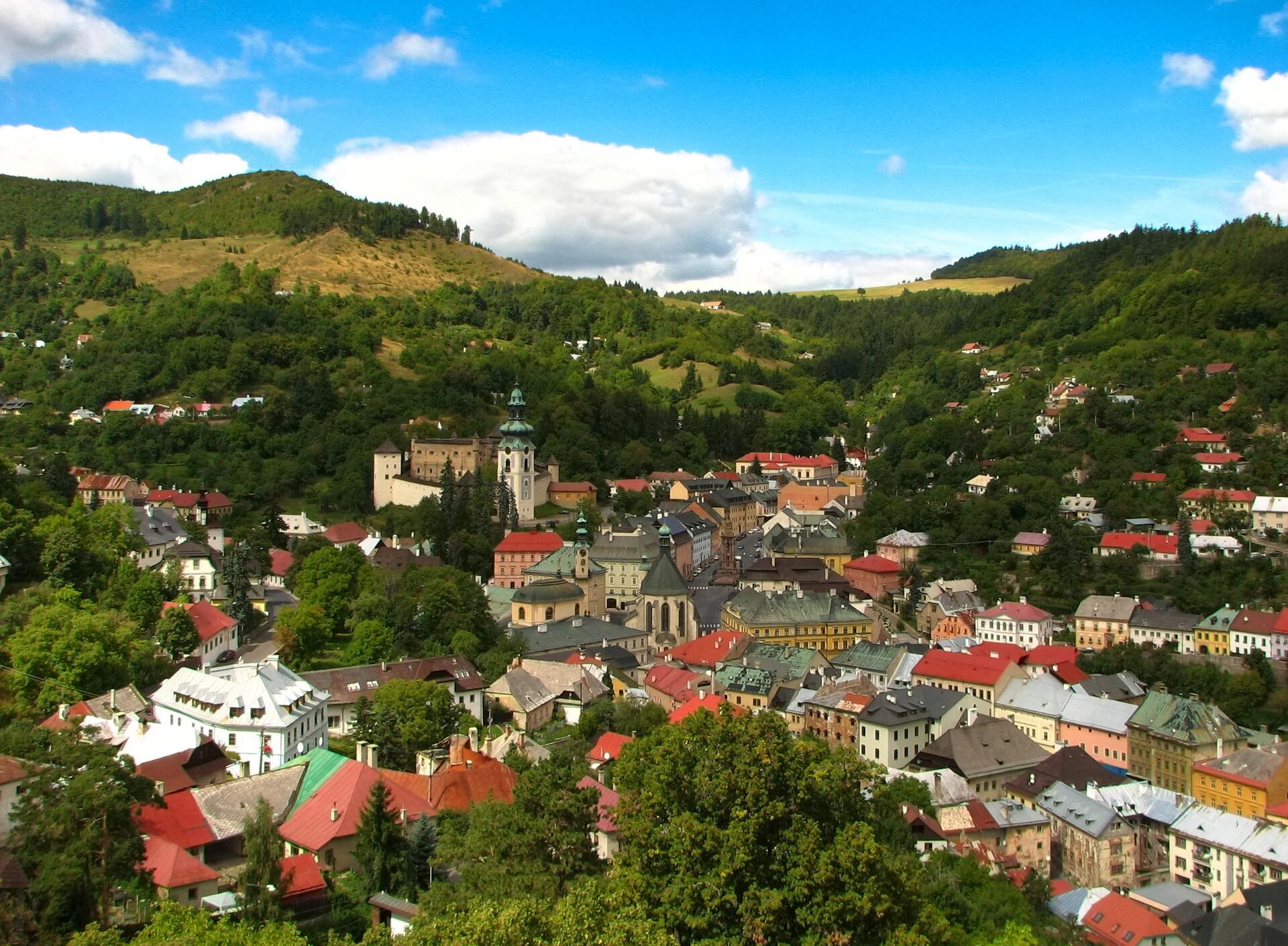
© Adrian Tync, CC BY-SA 4.0 Resized from original. (This derivative is under the same CC BY-SA license.)
World Heritage Research
Discover scientific research and academic studies that deepen our understanding of Historic Town of Banská Štiavnica and the Technical Monuments in its Vicinity from its history and significance to its conservation, management, and contemporary challenges.
-
Historical Water Management in the Vicinity of Banská Štiavnica under Changing Climatic Conditions
A once-unparalleled water management system, spanning 170 km and featuring 60 structures, was engineered from the 16th to 19th centuries in Banská Štiavnica to sustain local mines by harnessing surface water from the Štiavnica Mountains. This system, now a UNESCO World Heritage Site, is at risk of disuse and decay. The study examines whether this historic infrastructure can be preserved and repurposed for modern needs—benefiting both citizens and ecosystems—amid changing climatic conditions. It explores the feasibility of integrating such heritage systems into sustainable resource management practices while addressing challenges posed by climate variability.
Červeň, M. (2026). Historical Water Management in the Vicinity of Banská Štiavnica under Changing Climatic Conditions. Integrated Approaches to Sustainable Resource and Environmental Management. https://doi.org/10.5772/intechopen.1014069
View Publication Record | Read Publication -
In Situ Radon Surface Exhalation and Indoor Activity Concentration Analysis in Historical Buildings: A Comparative Case Study
A comparative analysis of radon surface exhalation and indoor activity concentrations in historical buildings reveals that cinder block masonry exhibits the highest exhalation rate (8.98 Bq m−2 h−1), followed by volcanic andesite ashlars (7.9 Bq m−2 h−1) and stone (1.87 Bq m−2 h−1). The study, conducted across three distinct structures in Slovakia—including a UNESCO-protected Gothic building—found that indoor radon levels are more strongly influenced by barometric pressure than outdoor temperature. An Activity Concentration Index of 0.30 suggests volcanic rock is radiologically safe for use as a bulk building material. Researchers employed continuous radon monitoring and accumulation chamber measurements, integrated with meteorological data, to assess the impact of different materials on indoor air quality.
Pijáková, J., Ingeli, R., & Rabenseifer, R. (2026). In Situ Radon Surface Exhalation and Indoor Activity Concentration Analysis in Historical Buildings: A Comparative Case Study. Buildings, 16(8), 1596. https://doi.org/10.3390/buildings16081596
View Publication Record | Read Publication -
Water as a Risk Factor for the Preservation of Cultural Heritage. A Case Study of Water-Related Threats in Slovakia
A significant increase in sulfate (SO4) and nitrate (NO3) levels in precipitation poses a growing risk to Slovakia's outdoor cultural heritage, including UNESCO sites like Banská Štiavnica. While current acid rain risks remain stable, the study reveals that many heritage assets are vulnerable to flooding due to their proximity to river basins, with flood probabilities rising. The research employed statistical analysis (paired t-test) and spatial mapping to assess water-related threats, offering insights for adaptive preservation strategies and improved flood-risk management in Slovakia.
Baculáková, K. (2026). Water as a Risk Factor for the Preservation of Cultural Heritage. A Case Study of Water-Related Threats in Slovakia. European Journal of Sustainable Development, 15(3), 415. https://doi.org/10.14207/ejsd.2026.v15n3p415
View Publication Record | Read Publication -
Medieval Sacral Architecture in Banská Štiavnica – Architectural Interpretation
Recent advancements in monument research and published studies have significantly enhanced our understanding of the architectural-historical development of medieval sacral buildings in Banská Štiavnica. This study provides theoretical reconstructions of churches and chapels from the 13th to the mid-16th century, including Romanesque structures like the Church of the Virgin Mary and Gothic ones such as the Hospital Church of St Elizabeth of Hungary. By integrating new findings with research on the city's residential development, the study offers a comprehensive architectural interpretation that sheds light on the evolution of sacral architecture in this historic town.
Budayová, L., & Terao Vošková, K. (2025). Medieval Sacral Architecture in Banská Štiavnica – Architectural Interpretation. Muzeológia a Kultúrne Dedičstvo, 13(1), 87–112. Internet Archive. https://doi.org/10.46284/mkd.2025.13.1.5
View Publication Record | Read Publication -
Anatómia historického domu. Hodnoty historickej architektúry a urbanizmu Banskej Štiavnice
A comprehensive analysis reveals the cultural values embedded in the historical architecture and urbanism of Banská Štiavnica. The study highlights regional architectural characteristics through detailed examination of construction principles, stylistic shapes, and urban layouts, using specific examples from the city. It emphasizes the importance of preserving these unique typologies—such as town houses, craftsman's houses, and miner's houses—which are frequently adapted for residential functions. Architectural drawings by Marcel Mészáros provide a visual representation of these insights, offering both academic and practical guidance for heritage protection and restoration efforts.
Terao Vošková, K. (2025). Anatómia historického domu. Hodnoty historickej architektúry a urbanizmu Banskej Štiavnice (, Ed.). SPEKTRUM Publishing. https://doi.org/10.61544/wiwy6091
View Publication Record | Read Publication -
Accessing Geological Heritage in Slovakia: Between Politics and Law
Slovakia's geotourism development, though politically driven and currently operating outside legal frameworks, stands to benefit significantly from integration into positive law. This study argues that enshrining principles of sustainability and regulated tourism in legislation could foster responsible geotourism practices, aligning them with global trends toward sustainable development. Using doctrinal interpretation—combining linguistic, historical, and logical analysis of Slovak law—the research demonstrates how legal frameworks can shape the future of geotourism in the region. The findings highlight a clear path forward: reforming current approaches to tourism governance could unlock potential for more structured, sustainable, and legally compliant geotourism initiatives, particularly around UNESCO World Heritage Sites like Banská Štiavnica.
Lukáč, M., & Štrba, Ľ. (2025). Accessing Geological Heritage in Slovakia: Between Politics and Law. Sustainability, 17(10), 4525. https://doi.org/10.3390/su17104525
View Publication Record | Read Publication -
Impact of the Nara Document on Authenticity – case of the UNESCO World Heritage Site Banská Štiavnica
The Nara Document on Authenticity (1994) significantly influenced the protection and restoration of Banská Štiavnica, a UNESCO World Heritage Site in Slovakia. The study highlights how the principles of this document were adapted to local conditions through the Banská Štiavnica Appeal (2002), leading to a tailored authenticity assessment framework by 2012. This approach facilitated the revitalization of the Baroque Calvary complex, which had suffered from neglect, vandalism, and unprofessional interventions during its religious use under socialism. The restoration process was accelerated by its inclusion in the '100 most endangered monuments' list (2007), demonstrating the impact of international recognition on heritage conservation efforts.
Terao Vošková, K., & Urland, A. (2025). Wpływ dokumentu z Nary na autentyczność – przypadek wpisanego na listę światowego dziedzictwa UNESCO miasta Bańska Szczawnica. Protection of Cultural Heritage, (24), 125–141. https://doi.org/10.35784/odk.7141
View Publication Record | Read Publication