World Heritage Identification Number: 872
World Heritage since: 1998
Category: Cultural Heritage
WHE Type: Historic Cities & Urban Areas
Transboundary Heritage: No
Endangered Heritage: No
Country: 🇫🇷 France
Continent: Europe
UNESCO World Region: Europe and North America
Map
A Journey Through Time: Exploring the Historic Site of Lyon, France
The Historic Site of Lyon, a UNESCO World Heritage Site since 1998, offers a captivating journey through time that showcases the rich history, culture, and architectural evolution of this remarkable French city. Situated along the confluence of the Rhone and Saône rivers, Lyon boasts a unique blend of Roman, Medieval, Renaissance, and Modernist influences, making it a must-visit destination for history enthusiasts and architecture aficionados alike.
More to come…UNESCO Description of the World Heritage Site
The long history of Lyon, which was founded by the Romans in the 1st century B.C. as the capital of the Three Gauls and has continued to play a major role in Europe's political, cultural and economic development ever since, is vividly illustrated by its urban fabric and the many fine historic buildings from all periods.
UNESCO Justification of the World Heritage Site
Criterion (ii): Lyon bears exceptional testimony to the continuity of urban settlement over more than two millennia on a site of great commercial and strategic significance, where cultural traditions from many parts of Europe have come together to create a coherent and vigorous continuing community.
Criterion (iv): By virtue of the particular manner in which it has developed spatially, Lyon illustrates in an exceptional way the progress and evolution of architectural design and town planning over many centuries.
Encyclopedia Record: Vieux Lyon
Vieux Lyon is the largest Renaissance district of Lyon. In 1964, Vieux-Lyon, the city's oldest district, became the first site in France to be protected under the Malraux law to protect France's cultural sites. Covering an area of 424 hectares between the Fourvière hill and the river Saône, it is one of Europe's most extensive Renaissance neighborhoods. There are three distinct sections: Saint Jean, Saint Paul and Saint Georges. In 1998, Vieux Lyon was inscribed on the UNESCO World Heritage List along with other districts in Lyon because of its historical importance and architecture.Additional Site Details
Area: 427 hectares
Number of Components: 1
(iv) — Outstanding example of a type of building or landscape
Coordinates: 45.76722 , 4.83333
Image
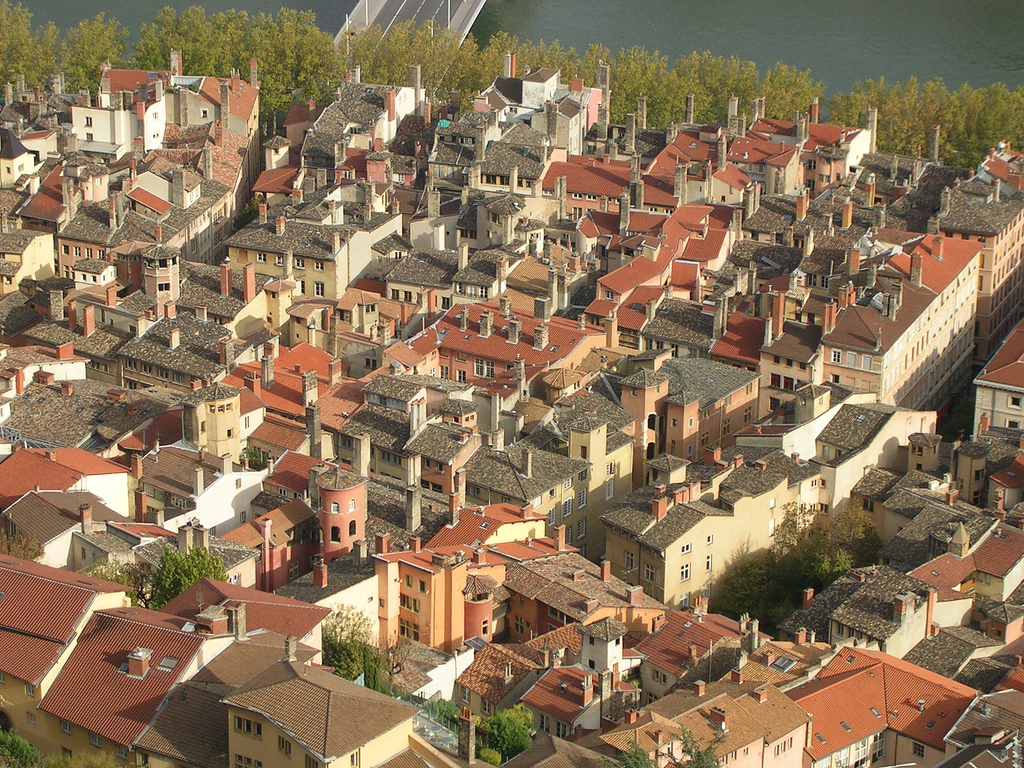
© Karldupart, CC BY-SA 3.0 Resized from original. (This derivative is under the same CC BY-SA license.)
World Heritage Research
Discover scientific research and academic studies that deepen our understanding of Historic Site of Lyon from its history and significance to its conservation, management, and contemporary challenges.
-
Le cas des rues piétonnières du Vieux-Lyon (Rhône) dans les années 1970
The piétonnisation of streets in Vieux-Lyon during the late 1970s, while primarily aimed at enhancing architectural heritage, inadvertently marginalized the street paving—a key element of urban patrimony. This study reveals how the reimagining of central streets as 'period' thoroughfares, though intended to serve the built environment, failed to recognize or preserve local paving traditions, which were later replaced by standardized designs. The research highlights a selective approach to patrimonialization, where street features were subsumed under the prioritization of architectural integrity, leading to the erasure of distinct Lyonese paving practices by the 1980s.
Baldasseroni, L. (2026). Le cas des rues piétonnières du Vieux-Lyon (Rhône) dans les années 1970. In Situ, 58. https://doi.org/10.4000/16ryx
View Publication Record | Read Publication -
The Aqueducts of Lugdunum
Lyon's aqueducts, built between 20 BCE and the early decades of Lugdunum (modern-day Lyon), represent an extraordinary engineering feat for their time. These four aqueducts, equipped with nine inverted siphons, were designed to overcome deep or wide valleys, ensuring a reliable water supply for one of Gaul's largest cities. The study highlights the significance of Dr. Jean Burdy's long-term research, which uncovered and preserved these ancient structures through meticulous investigation of historical records and physical remains. Today, Lyon, with over a million inhabitants, stands as a UNESCO World Heritage Site, partly due to its 2000-year-old urban architecture, including these remarkable aqueducts. This work not only sheds light on Roman engineering but also underscores the importance of preserving such heritage for future generations.
Kessener, P. M. (2024). The Aqueducts of Lugdunum. Water, 16(15), 2117. https://doi.org/10.3390/w16152117
View Publication Record | Read Publication -
Compréhension expérimentale et numérique des chemins de l'eau sur l'ensemble du champ captant de la Métropole de Lyon
A study on the Historic Site of Lyon reveals that artificial recharge basins, used to create hydraulic barriers for contamination protection, only maintain their effect for 1-2 days after cessation. This finding underscores the transient nature of such protective measures and highlights the need for continuous monitoring. The research employed a multi-faceted approach combining in-situ observations, experimental infiltration tests, thermal tracing, and 3D hydro-thermal modeling to characterize groundwater flow and heat transfer within Lyon's 375-ha aquifer system. Key insights include the identification of an infiltrability index that tracks basin performance over time, revealing progressive clogging due to sand layer compaction. The study also confirmed the presence of unsaturated zones and complex 3D flow dynamics beneath the Vieux-Rhône river, providing critical data for managing water resources under potential climate change scenarios.
Réfloch, A. Compréhension expérimentale et numérique des chemins de l’eau sur l’ensemble du champ captant de la Métropole de Lyon. https://doi.org/10.70675/704f13ccz5b25z4f7bzabcfz22695aaa0710
View Publication Record | Read Publication -
Imagining an Old City in Nineteenth-Century France: Urban Renovation, Civil Society, and the Making of Vieux Lyon
Nineteenth-century urban renovations in Lyon, driven by state initiatives under the Second Empire, inadvertently sparked a localist movement that sought to preserve the city's distinctive, antiquarian architectural heritage. This study reveals that cultural elites in Lyon used antiquarian discourse to assert that the city's narrow, crooked streets were integral to its identity, fearing their erasure by Parisian influences. Contrary to traditional narratives focusing on state-led urban transformations, this research highlights the role of civil society and antiquarian history as modern phenomena shaping urban development. The analysis combines urban history with cultural studies to illustrate how local pride and anxiety drove the preservation movement that gave rise to Vieux Lyon.
De Oliveira, P. L. S. (2017). Imagining an Old City in Nineteenth-Century France: Urban Renovation, Civil Society, and the Making of Vieux Lyon. Journal of Urban History, 45(1), 67–98. https://doi.org/10.1177/0096144216689090
View Publication Record | Read Publication -
Lyon (Rhône). Vieux-Lyon
A historic building, known as the 'maison du chamarier,' located in the heart of Vieux-Lyon near the Cathedral Saint-Jean-Baptiste, has been recognized for its architectural significance. This structure, comprising three L-shaped buildings with three to four stories that open onto a southern courtyard, was designated a Monument historique in 1943. Adjacent to it is another more recent building also listed as a historic monument, together forming a complete urban block. The study highlights the architectural and historical importance of this ensemble, which reflects the urban development and preservation efforts in Lyon, France.
Puel, O. (2015). Lyon (Rhône). Vieux-Lyon. Archéologie Médiévale, 45, 218–219. https://doi.org/10.4000/archeomed.7957
View Publication Record | Read Publication -
Analyse spatio-temporelle de la morphologie du chenal du Rhône du Léman à la Méditerranée
A century-long incision of the Rhône River's channel, driven primarily by channelization and hydroelectric dams, has significantly altered sediment dynamics and river morphology. This study reveals that while these modifications have led to paving and fine sediment storage in certain sections, residual mobility of bedload persists during major floods. Key findings include the compartmentalization of the river continuum due to dams, which traps sediments in reservoirs and promotes paving downstream of Lyon. The research integrates bathymetric data from 1897–2010 with granulometric samples from over 300 sites, using a standardized sampling protocol to assess bedload mobility, tributary inputs, and the impact of structures on sediment transport conditions. These insights support recommendations for sustainable river management, such as adjusting dam operations and gravel reinjection, aimed at ecological restoration.
Parrot, E. Analyse spatio-temporelle de la morphologie du chenal du Rhône du Léman à la Méditerranée. https://doi.org/10.70675/590864baz8d53z428aza9dezc5d31352ff17
View Publication Record | Read Publication -
La recuperación y revalorización del patrimonio industrial en Lyon (Francia). La intervención en Port Rambaud
The urban renewal project Lyon Confluence successfully revitalized the industrial heritage site Port Rambaud, transforming it into a vibrant cultural and social hub. The intervention preserved key industrial buildings like La Sucrière and Les Salins while integrating modern architecture by Rudy Ricciotti and Odile Decq, along with public spaces designed by Lantz und Partners to enhance connectivity with the river Saône. The project's integration of the Biennale of Contemporary Art Lyon further boosted cultural dynamism, creating a new urban centrality rooted in industrial memory. This case study demonstrates how heritage conservation can be effectively combined with contemporary urban development and cultural programming.
García Gómez, S. (2013). The Recovery and Revaluation of Industrial Heritage in Lyon (France). The Intervention at Port Rambaud. Arte Y Ciudad, 2(3.1), 781–798. https://doi.org/10.22530/ayc.2013.n3.1.310
View Publication Record | Read Publication