World Heritage Identification Number: 44
World Heritage since: 1979
Category: Cultural Heritage
WHE Type: Archaeological Sites
Transboundary Heritage: No
Endangered Heritage: No
Country: 🇧🇬 Bulgaria
Continent: Europe
UNESCO World Region: Europe and North America
Map
Unveiling the Mysteries of the Thracian Tomb of Kazanlak
The Thracian Tomb of Kazanlak, a remarkable archaeological treasure, stands as a testament to the rich cultural heritage of ancient Thrace, nestled in the heart of modern-day Bulgaria. This UNESCO World Heritage Site, inscribed in 1979, offers a captivating glimpse into the lives, beliefs, and artistic prowess of the Thracians during the Hellenistic period.
More to come…UNESCO Description of the World Heritage Site
Discovered in 1944, this tomb dates from the Hellenistic period, around the end of the 4th century BC. It is located near Seutopolis, the capital city of the Thracian king Seutes III, and is part of a large Thracian necropolis. The tholos has a narrow corridor and a round burial chamber, both decorated with murals representing Thracian burial rituals and culture. These paintings are Bulgaria’s best-preserved artistic masterpieces from the Hellenistic period.
UNESCO Justification of the World Heritage Site
Criterion (i): The Thracian Tomb of Kazanlak is the masterpiece of the Thracian creative spirit.
Criterion (iii): The Kazanlak frescoes testify to high level of culture and pictorial art in Thracia.
Criterion (iv): The Kazanlak frescoes represent a significant stage in the development of Hellenistic funerary art.
Encyclopedia Record: Thracian Tomb of Kazanlak
The Thracian Tomb of Kazanlak is a vaulted-brickwork "beehive" (tholos) tomb that is located near the town of Kazanlak in central Bulgaria.Additional Site Details
Area: 0.0155 hectares
Number of Components: 1
(iii) — Unique or exceptional testimony to a cultural tradition
(iv) — Outstanding example of a type of building or landscape
Coordinates: 42.625774 , 25.399172
Image
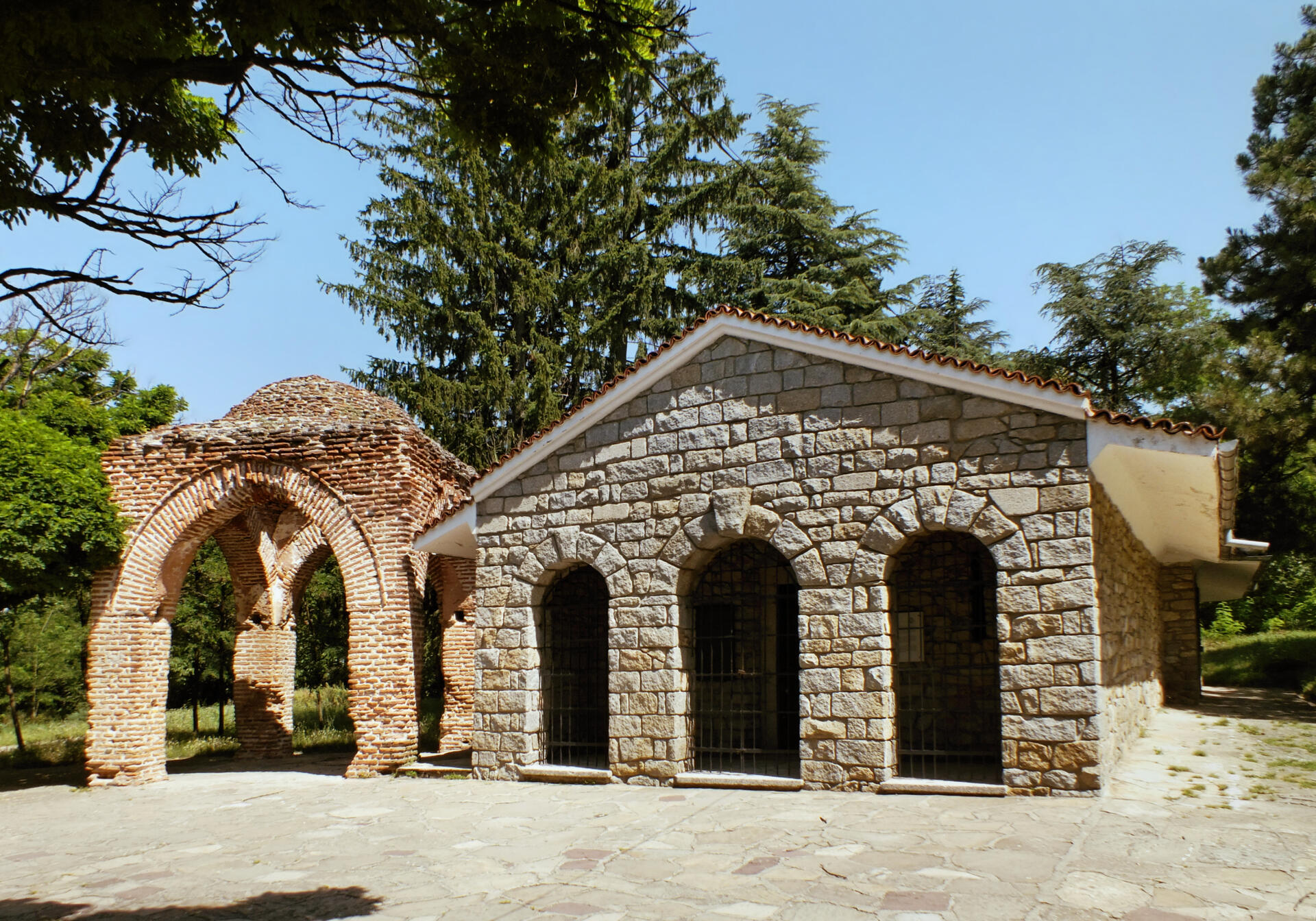
© Roweromaniak, CC BY-SA 3.0 Resized from original. (This derivative is under the same CC BY-SA license.)
World Heritage Research
Discover scientific research and academic studies that deepen our understanding of Thracian Tomb of Kazanlak from its history and significance to its conservation, management, and contemporary challenges.
-
Validating predictions of burial mounds with field data: the promise and reality of machine learning
A pre-trained machine learning model, despite achieving high self-reported success rates, failed to accurately detect burial mounds in satellite imagery when validated against field data. The study found false negative and positive rates of 95–96% and 87–95%, respectively, with true positives accounting for only 5–13%. This challenges the optimistic narrative surrounding machine learning (ML) applications in archaeological prospection, highlighting significant limitations in detecting varied features within heterogeneous landscapes. The research underscores the substantial time, expertise, and resources required to improve model performance, questioning the efficiency of ML over manual inspection methods.
Sobotkova, A., Kristensen-McLachlan, R. D., Mallon, O., & Ross, S. A. (2024). Validating predictions of burial mounds with field data: the promise and reality of machine learning. Journal of Documentation, 80(5), 1167–1189. https://doi.org/10.1108/jd-05-2022-0096
View Publication Record | Read Publication -
Realization of a Collection of Digital Resources for Cultural Heritage Sites as a Basis for Formation of Skills and Competencies
A web-based application, 'Me and UNESCO,' has been developed to serve as a digital resource for Bulgarian cultural and historical heritage sites under UNESCO protection. This application employs the Understanding by Design pedagogical approach, providing multimedia content that fosters the formation of skills and competencies in users. The platform acts as a database, offering an interactive learning environment that enhances understanding and engagement with UNESCO-protected sites in Bulgaria.
Kovacheva, S., & Dimitrova, L. (2022). Realization of a Collection of Digital Resources for Cultural Heritage Sites as a Basis for Formation of Skills and Competencies. Digital Presentation and Preservation of Cultural and Scientific Heritage, 12, 217–226. https://doi.org/10.55630/dipp.2022.12.18
View Publication Record | Read Publication