World Heritage Identification Number: 43
World Heritage since: 1979
Category: Cultural Heritage
WHE Type: Archaeological Sites
Transboundary Heritage: No
Endangered Heritage: No
Country: 🇧🇬 Bulgaria
Continent: Europe
UNESCO World Region: Europe and North America
Map
The Enigmatic Equestrian Sculpture: The Madara Rider
The Madara Rider, officially recognized as a UNESCO World Heritage Site since 1979, stands tall amidst the verdant landscapes of northeastern Bulgaria. This remarkable piece of art, etched into a towering cliff near the village of Madara, presents an intriguing blend of history, culture, and artistic prowess.
More to come…UNESCO Description of the World Heritage Site
The Madara Rider, representing the figure of a knight triumphing over a lion, is carved into a 100-m-high cliff near the village of Madara in north-east Bulgaria. Madara was the principal sacred place of the First Bulgarian Empire before Bulgaria’s conversion to Christianity in the 9th century. The inscriptions beside the sculpture tell of events that occurred between AD 705 and 801.
UNESCO Justification of the World Heritage Site
Criterion (i): The Madara Rider is an exceptional work of art dating from the beginning of the 8th century. It is the only relief of its kind, having no parallel in Europe.
Criterion (iii): The Madara Rider is outstanding not only as a work of the realist Bulgarian sculpture but also as a piece of historical source material from the earliest years of the Bulgarian state, since the inscriptions around the relief chronicle events in the reigns of famous Khans.
Encyclopedia Record: Madara Rider
The Madara Rider or Madara Horseman is a large early medieval rock relief carved on the Madara Plateau east of Shumen in northeastern Bulgaria, near the village of Madara. The monument is dated to the very late 7th or more often the very early 8th century, during the reign of the Bulgar Khan Tervel. In 1979, the monument was listed as a UNESCO World Heritage Site.Additional Site Details
Area: 1.2 hectares
Number of Components: 1
(iii) — Unique or exceptional testimony to a cultural tradition
Coordinates: 43.277375 , 27.118894
Image
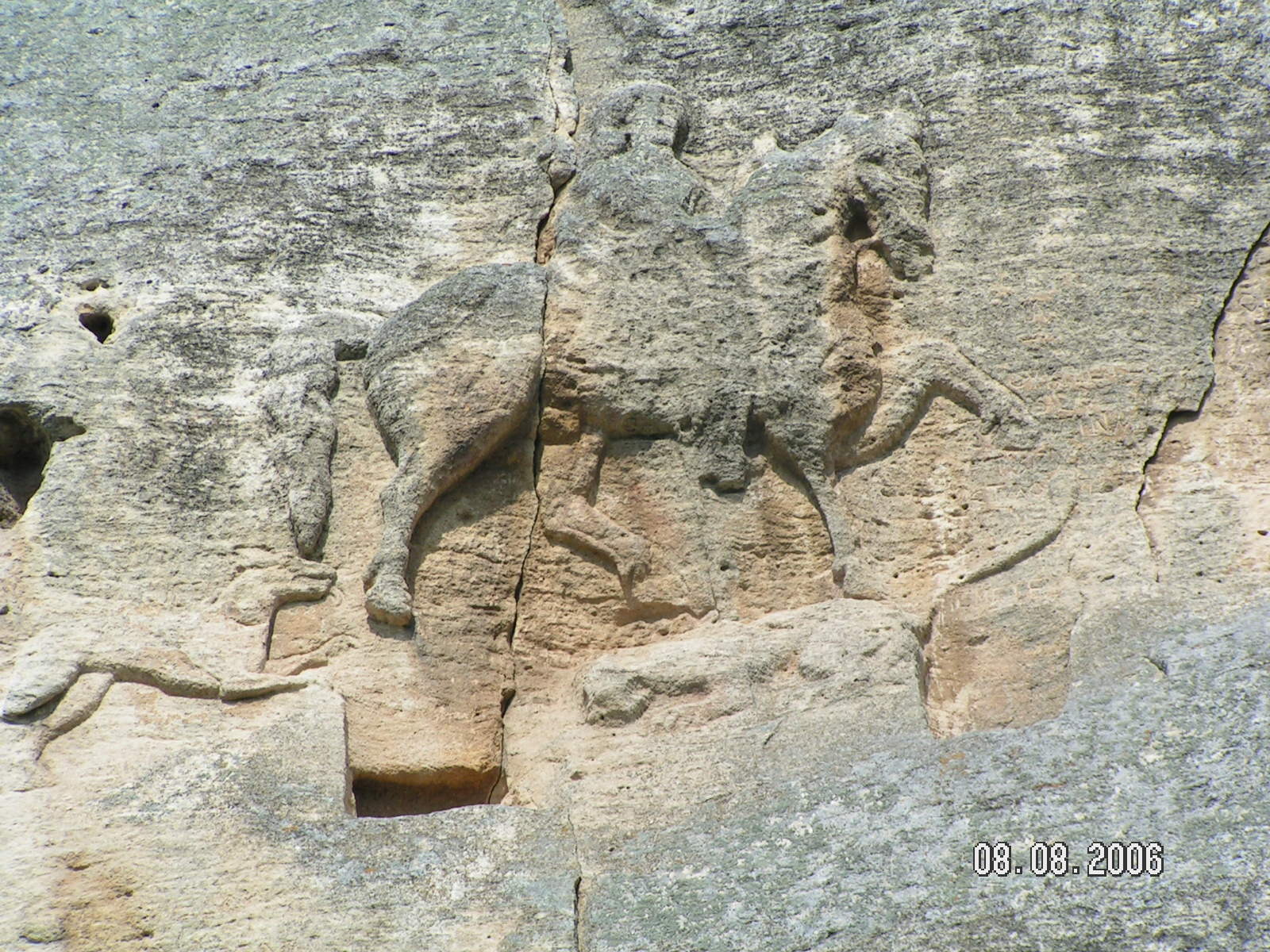
No machine-readable author provided. Dom2002 assumed (based on copyright claims)., Public domain
World Heritage Research
Discover scientific research and academic studies that deepen our understanding of Madara Rider from its history and significance to its conservation, management, and contemporary challenges.
-
Social and economic benefits of cultural heritage tourism in the city of Shumen
Cultural heritage tourism in Shumen, Bulgaria, primarily benefits from domestic visitation due to the pandemic's impact on international travel. The study reveals that local tourists are drawn to a combination of historical significance and natural beauty at key sites like Madara Rider, Shumen Fortress, and others. While these sites offer substantial social and economic value, they require additional financial support to sustain operations. The research, based on surveys of 508 visitors in 2021, explores motivations, perceptions, and economic impacts, highlighting the need for balanced development strategies to leverage tourism's potential while ensuring long-term viability.
Vladimirov, Z. (2025). Социални и икономически ползи от туризма на културното наследство в град Шумен. Research Announcements “Heritage BG”, (5), 54–65. https://doi.org/10.58894/ar-hbg.2023.5.54-65
View Publication Record | Read Publication