World Heritage Identification Number: 1506
World Heritage since: 2016
Category: Cultural Heritage
WHE Type: Buildings & Architectural Ensembles
Transboundary Heritage: No
Endangered Heritage: No
Country: 🇮🇷 Iran (Islamic Republic of)
Continent: Asia
UNESCO World Region: Asia and the Pacific
Map
The Persian Qanat: An Ancient Irrigation System in Arid Regions
The Persian Qanat, inscribed as a UNESCO World Heritage Site in 2016, is an ingenious irrigation system that has been supporting agriculture and permanent settlements in the arid regions of Iran for centuries. This ancient technology, which originated around 3,000 years ago, continues to play a vital role in the region's water supply and agricultural productivity.
More to come…UNESCO Description of the World Heritage Site
Throughout the arid regions of Iran, agricultural and permanent settlements are supported by the ancient qanat system of tapping alluvial aquifers at the heads of valleys and conducting the water along underground tunnels by gravity, often over many kilometres. The eleven qanats representing this system include rest areas for workers, water reservoirs and watermills. The traditional communal management system still in place allows equitable and sustainable water sharing and distribution. The qanats provide exceptional testimony to cultural traditions and civilizations in desert areas with an arid climate.
UNESCO Justification of the World Heritage Site
Criterion (iii): The Persian Qanat system is an exceptional testimony to the tradition of providing water to arid regions to support settlements. The technological and communal achievements of the qanats play a vital role of qanat in the formation of various civilisations. Its crucial importance for the larger arid region is expressed in the name of the desert plateau of Iran which is called “Qanat Civilisation”. Dispersion of primary settlements on alluvial fans of the inner plateau and deserts of Iran is immediately related with the distribution pattern of qanat system across the country. The system also presents an exceptional living cultural tradition of communal management of water resources.
Criterion (iv): The Persian Qanat system is an outstanding example of a technological ensemble illustrating significant stages in the history of human occupation of arid and semi-arid regions. Based on complex calculations and exceptional architectural qualities, water was collected and transported by mere gravity over long distances and these transport systems were maintained over centuries and, at times, millennia. The qanat system enabled settlements and agriculture but also inspired the creation of a desert-specific style of architecture and landscape involving not only the qanats themselves, but their associated structures, such as water reservoirs, mills, irrigation systems, and gardens.
Encyclopedia Record: Qanat
A qanāt or kārīz (کَارِیز) is a water supply system that was developed in ancient Iran for the purpose of transporting usable water to the surface from an aquifer or a well through an underground aqueduct. Originating approximately 3,000 years ago, its function is essentially the same across the Middle East and North Africa, but it is known by a variety of regional names beyond today's Iran, including: kārēz in Afghanistan and Pakistan; foggāra in Algeria; khettāra in Algeria and Morocco; the daoudi-type falaj in Oman and the United Arab Emirates; and ʿuyūn in Saudi Arabia. In addition to those in Iran, the largest extant and functional qanats are located in Afghanistan, Xinjiang in China, Oman, and Pakistan.Additional Site Details
Area: 19,057 hectares
Number of Components: 11
(iv) — Outstanding example of a type of building or landscape
Coordinates: 34.29 , 58.6544444444
Image
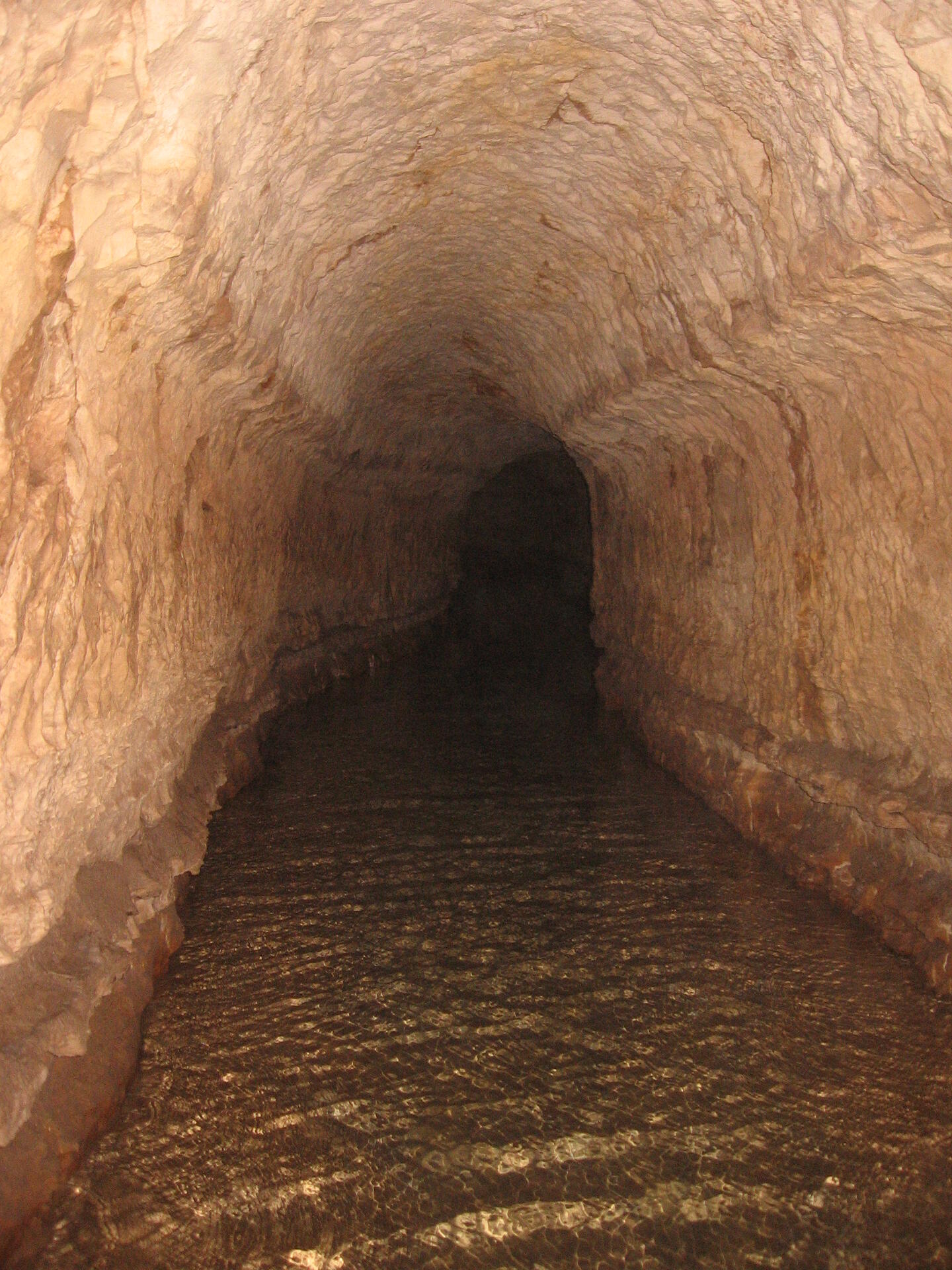
© Pafnutius, CC BY-SA 3.0 Resized from original. (This derivative is under the same CC BY-SA license.)
World Heritage Research
Discover scientific research and academic studies that deepen our understanding of The Persian Qanat from its history and significance to its conservation, management, and contemporary challenges.
-
UNESCO Water Structures: Heritage, Innovation and Sustainable Use
Ancient water structures, such as Roman aqueducts and Persian qanats, exemplify the ingenuity of past civilizations in engineering and resource management. Recognized by UNESCO for their cultural, historical, and technical significance, these systems—particularly the Persian qanat—demonstrate sustainable principles that remain relevant today. This study examines a selection of these structures to highlight their adaptive reuse and integration into modern environments, though it acknowledges limitations due to its focus on specific ancient examples.
Nováková, L. (2024). UNESCO Water Structures: Heritage, Innovation and Sustainable Use. Culture. Society. Economy. Politics, 4(2), 27–45. https://doi.org/10.2478/csep-2024-0009
View Publication Record | Read Publication -
Developing Sustainable Behaviors for Underground Heritage Tourism Management: The Case of Persian Qanats, a UNESCO World Heritage Property
A sustainable behavior model for managing underground heritage tourism at Persian Qanats, UNESCO World Heritage Sites, has been developed to ensure their long-term preservation. The study, involving 22 experts and managers, employed content and thematic analysis to shape the behavior of tourists, officials, and locals, fostering territorial collaboration and social capital. This approach aims to protect these ancient aqueduct systems, which have sustained arid regions in Iran for over 3000 years, by providing a guideline for effective management practices.
Mousazadeh, H., Ghorbani, A., Azadi, H., Almani, F. A., Zangiabadi, A., Zhu, K., & Dávid, L. D. (2023). Developing Sustainable Behaviors for Underground Heritage Tourism Management: The Case of Persian Qanats, a UNESCO World Heritage Property. Land, 12(4), 808. https://doi.org/10.3390/land12040808
View Publication Record | Read Publication -
Private Property and the Commons: The Case Study of Water Distribution in Persian Qanats
Global governance often relies on the model of private property, rooted in natural law and codified in legal frameworks like the Napoleonic Code. However, this is not the only way to manage resources; comparative legal analysis reveals alternative models that prioritize collective action for sustainable resource protection. A case study of Persian qanats demonstrates how water distribution systems can operate effectively under commons-based governance, ensuring equitable access and preserving resources for future generations without relying solely on proprietary individualism.
Pradi, A. (2023). Private Property and the Commons: The Case Study of Water Distribution in Persian Qanats. Global Jurist, 23(3), 287–304. https://doi.org/10.1515/gj-2023-0124
View Publication Record | Read Publication -
Sustainable cultural heritage landscape: an imaginary journey inside the veins of deserts
Persian Qanats, recognized as UNESCO World Heritage Sites, serve as unique attractions for foreign tourists, leaving lasting impressions and offering captivating experiences akin to fiction. A study analyzing the narratives of 30 tourists who visited these ancient groundwater systems revealed their significant potential in promoting sustainable cultural heritage tourism in Iran. The research employed qualitative and narrative analysis methods, avoiding reliance on numerical data to delve into the extraordinary experiences of visitors exploring these desert conduits. This approach highlights the importance of leveraging travel narratives to showcase the invaluable engineering heritage of Persian Qanats, a nascent branch of tourism in Iran that has yet to be fully recognized.
Mousazadeh, H., Zhu, K., Ghorbani, A., Akbarzadeh Almani, F., Arabi, M., Parvar, F., & Dávid, L. D. (2023). Sustainable cultural heritage landscape: an imaginary journey inside the veins of deserts. Frontiers in Sustainable Food Systems, 7. https://doi.org/10.3389/fsufs.2023.1218881
View Publication Record | Read Publication -
Rediscovering Community Participation in Persian Qanats: An Actor-Network Framework
A critical shift is needed in Iran's water management, moving from centralized bureaucratic approaches to community-driven governance. This study highlights the effectiveness of traditional Persian qanats—a centuries-old system of groundwater exploitation—as a model for sustainable water management in arid regions. By applying Actor-Network Theory, it reveals how socio-economic networks within qanat-dependent communities foster civic participation and collective problem-solving, offering a viable alternative to modern, top-down infrastructure. This framework challenges the dominance of large-scale dams and centralized systems, advocating instead for decentralized governance that leverages local knowledge and collaboration.
Salek, A. (2019). Rediscovering Community Participation in Persian Qanats: An Actor-Network Framework. European Journal of Creative Practices in Cities and Landscapes, Vol 2, Present and Future. https://doi.org/10.6092/ISSN.2612-0496/8674
View Publication Record | Read Publication -
New Trends in Achaemenid History
Recent archaeological and documentary discoveries have significantly challenged traditional views on the extent of Achaemenid imperial influence, particularly in Egypt. Contrary to long-held assumptions that Persian rule was limited to controlled enclaves along major royal routes, new evidence—including images adapted from the imperial court and re-examined documents—demonstrates a broader and more pronounced Achaemenid presence across provinces like Babylonia and Egypt. Additionally, the discovery of underground water canals (qanats) in an Achaemenid-era village has provided tangible proof of Persian engineering and administrative control over Egypt's water resources, reinforcing the empire's lasting impact on local social structures despite periods of revolt. These findings mark a paradigm shift in Achaemenid studies, emphasizing the need for a reevaluation of imperial periphery dynamics.
Briant, P. (2018). New Trends in Achaemenid History. From Cyrus to Seleukos, 283–297. https://doi.org/10.1163/9789004460652_014
View Publication Record | Read Publication -
An appraisal of the qualifying role of hydraulic heritage systems: a case study of Qanats in central Iran
A case study of Qanats in central Iran reveals the significant but often overlooked role of hydraulic heritage systems in urban drainage and water management. These ancient underground channels, known for their sustainability over millennia, demonstrate functional interconnectedness with society and ecology. However, a modern drainage system modeled after Qanat techniques led to a dramatic drop in groundwater levels, highlighting both the potential and pitfalls of integrating historical hydrosystems into contemporary infrastructure. The study underscores the need to reconsider the qualifying role of such heritage systems in revitalization plans, balancing their historical significance with modern engineering challenges.
Harandi, M. F., & de Vries, M. J. (2014). An appraisal of the qualifying role of hydraulic heritage systems: a case study of Qanats in central Iran. Water Supply, 14(6), 1124–1132. https://doi.org/10.2166/ws.2014.074
View Publication Record | Read Publication -
The role of four key structures in the creation and survival of cultural landscapes in the desert environment of Iran
Four key structures—qanats, cisterns, ice-houses, and wind catchers—have been identified as pivotal to the creation and sustainability of cultural landscapes in Iran's desert environments. These ingenious systems address water scarcity and climate challenges, enabling human settlement and sustainable living over centuries. The study analyzes their individual and collective roles, demonstrating their effectiveness in managing water resources, providing cooling, and maintaining ecological balance. This research highlights their significance as part of UNESCO's cultural heritage criteria, offering insights into traditional adaptation strategies that remain relevant today.
Fanood, M. R. (2014). The role of four key structures in the creation and survival of cultural landscapes in the desert environment of Iran. Journal of Architectural Conservation, 20(3), 184–196. https://doi.org/10.1080/13556207.2014.985490
View Publication Record | Read Publication -
Achieving Ground Water Sustainability in Iran through Qanat Rejuvenation
Rejuvenation of ancient Persian qanats offers a sustainable and cost-effective solution for groundwater management in arid regions, outperforming conventional dams. The study highlights that floodwater spreading and artificial groundwater recharge (ARG) can restore 30,000 desiccated qanats while preserving aquifers, unlike dams which face issues like sedimentation, evaporation, and high costs. Long-term ARG projects demonstrate that maintaining constant flow in qanats ensures groundwater sustainability, providing a viable alternative for water-short regions with suitable geological conditions.
Rahnemaei, M. (2013). Achieving Ground Water Sustainability in Iran through Qanat Rejuvenation. Journal of Waste Water Treatment & Analysis, 04(02). https://doi.org/10.4172/2157-7587.1000150
View Publication Record | Read Publication -
Review of Ancient Wisdom of Qanat, and Suggestions for Future Water Management
A review of the ancient Persian Qanat system demonstrates its potential as a sustainable solution for water scarcity in arid regions, despite its decline in modern usage. The study explores why these 3,000-year-old underground tunnels, once vital for agriculture and domestic water supply, are no longer widely employed today. It also proposes innovative methods using new materials and technology to revitalize the Qanat system, including a multi-purpose model that integrates rainwater infiltration management. This approach could address urban water challenges in both dry and wet cities, offering a blend of ancient wisdom and modern innovation for sustainable water management.
Taghavi-Jeloudar, M., Han, M., Davoudi, M., & Kim, M. (2013). Review of Ancient Wisdom of Qanat, and Suggestions for Future Water Management. Environmental Engineering Research, 18(2), 57–63. https://doi.org/10.4491/eer.2013.18.2.057
View Publication Record | Read Publication