
Palace and Gardens of Schönbrunn


World Heritage Identification Number: 786

World Heritage since: 1996

Category: Cultural Heritage

WHE Type: Buildings & Architectural Ensembles

Transboundary Heritage: No

Endangered Heritage: No

Country: 🇦🇹 Austria

Continent: Europe

UNESCO World Region: Europe and North America

Map

Schönbrunn Palace and Gardens: A Baroque Masterpiece of Imperial Vienna

The Palace and Gardens of Schönbrunn, inscribed as a UNESCO World Heritage Site in 1996, offer a captivating glimpse into the opulent history of the Habsburg Empire. Located in the Hietzing district (13th district) of Vienna, this Baroque ensemble stands as a testament to the grandeur and artistic achievement of the era.

Schönbrunn Palace and Gardens were inscribed as a World Heritage Site because they represent one of the most complete and best-preserved examples of Baroque palace architecture and landscape design in Europe. The ensemble is considered a “Gesamtkunstwerk,” or total work of art, in which architecture, interior design, and garden planning form a unified artistic and symbolic composition. It also reflects the political ideals of absolutist rule, comparable in scale and influence to other major European royal residences such as Versailles.

The palace was originally conceived in the late 17th century in designs associated with Johann Bernhard Fischer von Erlach and was later significantly rebuilt and refined in the 18th century by Nicolaus Pacassi, giving it much of its present appearance. Its elegant, symmetrical façade and richly decorated interiors reflect Baroque court ideals and imperial representation.

Upon entering the palace, visitors are greeted by the Imperial Apartments, a series of rooms that once housed the Habsburg rulers. These apartments showcase an array of decorative arts, including lavish furnishings, ornate tapestries, and exquisite porcelain. Notable among them is the Great Gallery, a 40-meter-long ceremonial hall decorated with elaborate stucco work and ceiling frescoes depicting the glory of the Habsburg dynasty.

Throughout its history, Schönbrunn served as a central stage for imperial life and European politics. It was the favored summer residence of Empress Maria Theresa, under whose reign the palace was extensively redesigned and became a central political and ceremonial residence of the Habsburg court. The palace is also associated with key historical figures and events, including Napoleon Bonaparte’s occupation of Vienna in the early 19th century and performances by Wolfgang Amadeus Mozart, who is said to have played before the imperial family as a child within its halls.

Beyond its historical interiors, Schönbrunn Palace is also renowned for its extensive gardens. Designed and developed over time under Habsburg patronage, the gardens are a prime example of Baroque landscape design. They encompass over 1.2 million square meters and include formal parterres, tree-lined avenues, wooded areas, and a historic maze and labyrinth.

One of the most prominent features within the gardens is the Gloriette, a monumental colonnaded structure completed in 1775 during the reign of Maria Theresa. It was built as a symbol of Habsburg imperial power and prestige and today offers panoramic views over Vienna and the surrounding landscape.

In addition to its aesthetic appeal, Schönbrunn Palace holds significant cultural and scientific importance. In 1752, it became home to the Tiergarten Schönbrunn, the world’s oldest continuously operating zoo. This zoological institution played an important role in the development of modern zoological gardens.

Today, Schönbrunn Palace remains one of Austria’s most visited cultural landmarks, attracting millions of visitors each year. As a UNESCO World Heritage Site, it preserves the legacy of the Habsburg monarchy and offers offers valuable insight into Baroque court culture, imperial architecture, and formal landscape design.

UNESCO Description of the World Heritage Site

From the 18th century to 1918, Schönbrunn was the residence of the Habsburg emperors. It was designed by the architects Johann Bernhard Fischer von Erlach and Nicolaus Pacassi and is full of outstanding examples of decorative art. Together with its gardens, the site of the world’s first zoo in 1752, it is a remarkable Baroque ensemble and a perfect example of Gesamtkunstwerk.

UNESCO Justification of the World Heritage Site

Criterion (i): The Palace and Gardens of Schönbrunn are an especially well preserved example of the Baroque Princely residential ensemble, which constitute an outstanding example of Gesamtkunstwerk, a masterly fusion of many art forms.

Criterion (iv): The Palace and Gardens of Schönbrunn are exceptional by virtue of the evidence that they preserve of modifications over several centuries that vividly illustrate the tastes, interests, and aspirations of successive Habsburg monarchs.

Encyclopedia Record: Schönbrunn Palace

Schönbrunn Palace was the main summer residence of the Habsburg rulers, located in Hietzing, the 13th district of Vienna. The name Schönbrunn has its roots in an artesian well from which water was consumed by the court.

Read more on Wikipedia

Additional Site Details

Area: 186.28 hectares

Number of Components: 1

UNESCO Criteria: (i) — Masterpiece of human creative genius
(iv) — Outstanding example of a type of building or landscape

Coordinates: 48.18666667 , 16.31333333

Image
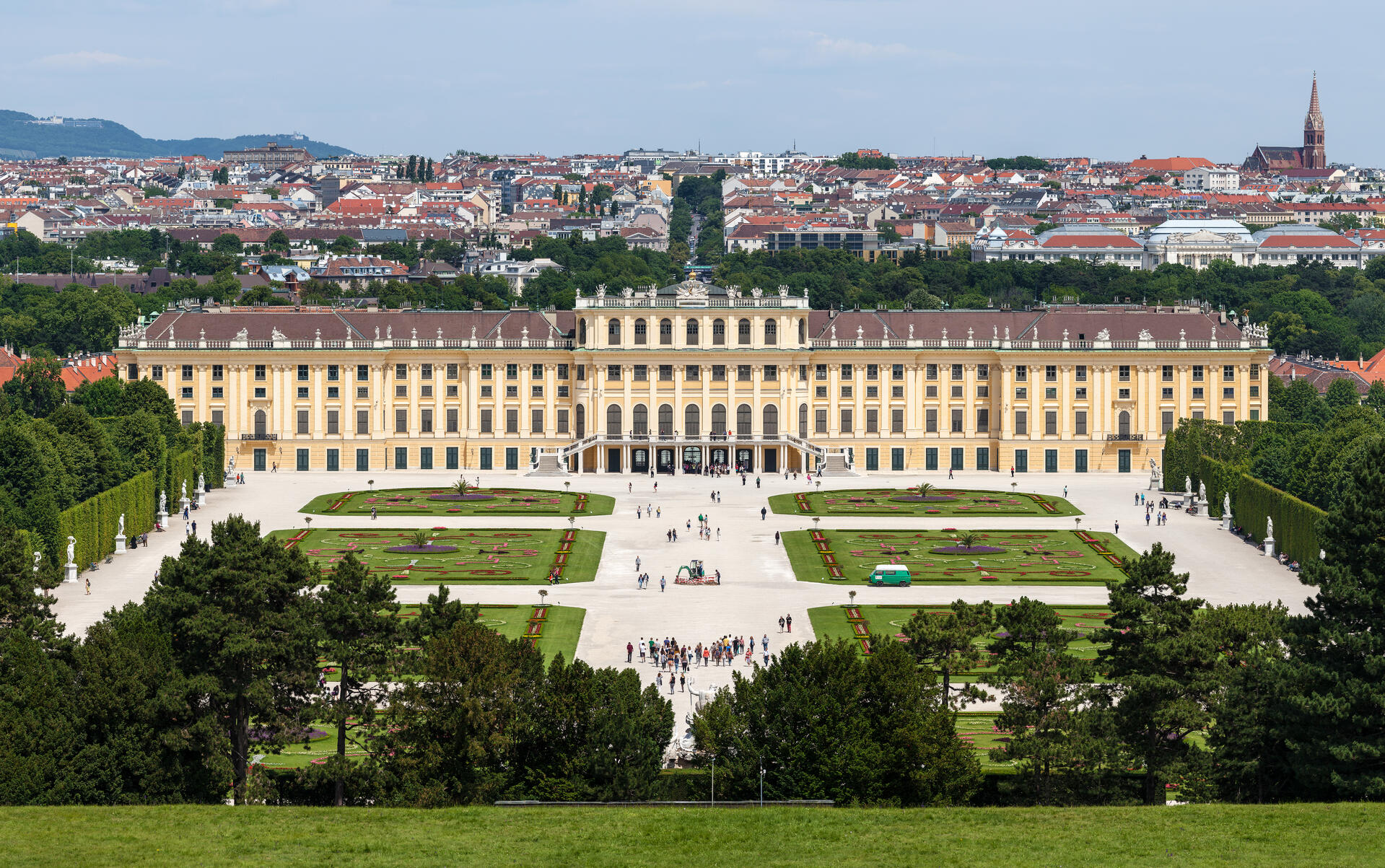
Image of Palace and Gardens of Schönbrunn

© Thomas Wolf, www.foto-tw.de, CC BY-SA 3.0 de Resized from original. (This derivative is under the same CC BY-SA license.)

About World Heritage Explorer

World Heritage Explorer is an independent educational project designed to uncover and share the richness of our world’s cultural and natural heritage. Dive into detailed site profiles, immersive imagery, interactive maps, and tools that help you explore UNESCO World Heritage Sites across the globe. Drawing extensively on open data sources, the project delivers authoritative, well-structured information for learners, educators, travelers, and younger explorers alike.

Learn more about the project

Nearby World Heritage Sites

Historic Centre of Vienna
5 km — Austria
Frontiers of the Roman Empire – The Danube Limes (Western Segment)
41 km — Austria, Germany, Slovakia
Fertö / Neusiedlersee Cultural Landscape
60 km — Austria, Hungary
Wachau Cultural Landscape
68 km — Austria
Semmering Railway
70 km — Austria
Flag of Austria

Austria and the World Heritage Convention

State Party since: December 18, 1992

Status: Ratification

Mandates to the World Heritage Committee: None

Total of Mandate Years: 0

Total of Mandates: 0

WHC Electoral Group: I (Western Europe/North America)

Learn more about Austria

Weather at the World Heritage Site

Last updated: July 10, 2026

Portions of the page Palace and Gardens of Schönbrunn are based on data from UNESCO — World Heritage List Dataset and on text from the Wikipedia article Schönbrunn Palace, licensed under CC BY-SA 4.0. Changes made. Additional original content by World Heritage Explorer (WHE), licensed under CC BY-SA 4.0. WHE is not affiliated with UNESCO or the World Heritage Committee. Legal Notice. Privacy Policy.

Open Data for an Open World