World Heritage Identification Number: 1201
World Heritage since: 2025
Category: Cultural Heritage
WHE Type: Cultural Landscapes
Transboundary Heritage: No
Endangered Heritage: No
Country: 🇲🇼 Malawi
Continent: Africa
UNESCO World Region: Africa
Map
Sacred Mountain Mulanje: A Unique Cultural Landscape in Southern Malawi
The Mount Mulanje Cultural Landscape, inscribed as a UNESCO World Heritage Site in 2025, offers a remarkable blend of natural beauty, rich cultural heritage, and spiritual significance. Situated in the southeastern region of Malawi, this property encompasses the majestic Mount Mulanje, one of the world's largest inselbergs, and its surrounding environment.
More to come…UNESCO Description of the World Heritage Site
This property encompasses the mountain range located in southern Malawi, with the imposing Mount Mulanje—one of the world’s largest inselbergs—and its surrounding environment. Revered as a sacred place inhabited by gods, spirits, and ancestors, it holds deep cultural and spiritual significance. The mountain’s geological and hydrological features are connected with the belief systems and cultural practices of the Yao, Mang’anja, and Lhomwe peoples. These communities have sustained the mountain’s sacredness through rituals and traditions, making the site a sacred cultural landscape that reflects the spiritual and ecological harmony between people and nature.
UNESCO Justification of the World Heritage Site
Criterion (iii): Mount Mulanje Cultural Landscape reflects the spiritual meanings that the local communities attach to their physical environment, which render it a sacred space protected and sustained through living traditions that constitute an exceptional example of a traditional management system anchored in African cosmologies. The system, enforced through traditional custodianship based on the knowledge-practice-belief nexus, has ensured continuous use of the property and preservation of its symbolic and cosmological significance. The system provides codified and regulated protocols that inform the sustainable use and management of natural and cultural resources, sustained by a wider frame of religious beliefs that define the roles and obligations and regulate behaviours of the community members.
Criterion (vi): The varied natural features within Mount Mulanje Cultural Landscape, such as geomorphological forms, water sources, and biodiversity, as well as natural phenomena affecting the place, embody elements of the spiritual world of the property, inhabited by gods, spirits, and the ancestors. These spiritual associations, which make the property a sacred space, are sustained through the traditional practices of the Yao, Mang’anja and Lhomwe communities. The spiritual power of Mount Mulanje and its surrounding landscape is recognised and renowned beyond the borders of Malawi, as a place that gives life and provides healing. The cultural understanding of this place and the relationship of the people to the mountain are shaped by the close interaction of traditional beliefs with the physical environment and natural phenomena. The mountain and the beliefs about it are inseparable, making the cultural landscape a repository of the intangible cultural heritage of local communities.
Encyclopedia Record: Mulanje Massif
The Mulanje Massif, also known as Mount Mulanje, is a large inselberg and World Heritage Site in southern Malawi. Sapitwa Peak, the highest point on the massif at 3,002 m, is the highest point in Malawi. It lies 65 km east of Blantyre, rising sharply from the surrounding plains of Phalombe and the Mulanje district. It forms part of a proposed ecoregion, to be called the South East Africa Montane Archipelago (SEAMA).Additional Site Details
Area: 89,549 hectares
Number of Components: 1
(vi) — Directly associated with events or living traditions
Coordinates: -15.9116666667 , 35.6580555556
Image
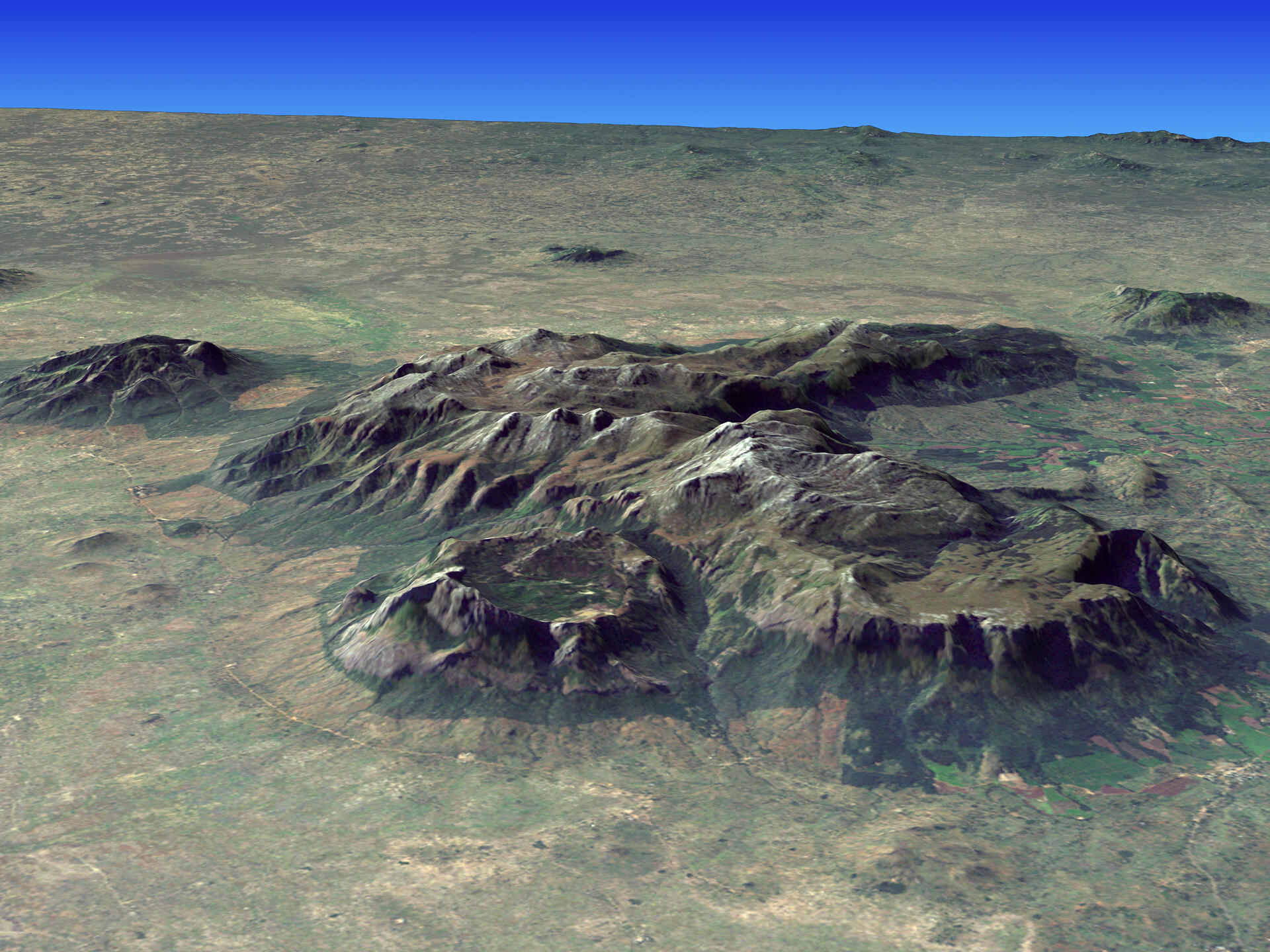
Jesse Allen, NASA Earth Observatory, using Landsat data and SRTM data courtesy of the University of Maryland’s Global Land Cover Facility, Public domain
World Heritage Research
Discover scientific research and academic studies that deepen our understanding of Mount Mulanje Cultural Landscape from its history and significance to its conservation, management, and contemporary challenges.
-
Learning from the Ground Up: Community Energy Stories from Malawi
Community engagement and realistic expectation-setting are key to the success of electrification projects, as demonstrated by two case studies from Malawi. The Mulanje Electricity Generation Agency Ltd (MEGA), covering over 2000 households in the Mulanje Massif, highlights how conservation concerns can drive sustainable energy development when community involvement is prioritized. Meanwhile, the Chipopoma Power Project, serving 120 households in Manchewe, showcases the potential of harnessing local knowledge and heterogeneous technologies to build and sustain small-scale energy solutions. Both projects underscore the importance of learning from on-the-ground experiences to shape effective, community-driven energy transitions.
Kadziponye, A., & Sailence, J. (2024). Learning from the Ground Up: Community Energy Stories from Malawi. Community Energy and Sustainable Energy Transitions, 221–241. https://doi.org/10.1007/978-3-031-57938-7_10
View Publication Record | Read Publication -
Local Stakeholder Perspectives on Mining Development in the Mount Mulanje Cultural Landscape, Malawi
Most local stakeholders and other participants in the Mount Mulanje Cultural Landscape, Malawi, are aware of the importance of preserving both cultural and natural features within the landscape. The study highlights that stakeholder identification is crucial before implementing any development project, particularly mining initiatives, to ensure effective conservation and management. A participatory ethnographic approach was used to gather stakeholders' views on mining development and heritage conservation, revealing their perceptions and involvement in decision-making processes.
(Ed.). (2020). Local Stakeholder Perspectives on Mining Development in the Mount Mulanje Cultural Landscape, Malawi. Journal of African Cultural Heritage Studies, 2(1). CLOCKSS. https://doi.org/10.22599/jachs.46
View Publication Record | Read Publication -
Re-assessment of the conservation status of Malawi’s ‘Endangered’ Yellow-throated Apalis Apalis flavigularis
A re-assessment of the globally 'Endangered' Yellow-throated Apalis (Apalis flavigularis), the only bird endemic to Malawi, suggests its population on Mount Mulanje may approach or exceed 10,000 individuals—a figure previously considered the most optimistic global estimate. This finding challenges earlier conservation assessments and highlights the species' resilience in fragmented forest patches as small as 0.01 hectares, particularly along forest edges. Researchers surveyed 41 forest patches during the breeding season, noting a positive correlation between the bird's presence and the invasive Himalayan yellow raspberry (Rubus ellipticus), potentially due to its role in structuring canopy architecture and understorey layers. Conservative estimates indicate at least 7,900 individuals inhabit cedar forests alone on Mount Mulanje, with densities in other native forests suggesting an even higher total population. The study underscores the need for targeted conservation efforts to address threats from illegal logging and uncontrolled fires, which exacerbate invasive species proliferation.
MZUMARA, T. I., HOCKEY, P. A. R., & RIDLEY, A. R. (2011). Re-assessment of the conservation status of Malawi’s ‘Endangered’ Yellow-throated Apalis Apalis flavigularis. Bird Conservation International, 22(2), 184–192. https://doi.org/10.1017/s0959270911000335
View Publication Record | Read Publication