World Heritage Identification Number: 476
World Heritage since: 2006
Category: Cultural Heritage
WHE Type: Archaeological Sites
Transboundary Heritage: No
Endangered Heritage: No
Country: 🇲🇼 Malawi
Continent: Africa
UNESCO World Region: Africa
Map
Exploring the Rich Legacy of Chongoni Rock-Art Area: A Unique Cultural Treasure in Central Africa
The Chongoni Rock-Art Area, inscribed as a UNESCO World Heritage Site in 2006, stands out as a remarkable testament to human history and creativity in Central Africa. This unique region, situated amidst a cluster of verdant granite hills on the Malawi plateau, spans an area of approximately 126.4 square kilometers.
More to come…UNESCO Description of the World Heritage Site
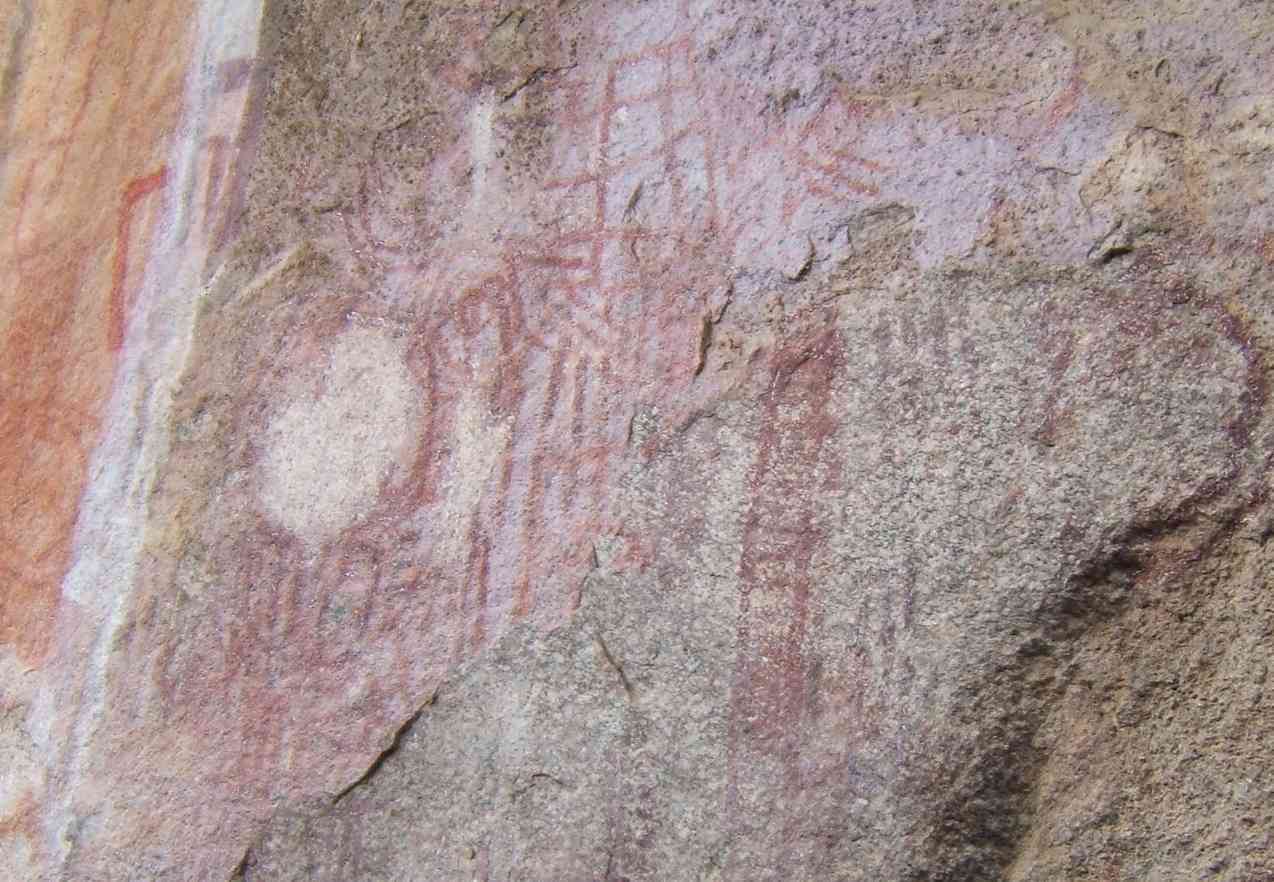
Situated within a cluster of forested granite hills and covering an area of 126.4 km2, high up the plateau of central Malawi, the 127 sites of this area feature the richest concentration of rock art in Central Africa. They reflect the comparatively scarce tradition of farmer rock art, as well as paintings by BaTwa hunter-gatherers who inhabited the area from the late Stone Age. The Chewa agriculturalists, whose ancestors lived there from the late Iron Age, practised rock painting until well into the 20th century. The symbols in the rock art, which are strongly associated with women, still have cultural relevance amongst the Chewa, and the sites are actively associated with ceremonies and rituals.
UNESCO Justification of the World Heritage Site
Criterion (iii): The dense and extensive collection of rock art shelters reflects a remarkable persistence of cultural traditions over many centuries, connected to the role of rock art in women's initiations, in rain making and in funeral rites, particularly in the Chewa agricultural society.
Criterion (vi): The strong association between the rock art images and contemporary traditions of initiation and of the Nyau secret society, and the extensive evidence for those traditions within the painted images over many centuries, together make the Chongoni landscape a powerful force in Chewa society and a significant place for the whole of southern Africa.
Encyclopedia Record: Chongoni Rock Art Area
The Chongoni Rock Art Area is a region containing 127 rock art and painting sites depicting the farmer community of the Late Stone Age and Iron Age, located in the forested hills of the Malawi plateau in the Central Region of Malawi.Additional Site Details
Area: 12,640 hectares
Number of Components: 1
(vi) — Directly associated with events or living traditions
Coordinates: -14.2185207713 , 34.2070738323
Image
「Malawi」, Public domain
World Heritage Research
Discover scientific research and academic studies that deepen our understanding of Chongoni Rock-Art Area from its history and significance to its conservation, management, and contemporary challenges.
-
Characterizing the pigments and paints of prehistoric artists
Advanced analytical techniques reveal that prehistoric artists at the Chongoni Rock-Art Area employed sophisticated strategies for sourcing, transforming, and applying pigments. This study shifts focus from mere compositional analysis to understanding technological and socio-cultural practices behind pigment procurement and use. By examining colors, raw materials, binders, and recipes, researchers uncover nuanced insights into the artistic and cultural evolution of prehistoric societies over time and space.
Domingo, I., & Chieli, A. (2021). Characterizing the pigments and paints of prehistoric artists. Archaeological and Anthropological Sciences, 13(11). https://doi.org/10.1007/s12520-021-01397-y
View Publication Record | Read Publication -
‘I Have Done Hundreds of Rock Paintings’: On the Ongoing Rock Art Tradition among Samburu, Northern Kenya
A vibrant rock art tradition among the Samburu warriors (lmurran) in northern Kenya persists as a dynamic, intergenerational visual culture. Fieldwork revealed that these warriors, aged 15–30 and living away from villages while herding cattle, create rock paintings primarily for leisure during camping stays, often alongside food preparation. The artwork predominantly features domestic animals, humans of both genders, and occasionally wild animals like elephants and rhinos. While not tied to rituals or ceremonies, the tradition evolves with each generation, incorporating new elements such as written names and letters. This ongoing practice serves as a visual medium for transmitting and reinforcing a shared warrior identity across generations, blending continuity with innovation.
Goldhahn, J., Labarakwe, S. L., Skoglund, P., & Westergren, E. (2020). ‘I Have Done Hundreds of Rock Paintings’: On the Ongoing Rock Art Tradition among Samburu, Northern Kenya. Cambridge Archaeological Journal, 31(2), 229–246. https://doi.org/10.1017/s095977432000044x
View Publication Record | Read Publication