World Heritage Identification Number: 1223
World Heritage since: 2008
Category: Cultural Heritage
WHE Type: Historic Cities & Urban Areas
Transboundary Heritage: No
Endangered Heritage: No
Country: 🇲🇾 Malaysia
Continent: Asia
UNESCO World Region: Asia and the Pacific
Map
The Historical Significance of Melaka and George Town, Historic Cities of the Straits of Malacca
The designation of Melaka and George Town, Historic Cities of the Straits of Malacca, as a UNESCO World Heritage Site in 2008 recognizes their exceptional historical and cultural value. These two Malaysian cities, located on opposite sides of the Straits of Malacca, have been significant centers of trade and cultural exchange for over five centuries.
More to come…UNESCO Description of the World Heritage Site
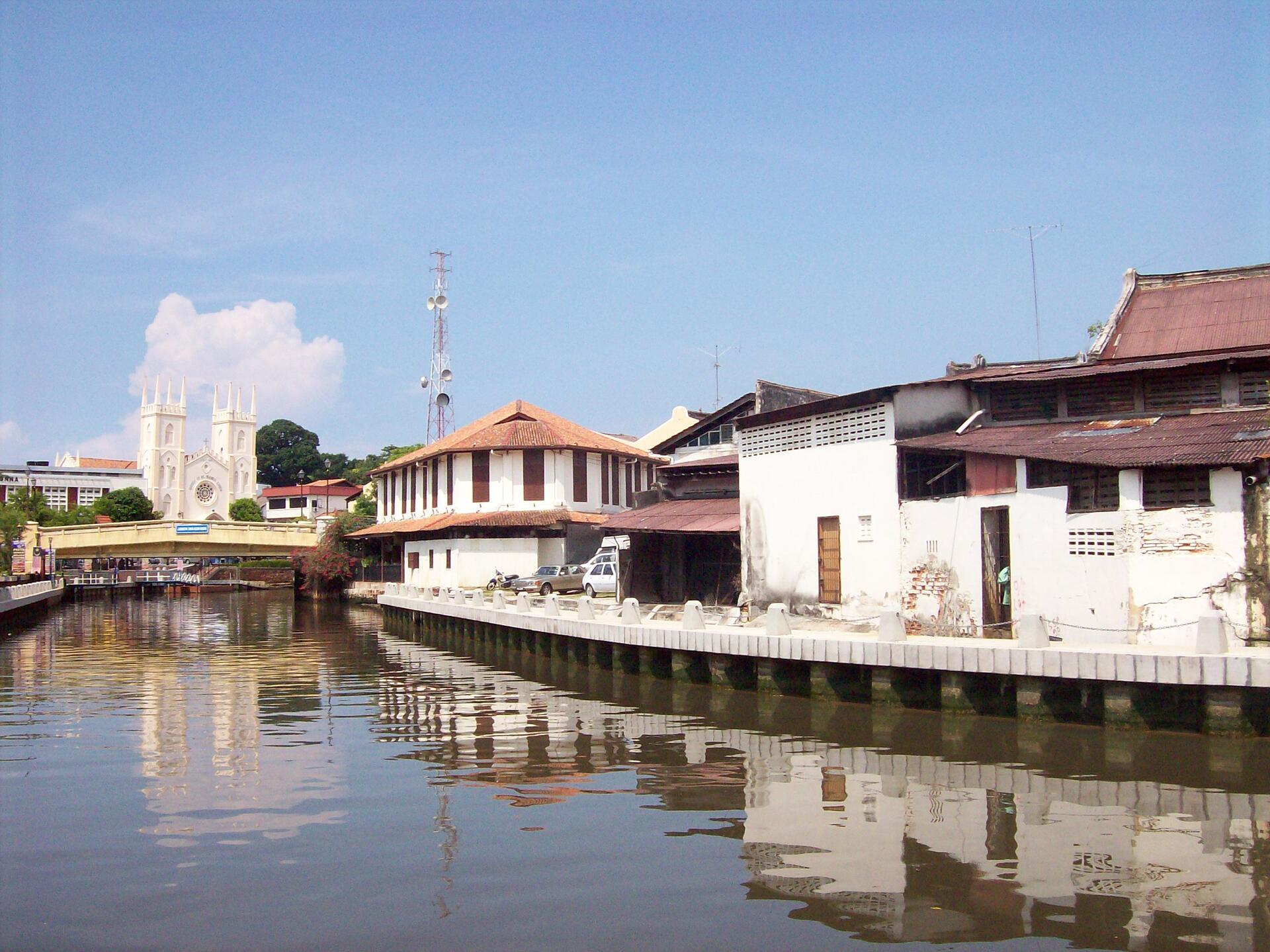
Melaka and George Town, historic cities of the Straits of Malacca have developed over 500 years of trading and cultural exchanges between East and West in the Straits of Malacca. The influences of Asia and Europe have endowed the towns with a specific multicultural heritage that is both tangible and intangible. With its government buildings, churches, squares and fortifications, Melaka demonstrates the early stages of this history originating in the 15th-century Malay sultanate and the Portuguese and Dutch periods beginning in the early 16th century. Featuring residential and commercial buildings, George Town represents the British era from the end of the 18th century. The two towns constitute a unique architectural and cultural townscape without parallel anywhere in East and Southeast Asia.
UNESCO Justification of the World Heritage Site
Criterion (ii): Melaka and George Town represent exceptional examples of multi-cultural trading towns in East and Southeast Asia, forged from the mercantile and exchanges of Malay, Chinese, and Indian cultures and three successive European colonial powers for almost 500 years, each with its imprints on the architecture and urban form, technology and monumental art. Both towns show different stages of development and the successive changes over a long span of time and are thus complementary.
Criterion (iii): Melaka and George Town are living testimony to the multi-cultural heritage and tradition of Asia, and European colonial influences. This multi-cultural tangible and intangible heritage is expressed in the great variety of religious buildings of different faiths, ethnic quarters, the many languages, worship and religious festivals, dances, costumes, art and music, food, and daily life.
Criterion (iv): Melaka and George Town reflect a mixture of influences which have created a unique architec¬ture, culture and townscape without parallel anywhere in East and South Asia. In particular, they demonstrate an exceptional range of shophouses and townhouses. These buildings show many different types and stages of development of the building type, some originating in the Dutch or Portuguese periods.
Encyclopedia Record: Historic Cities of the Straits of Malacca
Melaka and George Town, Historic Cities of the Straits of Malacca is a UNESCO World Heritage listing comprising the historic urban centres of two cities, Melaka and George Town, that illustrate 500 years of cultural and trade exchange between East and West.Additional Site Details
Area: 154.68 hectares
Number of Components: 2
(iii) — Unique or exceptional testimony to a cultural tradition
(iv) — Outstanding example of a type of building or landscape
Coordinates: 5.4213888889 , 100.3458333333
World Heritage Research
Discover scientific research and academic studies that deepen our understanding of Melaka and George Town, Historic Cities of the Straits of Malacca from its history and significance to its conservation, management, and contemporary challenges.
-
Adaptive Reuse of Penang Shophouses in George Town, Malaysia: an Overview
Adaptive reuse of Penang shophouses in George Town, Malaysia, offers a pathway to reconstructing shared memory and fostering a multicultural urban identity. The study highlights that current heritage management, while structured by formal conservation policies like the 2005 National Heritage Act and the 2016 George Town Special Area Plan, remains top-down and lacks community participation. Architectural practices often prioritize modernization over cultural continuity, leading to adaptive reuse projects driven primarily by tourism and gentrification. To address this, integrating postcolonial and decolonial frameworks—such as Bhabha’s spatial practices and Fritz and Krasny’s critical care—can reframe adaptive reuse as a tool for heritage conservation that transcends mere restoration. The research draws on literature reviews and site observations to outline how colonial legacies and ethnopolitical shifts have shaped fragmented perceptions of built heritage, delaying societal consensus on its role in national identity.
Chow, Y. X. (2026). Adaptive Reuse of Penang Shophouses in George Town, Malaysia: an Overview. Proceedings of the International Conference on Adaptive Reuse. Volume 1, 220–226. https://doi.org/10.65686/aekl9744
View Publication Record | Read Publication -
Living on Display: Negotiating Gentrification and Cultural Resilience in Chew Jetty, George Town, Malaysia
Residents of Chew Jetty, a historic clan settlement within George Town's UNESCO World Heritage Site, exhibit 'negotiated resilience' to counter commercial gentrification without erasing cultural heritage. This phenomenon challenges the notion that economic opportunism leads to cultural displacement, instead showing how communities adapt through spatial regulation and ritual bifurcation. The study highlights resident agency as crucial for sustainable heritage conservation, contrasting with traditional facade-oriented planning frameworks. Qualitative case studies, representing a significant majority of the population, reveal 'commercial gentrification from below,' driven by economic incentives but mitigated by community-led strategies to preserve intangible heritage.
Hin, C. C., & Mabahwi, N. A. (2026). LIVING ON DISPLAY: NEGOTIATING GENTRIFICATION AND CULTURAL RESILIENCE IN CHEW JETTY, GEORGE TOWN, MALAYSIA. Planning Malaysia, 24. https://doi.org/10.21837/pm.v24i43.2099
View Publication Record | Read Publication -
“Guess I’m Next to be Erased”: street art, heritage and gentrification in George Town, Malaysia
Street art in George Town, Malaysia, has significantly contributed to gentrification and urban renewal since 2012. This study reveals that while street art revitalizes previously secluded spaces like back lanes and alleys, it also attracts middle-class tourists, sidelining traditional space uses. Using Chang's (2016) concept of 'gentrification aesthetics,' the research examines how street art serves government efforts to boost tourism revenues in this UNESCO World Heritage City. The findings underscore the need for careful cultivation and regulation of street art to align its diverse meanings with desired urban outcomes, particularly in multicultural historic centers like George Town.
Connolly, C. (2025). “Guess I’m Next to be Erased”: street art, heritage and gentrification in George Town, Malaysia. Urban Geography, 46(10), 2302–2319. https://doi.org/10.1080/02723638.2025.2524635
View Publication Record | Read Publication -
The Impact of Tangible Heritage towards Historic Building Usages in the George Town UNESCO World Heritage Site in Penang, Malaysia
Tangible heritage treasures in George Town, Malaysia, function as specialized markets with significant economic value, serving as both monetary assets and indicators of living cultural heritage. This dual role generates positive financial impacts for historical buildings but also introduces challenges like gentrification, which displaces long-standing residents. The study highlights the need for adaptive reuse and ongoing maintenance to sustain these assets while addressing issues such as displacement and the long-term viability of sustainable enterprises. Qualitative data from local and international traders were analyzed using a framework approach, revealing perspectives that offer constructive suggestions for heritage conservation in light of challenges like those posed by Covid-19.
Yun, O. H., & Marzuki, A. (2025). THE IMPACT OF TANGIBLE HERITAGE TOWARDS HISTORIC BUILDING USAGES IN THE GEORGE TOWN UNESCO WORLD HERITAGE SITE IN PENANG, MALAYSIA. Planning Malaysia, 23. https://doi.org/10.21837/pm.v23i38.1848
View Publication Record | Read Publication -
Using a Space Syntax Approach to Enhance Pedestrians’ Accessibility and Safety in the Historic City of George Town, Penang
A space syntax analysis of George Town, Penangreveals critical structural inefficiencies in its pedestrian network, including poor connectivity, suboptimal integration, and safety hazards such as limited zebra crossings. The study identifies concentrated pedestrian flows along two-way roads and inadequate access to key attractions, exacerbated by the unique 'five-foot way' shophouse design adapted to Malaysia's climate. Using space syntax indicators like intelligibility and choice, researchers propose targeted interventions, including strategic infrastructure upgrades and zebra-crossing installations, to enhance accessibility and safety in this historic urban landscape. This approach offers a novel method for optimizing pedestrian environments in Southeast Asian heritage cities.
Fan, M., Hedayati Marzbali, M., Abdullah, A., & Maghsoodi Tilaki, M. J. (2024). Using a Space Syntax Approach to Enhance Pedestrians’ Accessibility and Safety in the Historic City of George Town, Penang. Urban Science, 8(1), 6. https://doi.org/10.3390/urbansci8010006
View Publication Record | Read Publication -
Cultural heritage safeguarding through social entrepreneurship: a case study analysis in George Town UNESCO World heritage site, Malaysia
Social entrepreneurship emerges as a viable mechanism for safeguarding cultural heritage, demonstrated through a case study of George Town. The research highlights that entities embodying social entrepreneurship orientation—whether legally registered or informal—can effectively contribute to heritage preservation by aligning their initiatives with sustainable development goals. Using a qualitative approach and the theory of change framework, the study dissects the processes, challenges, and impacts of these efforts, focusing on inputs, activities, outputs, outcomes, and long-term effects. Key findings underscore the potential for social entrepreneurship to foster sustainable cities (SDG 11) while addressing complex heritage safeguarding needs.
Law, J., Ong, J. W., & Aziz, K. Ab. (2024). Cultural heritage safeguarding through social entrepreneurship: a case study analysis in George Town UNESCO World heritage site, Malaysia. Cogent Business & Management, 11(1). https://doi.org/10.1080/23311975.2024.2347964
View Publication Record | Read Publication -
The big state in touristification: a look into tourist perceptions on placemaking and authenticity in Melaka and George Town, Malaysia
Tourist perceptions of authenticity in UNESCO World Heritage Sites are shaped by geographic origin and the degree of state involvement in placemaking. A study comparing Melaka and George Town, Malaysia—both part of the Historic Cities of the Straits of Malacca—revealed that domestic tourists more readily accept state-led heritage reconstruction, while foreign tourists associate it with intense commodification. The research used visual elicitation methods, including photographs and videos, to analyze semi-structured interviews focused on two key attractions: Melaka River Cruise and George Town's Little India Improvements District. This approach highlighted how contrasting touristification strategies—neo-liberal-driven and participatory in George Town versus state-dominated in Melaka—influence perceptions of authenticity.
Wee, V. E. l., & Katahenggam, N. (2024). The big state in touristification: a look into tourist perceptions on placemaking and authenticity in Melaka and George Town, Malaysia. International Journal of Leisure and Tourism Marketing, 8(2). https://doi.org/10.1504/ijltm.2024.10065394
View Publication Record | Read Publication