World Heritage Identification Number: 1734
World Heritage since: 2025
Category: Cultural Heritage
WHE Type: Natural Landscapes & Geographic Features
Transboundary Heritage: No
Endangered Heritage: No
Country: 🇲🇾 Malaysia
Continent: Asia
UNESCO World Region: Asia and the Pacific
Map
A Pioneering Effort in Tropical Rainforest Restoration: Forest Research Institute Malaysia Forest Park Selangor
The Forest Research Institute Malaysia Forest Park Selangor, inscribed as a UNESCO World Heritage Site in 2025, stands as a testament to human ingenuity and dedication towards environmental sustainability. Situated approximately 16 kilometers northwest of Kuala Lumpur, this unique human-made tropical rainforest was established on degraded tin-mining land dating back to the 1920s.
More to come…UNESCO Description of the World Heritage Site
Located 16 km northwest of Kuala Lumpur, the property is a human-made tropical rainforest established on degraded tin-mining land from the 1920s. It includes scientific, residential, and service buildings, water bodies, and trails. The site represents a pioneering reforestation effort, successfully transforming barren land into a mature lowland tropical forest, showcasing early ecological restoration and sustainable land rehabilitation practices.
UNESCO Justification of the World Heritage Site
Criterion (iv): Forest Research Institute Malaysia Forest Park Selangor is an outstanding example of a designed forested landscape, historically and tangibly testifying to the efforts of large-scale environmental rehabilitation at the beginning of the 20th century. It remarkably illustrates a period in human history when scientific methods were applied to remedy the devastating impacts of mining, when ecological concerns were beginning to emerge. This effort marks an important scientific stage in forestry where the Forest Research Institute Malaysia Forest Park Selangor represents an early successful tropical large-scale scientific transformation from a severe deforestation stage to a mature biodiversity-rich forest restoration stage in 100 years.
Encyclopedia Record: Forest Research Institute Malaysia
The Forest Research Institute Malaysia is a statutory agency of the Government of Malaysia, under the Natural Resources and Environmental Sustainability (NRES). It is a UNESCO World Heritage Site that promotes sustainable management and optimal use of forest resources in Malaysia by generating knowledge and technology through research, development and application in tropical forestry. FRIM is located in Kepong, near Kuala Lumpur.Additional Site Details
Area: 589 hectares
Number of Components: 1
Coordinates: 3.22925 , 101.6272777778
Image
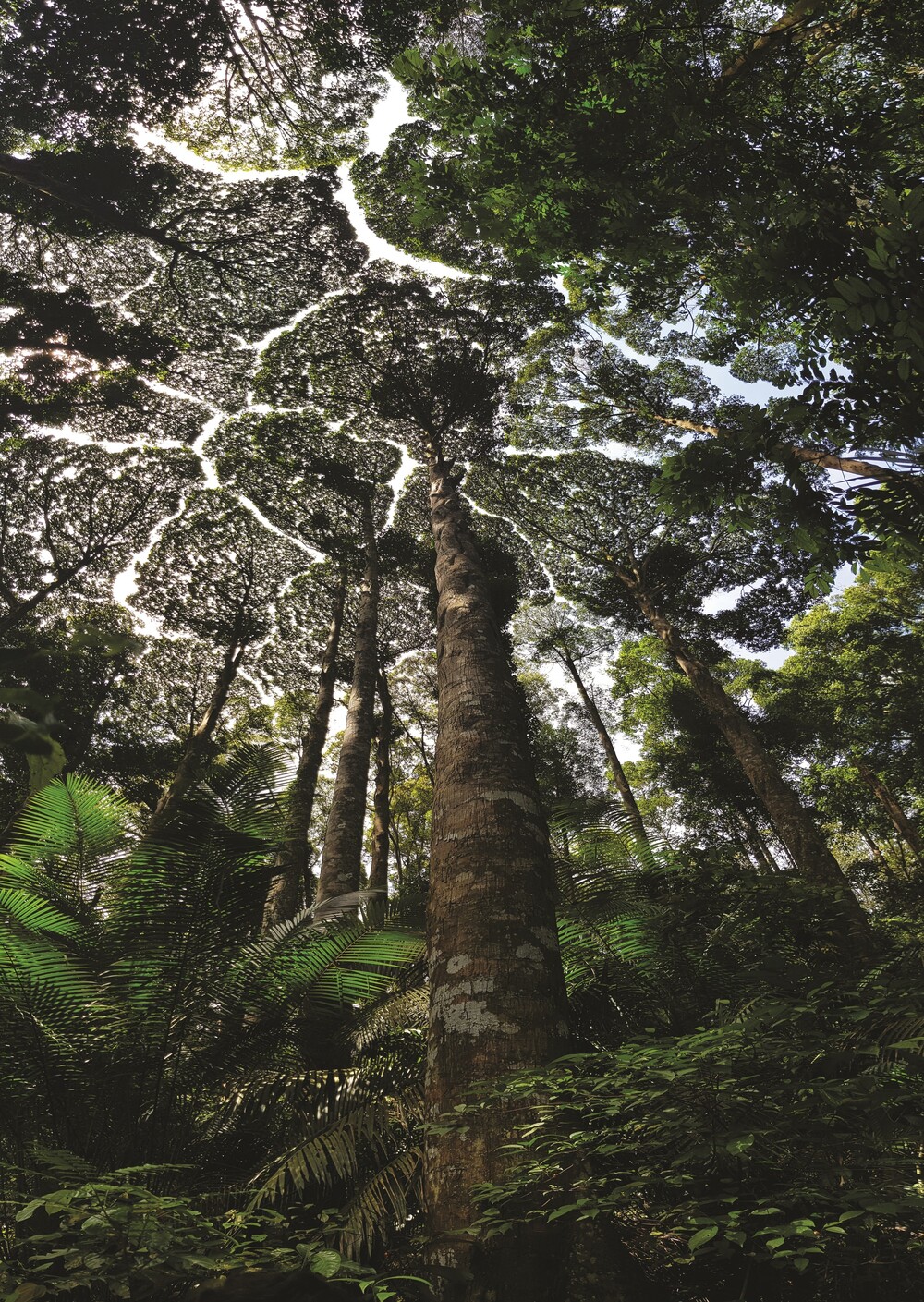
© FRIM. Used with permission.
World Heritage Research
Discover scientific research and academic studies that deepen our understanding of Forest Research Institute Malaysia Forest Park Selangor from its history and significance to its conservation, management, and contemporary challenges.
-
Community structure and diversity of tree species in a lowland dipterocarp forest of Sungai Lalang Forest Reserve, Selangor, Malaysia
Lowland dipterocarp forests, vital for carbon storage and biodiversity, face growing threats from logging and land conversion. A study in Sungai Lalang Forest Reserve (SLFR), Selangor, Malaysia, reveals significant carbon storage potential—304.86 t/ha—while highlighting uneven species distribution and the presence of seven threatened tree species, including critically endangered Hopea auriculata and Palaquium burckii. The research, using ten 3-hectare plots to enumerate trees with diameters ≥5 cm, found Fabaceae as the most diverse family and Elateriospermum tapos (Euphorbiaceae) as dominant. Moderate diversity and low evenness suggest conservation challenges, but SLFR emerges as a critical refuge for endangered taxa. Urgent management strategies—such as stricter recreational activity regulation, enrichment planting, and threatened species protection—are recommended to balance biodiversity conservation with climate mitigation, aligning with Sustainable Development Goal 15.
PARDI, F., RAMBEY, R., & RUZIMAN, H. H. (2026). Community structure and diversity of tree species in a lowland dipterocarp forest of Sungai Lalang Forest Reserve, Selangor, Malaysia. Biodiversitas Journal of Biological Diversity, 27(1). https://doi.org/10.13057/biodiv/d270107
View Publication Record | Read Publication -
Freshwater fish diversity and assemblage patterns in reforested streams of the Forest Research Institute Malaysia
A study of reforested streams within the Forest Research Institute Malaysia revealed that urban forest landscapes can support diverse freshwater fish assemblages, with species composition and ecological stability varying significantly among streams. The conservation-buffered stream exhibited the highest diversity (H′=1.582), while a recreationally impacted stream showed lower evenness and dominance by opportunistic species. Environmental factors, including water quality and habitat complexity, played a limited but notable role in shaping assemblage structure. These findings underscore the potential for urban forests to contribute to biodiversity conservation, even amid human influence.
Adzhar, S. N. A., Munian, K., Mazian, M. A., Aqmal-Naser, M., & Azmir, I. A. (2026). Freshwater fish diversity and assemblage patterns in reforested streams of the Forest Research Institute Malaysia. Aquaculture, Aquarium, Conservation & Legislation, 19(4), 1993. https://doi.org/10.67784/0001
View Publication Record | Read Publication -
Unveiling the Diversity and Ecological Roles of Macrofungi in Ayer Hitam Forest Reserve, Selangor, Malaysia
Ayer Hitam Forest Reserve, Malaysia, hosts a diverse array of macrofungi, with Basidiomycota being the dominant phylum. The study identified 27 species from 14 families, predominantly saprophytic (81.5%), alongside mycorrhizal and parasitic fungi. Polyporales emerged as the most abundant order, contributing significantly to the forest's fungal diversity. This research highlights the ecological significance of macrofungi in tropical lowland dipterocarp forests, offering critical insights for conservation efforts amid urbanization pressures. The findings were derived from field surveys and morphological and molecular analyses of 333 sporocarps, emphasizing the influence of substrate richness and microclimates on macrofungal community structure.
Noor Aisyah Mohd Nordin, Zainudin, N. A. I. M., Syazwan, W. M., Aziz, N. A. A., Yusof, M. T., & Ramli, N. S. (2024). Unveiling the Diversity and Ecological Roles of Macrofungi in Ayer Hitam Forest Reserve, Selangor, Malaysia. Malaysian Applied Biology, 53(3), 59–70. https://doi.org/10.55230/mabjournal.v53i3.2996
View Publication Record | Read Publication -
Understorey bird assemblages in selected environmentally sensitive areas (ESA) of Selangor, Peninsular Malaysia
A study reveals significant differences in the diversity, composition, and biomass of understorey bird assemblages among three Environmentally Sensitive Areas (ESA) rank II permanent forest reserves in Selangor, Peninsular Malaysia. The research, conducted using mist-netting surveys across 400 m × 200 m plots, provides baseline data to enhance ESA classification by incorporating biological elements, which are currently lacking in the existing physical attribute-centric framework. Analysis of similarity (ANOSIM) indicated weakly diverged bird assemblages, while SIMPER analysis identified six key species contributing to 60% of the observed differences. This first-of-its-kind insight underscores the critical importance of conserving and preserving small, fragmented ESA forests, particularly in maintaining biodiversity and ecosystem services such as water purification and erosion regulation.
Munian, K., Mahyudin, N. A., & Azman, S. (2023). Understorey bird assemblages in selected environmentally sensitive areas (ESA) of Selangor, Peninsular Malaysia. Biodiversity Data Journal, 11. https://doi.org/10.3897/bdj.11.e95670
View Publication Record | Read Publication -
Estimating the visitor’s willingness to pay towards biodiversity conservation at Kuala Lumpur Forest Eco Park, Malaysia, using the Contingent Valuation Method
Visitors to Kuala Lumpur Forest Eco Park, Malaysia's oldest and most biodiverse urban forest, demonstrate significant willingness to pay (WTP) for biodiversity conservation, with a mean WTP of MYR3.81 per visit and a median of MYR2.58. This finding, derived from a Contingent Valuation Method (CVM) study involving 250 domestic and international tourists, provides critical economic insights to support future conservation funding strategies. Factors such as religion, marital status, income, employment, and education were found to influence WTP, suggesting targeted approaches for maximizing visitor contributions. The study addresses a key gap in biodiversity valuation by quantifying non-market benefits, offering decision-makers a data-driven basis for setting conservation fees that could enhance park sustainability.
MUSA, F., & SHAHRUDIN, I. N. M. (2023). Estimating the visitor’s willingness to pay towards biodiversity conservation at Kuala Lumpur Forest Eco Park, Malaysia, using the Contingent Valuation Method. Biodiversitas Journal of Biological Diversity, 24(7). https://doi.org/10.13057/biodiv/d240705
View Publication Record | Read Publication -
Exploring the relevance of engaging the Orang Asli in Malaysia’s forest management
Engaging the Orang Asli, Malaysia's indigenous forest-dependent communities, in forest management can lead to positive social and environmental outcomes. A study conducted at Kampung Tanjung Rambai in Selangor revealed that these communities maintain a prudent relationship with their land, ensuring sustainable resource use. Their traditional practices also act as small-scale disturbances, contributing to the resilience of the forest ecosystem. The research employed a participant observational approach, involving a month-long stay with the community to observe and analyze their interactions with the forest.
Diansyah, M. W., Abas, A., & Sakawi, Z. (2022). Exploring the relevance of engaging the Orang Asli in Malaysia’s forest management. Frontiers in Forests and Global Change, 5. https://doi.org/10.3389/ffgc.2022.1019994
View Publication Record | Read Publication -
Knowledge, Attitude, and Practices regarding Leptospirosis among Visitors to a Recreational Forest in Malaysia
A cross-sectional study of 300 visitors to Malaysia's Forest Research Institute Forest Park Selangor found that while most had high knowledge and positive attitudes toward leptospirosis, significant gaps remained—particularly regarding transmission routes. The research identified a strong correlation between higher knowledge scores and better prevention practices, highlighting the need for targeted education campaigns in recreational areas to address misconceptions (e.g., 78% incorrectly cited handwashing as a major cause). These insights underscore the importance of precision-focused public health interventions to mitigate leptospirosis risks among high-risk groups.
Shafie, N. J., Abdul Halim, N. S., Nor Zalipah, M., Mohd Amin, N. A. Z., Syed Esa, S. M., Md-Nor, S., Casanovas-Massana, A., Ko, A. I., Palma, F., Neves Souza, F., & Costa, F. (2021). Knowledge, Attitude, and Practices regarding Leptospirosis among Visitors to a Recreational Forest in Malaysia. The American Journal of Tropical Medicine and Hygiene, 104(4), 1290–1296. https://doi.org/10.4269/ajtmh.20-0306
View Publication Record | Read Publication