
World Heritage Identification Number: 97
World Heritage since: 1979
Category: Cultural Heritage
WHE Type: Buildings & Architectural Ensembles
Transboundary Heritage: No
Endangered Heritage: No
Country: 🇭🇷 Croatia
Continent: Europe
UNESCO World Region: Europe and North America
Map
The Historical Complex of Split with the Palace of Diocletian: A Blend of Ancient and Medieval Architecture
The Historical Complex of Split with the Palace of Diocletian, inscribed as a UNESCO World Heritage Site in 1979, offers a unique blend of ancient Roman architecture and medieval structures that have evolved over time. Situated in the heart of Split, Croatia, this complex serves as a testament to the city's rich history and cultural diversity.
More to come…UNESCO Description of the World Heritage Site
The ruins of Diocletian's Palace, built between the late 3rd and the early 4th centuries A.D., can be found throughout the city. The cathedral was built in the Middle Ages, reusing materials from the ancient mausoleum. Twelfth- and 13th-century Romanesque churches, medieval fortifications, 15th-century Gothic palaces and other palaces in Renaissance and Baroque style make up the rest of the protected area.
Encyclopedia Record: Split, Croatia
Split is the second-largest city in Croatia, after the capital Zagreb, situated on the eastern shore of the Adriatic Sea. As the administrative seat of Split-Dalmatia County and the largest city on the Croatian coast, it serves as a key economic, cultural, and transportation hub for the region. Developed around the historic core of Diocletian's Palace and extending across a central peninsula toward its surrounding suburbs and hinterland, Split combines a continuous urban tradition spanning more than seventeen centuries with a contemporary role as one of Croatia's leading tourist destinations. The city itself has a population of over 160,000, while the metropolitan area encompasses approximately 310,000 inhabitants.Additional Site Details
Area: 20.8 hectares
Number of Components: 1
(iii) — Unique or exceptional testimony to a cultural tradition
(iv) — Outstanding example of a type of building or landscape
Coordinates: 43.5088888889 , 16.4391666667
Image
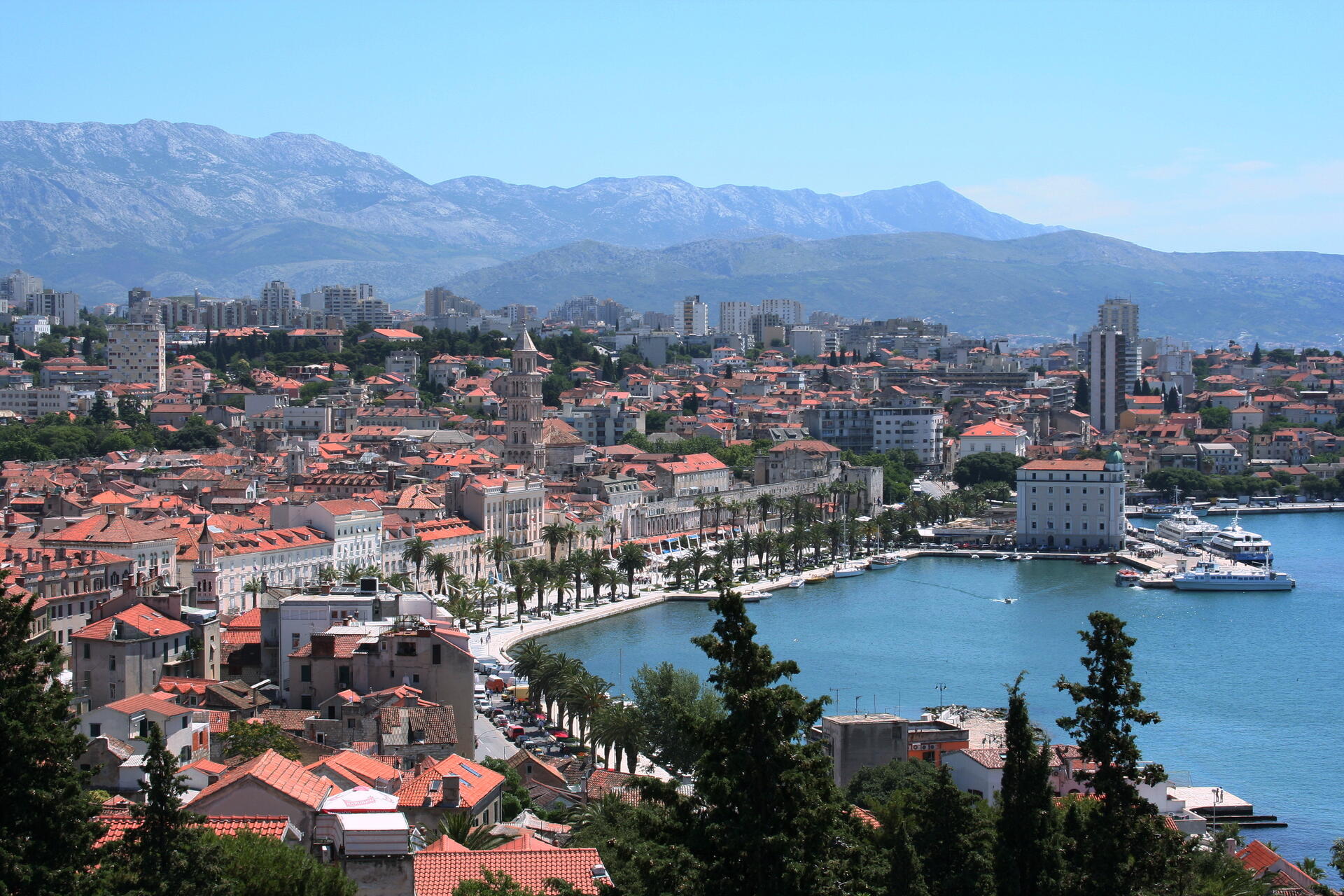
© Tatyana Peshkova, CC BY-SA 4.0 Resized from original. (This derivative is under the same CC BY-SA license.)