
World Heritage Identification Number: 1504
World Heritage since: 2016
Category: Cultural Heritage
WHE Type: Archaeological Sites
Transboundary Heritage: Yes
Endangered Heritage: No
Country: Bosnia and Herzegovina, Croatia, Montenegro, Serbia
Continent: Europe
UNESCO World Region: Europe and North America
Map
Stećci Medieval Tombstone Graveyards: A Unique Cultural Legacy in Southeastern Europe
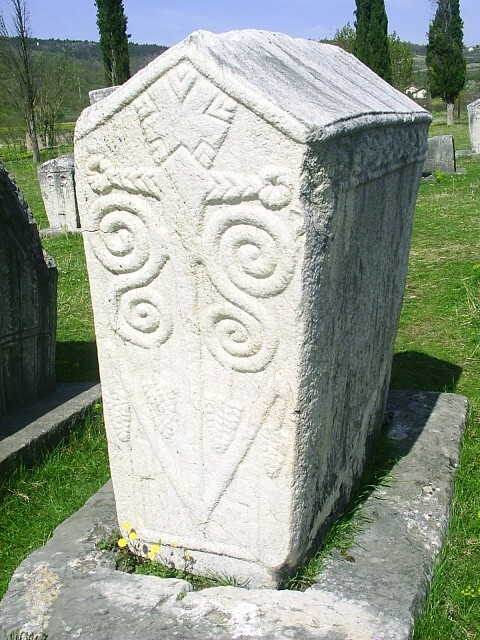
The Stećci Medieval Tombstone Graveyards, inscribed as a UNESCO World Heritage Site in 2016, constitute a remarkable cultural legacy in southeastern Europe. Spanning across Bosnia and Herzegovina, western Serbia, western Montenegro, and central and southern Croatia, this serial property encompasses 28 sites, each featuring regionally distinctive medieval tombstones, or stećci.
More to come…UNESCO Description of the World Heritage Site
This serial property combines 28 sites, located in Bosnia and Herzegovina, western Serbia, western Montenegro and central and southern Croatia, representing these cemeteries and regionally distinctive medieval tombstones, or stećci. The cemeteries, which date from the 12th to 16th centuries CE, are laid out in rows, as was the common custom in Europe from the Middle Ages. The stećci are mostly carved from limestone. They feature a wide range of decorative motifs and inscriptions that represent iconographic continuities within medieval Europe as well as locally distinctive traditions.
UNESCO Justification of the World Heritage Site
Criterion (iii): A remarkable number of stećci, of diversified form, are found in this part of southeast Europe, conveying an exceptional testimony to medieval European artistic and archaeological heritage, with traces of earlier influences (prehistoric, roman and early medieval). The extremely large number of preserved stećci (estimated to be more than 70,000) and variety of their forms (slabs, chests, gabled roof tombstones, pillars and monumental crosses) are well represented. Their reliefs, including decorative, symbolic, and religious motives as well as scenes from everyday life, are an extraordinary testimony of medieval culture. Inscriptions in the selected graveyards offer an exceptional historical resource, and are associated with the cultures and histories of the medieval states in this region.
Criterion (vi): The stećci have been deeply embedded in historical and continual cultural traditions and beliefs and toponyms demonstrate the historical meanings and significance of the stećci. The stećci are associated with local folk and fairy tales, superstitions and customs; and their epigraphy and reliefs have significantly influenced the contemporary literature and other forms of art in all four countries, but also wider in the region.
Encyclopedia Record: Stećak
Stećak is the name for monumental medieval tombstones that lie scattered across Bosnia and Herzegovina, and the border parts of Croatia, Montenegro and Serbia. An estimated 60,000 are found within the borders of modern Bosnia and Herzegovina and the rest of 10,000 are found in what are today Croatia (4,400), Montenegro (3,500), and Serbia (2,100), at more than 3,300 odd sites with over 90% in poor condition. They are cut in a variety of recognizable stećak forms, with a certain percentage being richly decorated and some individual stećci also containing inscriptions in form of epitaphs.Additional Site Details
Area: 49.15 hectares
Number of Components: 28
(vi) — Directly associated with events or living traditions
Coordinates: 43.0922138889 , 17.9240527778
World Heritage Research
Discover scientific research and academic studies that deepen our understanding of Stećci Medieval Tombstone Graveyards from its history and significance to its conservation, management, and contemporary challenges.
-
Bjelojevici Village Near Stolac in Bosnia and Herzegovina
Bjelojevici Village, near Stolac in Bosnia and Herzegovina, stands out for its unique historical and cultural significance, as evidenced by the ancient well Neves ('Greek Well') and an exceptionally rich medieval necropolis of stećak tombstones. The study reveals that this locality has been a continuous hub of human activity, attracting people from diverse ethnic and religious backgrounds—Catholics, Orthodox, and Muslims—who were united by its unique natural environment. Through interviews with current residents and existing literature, the research highlights the village's rich history of settlement and migration, underscoring its importance as a UNESCO World Heritage Site candidate due to its cultural and historical continuity.
Hadrović, A. (2026). Bjelojevici Village Near Stolac in Bosnia and Herzegovina. International Journal of Multidisciplinary Research and Growth Evaluation, 7(4), 278–288. https://doi.org/10.54660/.ijmrge.2026.7.4.278-288
View Publication Record | Read Publication -
Environmental Influences on Stećci Necropolises in Bosnia and Herzegovina: A Spatial Analyses
Stećci, medieval stone tombstones primarily concentrated in Bosnia and Herzegovina, face significant threats from both natural weathering and anthropogenic activities. A spatial analysis reveals that these necropolises are particularly vulnerable to physical deterioration caused by prolonged exposure to sunlight, wind, rain, and snow, which compromises the legibility of inscriptions and the aesthetic quality of decorative motifs. Additionally, historical conflicts, agricultural practices, and reuse as construction materials have further exacerbated their decline. Despite being inscribed on UNESCO's World Heritage List in 2016, stećci remain endangered, underscoring the urgent need for enhanced protective measures. This study employs geospatial analysis using satellite and cartographic data, supported by GIS technologies, to examine the relationship between the spatial distribution of major necropolises and natural factors such as geological substrate, relief, and hydrographic characteristics.
Grmuša, M., Golijanin, J., Šušnjar, S., Lukić Tanović, M., & Ivanović, R. (2026). ENVIRONMENTAL INFLUENCES ON STEĆCI NECROPOLISES IN BOSNIA AND HERZEGOVINA: A SPATIAL ANALYSES. Proceedings 2026, 91–101. https://doi.org/10.18509/gbp2691g
View Publication Record | Read Publication -
Neki problemi terenske obrade i konzervacije stećaka na primjeru nekropola s područja Visokog
A comprehensive survey of stećak medieval tombstone graveyards in Visoko, Bosnia and Herzegovina, conducted over multiple phases from 2016 to 2024, has documented 424 stećaks across 32 necropolises. This work highlights critical challenges in field processing and conservation that significantly impact the accuracy and outcomes of such archaeological research. The study emphasizes the importance of preliminary cleaning and technical documentation as essential steps in preserving these heritage sites while underscoring persistent obstacles that hinder effective conservation efforts.
(Ed.). (2025). Neki problemi terenske obrade i konzervacije stećaka na primjeru nekropola s područja Visokog. Prilozi. https://doi.org/10.51237/issn.2744-1172.2025.54.113
View Publication Record | Read Publication -
Nišan s prikazima životinja iz harema Ali-pašine džamije: pitanje kontinuiteta likovne tradicije srednjeg vijeka u ranom osmanskom periodu / A Gravestone (Nišan) with Animal Motifs in the Graveyard of the Ali-paša Mosque: On the Continuity of Medieval Artistic Tradition in the Early Ottoman Period
A gravestone (nišan) from the Ali-paša Mosque graveyard in Sarajevo, Bosnia and Herzegovina, reveals significant insights into the cultural transition between medieval and early Ottoman periods. This monument, dating to the second half of the 15th century, features animal motifs and serves as a valuable example of funerary sculpture from this era. The nišan, composed of a headstone (bašlık) and footstone (ajaklık), provides evidence for the continuity of medieval artistic traditions in early Ottoman art. The study analyzes this understudied monument to understand its role in bridging these cultural periods, offering new perspectives on the evolution of funerary sculpture in Bosnia.
Dervišević, H., & Mekić, A. (2025). Nišan s prikazima životinja iz harema Ali-pašine džamije: pitanje kontinuiteta likovne tradicije srednjeg vijeka u ranom osmanskom periodu / A Gravestone (Nišan) with Animal Motifs in the Graveyard of the Ali-paša Mosque: On the Continuity of Medieval Artistic Tradition in the Early Ottoman Period. Journal of the Faculty of Philosophy in Sarajevo (History, History of Art, Archeology) / Radovi (Historija, Historija Umjetnosti, Arheologija), ISSN 2303-6974 On-Line, (12), 251–274. https://doi.org/10.46352/23036974.2025.251
View Publication Record | Read Publication -
Digitization of Typographic Cultural Heritage and its Application in Interactive Web Presentation
A digital solution enhances accessibility and engagement with medieval cultural heritage, demonstrating how typographic digitization can bridge gaps between traditional and modern learning. The study focuses on 14th to 16th century 'stećak' tombstone graveyards in Bosnia and Herzegovina, integrating their unique writing system ('Bosančica'), iconography, and relief into an interactive web platform. By leveraging widely available tools, the research creates a visually enriched educational experience that pairs historical context with dynamic digital resources. A custom transliterator further personalizes user interaction by converting Latin script input to 'Bosančica,' offering an innovative approach to cultural preservation and public engagement.
Ramljak, L., Čurić, S., Turčić, M., Hudika, T., Rudolf, M.,. (2024). DIGITIZATION OF TYPOGRAPHIC CULTURAL HERITAGE AND ITS APPLICATION IN INTERACTIVE WEB PRESENTATION. Proceedings - the Twelfth International Symposium GRID 2024. https://doi.org/10.24867/grid-2024-p25
View Publication Record | Read Publication -
Stećky, bogomilský mýtus a nacionalistické naratívy v Bosne a Hercegovine
Stećki, the medieval tombstone graveyards of Bosnia and Herzegovina, challenge long-standing nationalist narratives by revealing their multiconfessional character. This study debunks the 'Bogomil myth,' which falsely links stećki to a heretical sect, showing instead that they represent a shared cultural heritage transcending ethnic and religious boundaries. By comparing historical interpretations with modern research, the analysis exposes how stećki have been weaponized in nationalist discourses since the 19th century, reinforcing territorial claims while overshadowing their broader significance as a symbol of medieval Balkans' diversity.
Mentel, A. (2024). Stećky, bogomilský mýtus a nacionalistické naratívy v Bosne a Hercegovine. Národopisná Revue, 34(4), 59. https://doi.org/10.62800/nr.2024.4.05
View Publication Record | Read Publication -
Srednjovjekovni kameni spomenici u Zemaljskom muzeju Bosne i Hercegovine
A collection of medieval stećak tombstones, housed at the National Museum of Bosnia and Herzegovina, has been cataloged and documented with individual descriptions and photographs. These tombstones, recognized as movable property by the Commission to Preserve National Monuments in 2019, represent a significant cultural heritage. The study provides a historical overview of their development and contributes to the preservation efforts of these unique medieval monuments.
Halilović, Z., & Delalić, A. (2022). Srednjovjekovni kameni spomenici u Zemaljskom muzeju Bosne i Hercegovine. Godišnjak Centra Za Balkanološka Ispitivanja, (50), 107–134. https://doi.org/10.5644/godisnjak.cbi.anubih-50.153
View Publication Record | Read Publication