World Heritage Identification Number: 1305
World Heritage since: 2010
Category: Cultural Heritage
WHE Type: Buildings & Architectural Ensembles
Transboundary Heritage: No
Endangered Heritage: No
Country: 🇨🇳 China
Continent: Asia
UNESCO World Region: Asia and the Pacific
Map
Exploring the Historic Monuments of Dengfeng in the "Centre of Heaven and Earth"
Dengfeng, a county-level city in Henan Province, China, holds a unique place in the country's cultural heritage. Designated as a UNESCO World Heritage Site in 2010, the Historic Monuments of Dengfeng in "The Centre of Heaven and Earth" offer a rich tapestry of architectural, scientific, and religious significance.
More to come…UNESCO Description of the World Heritage Site
Mount Songshang is considered to be the central sacred mountain of China. At the foot of this 1500 metre high mountain, close to the city of Dengfeng in Henan province and spread over a 40 square-kilometre circle, stand eight clusters of buildings and sites, including three Han Que gates - remains of the oldest religious edifices in China -, temples, the Zhougong Sundial Platform and the Dengfeng Observatory. Constructed over the course of nine dynasties, these buildings are reflections of different ways of perceiving the centre of heaven and earth and the power of the mountain as a centre for religious devotion. The historical monuments of Dengfeng include some of the best examples of ancient Chinese buildings devoted to ritual, science, technology and education.
UNESCO Justification of the World Heritage Site
Criterion (iii): The astronomical idea of the centre of heaven and earth is strongly linked with the idea of imperial power, with the propitiousness of establishing capitals at the centre of heaven and earth, and with its natural attribute, Mount Songshan and the ceremonies and ritual associated with it. The serial property reflects the significance of the area in terms of prestige and patronage.
Criterion (vi): The concentration of sacred and secular structures in the Dengfeng area reflects the strong and persistent tradition of the centre of heaven and earth linked to the sacred mountain which sustained imperial sacrifices and patronage over 1500 years and became of outstanding significance in Chinese culture. The Buddhist structures came to have a symbiotic relationship with the sacred mountain.
Encyclopedia Record: Dengfeng
Dengfeng is a county-level city of Henan Province, China. It is under the administration of the prefecture-level city of Zhengzhou. The name Dengfeng was bestowed upon it by Empress Wu Zetian of the Wu Zhou dynasty. Located in the central-west part of Henan Province, at the southern foot of Songshan Mountain, it borders the provincial capital Zhengzhou to the northeast and the ancient capital Luoyang to the northwest.Additional Site Details
Area: 825 hectares
Number of Components: 8
(vi) — Directly associated with events or living traditions
Coordinates: 34.4587472222 , 113.0677194444
Image
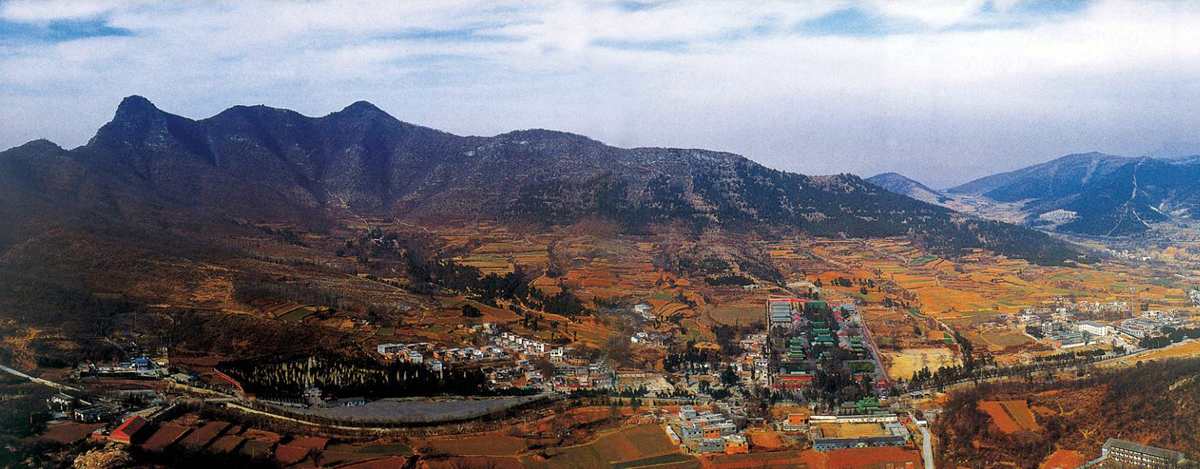
Charlie fong, Public domain
World Heritage Research
Discover scientific research and academic studies that deepen our understanding of Historic Monuments of Dengfeng in “The Centre of Heaven and Earth” from its history and significance to its conservation, management, and contemporary challenges.
-
Interpretation of “The Centre of Heaven and Earth” World Heritage Nomination and the Tensions of Cultural Transmutation: From Ancient Cosmology to Contemporary World Heritage Contestation
Mount Songshan, China’s central sacred mountain and a UNESCO World Heritage Site, embodies the ancient cosmological concept of 'The Centre of Heaven and Earth.' This study reveals that while the site’s World Heritage nomination reflects this cultural significance, it also highlights tensions arising from its evolving interpretations. The research demonstrates the need for a reinforced indigenous narrative to acknowledge the long-term transmutability of culture and its multiple possibilities. By tracing critiques from ancient cosmology to contemporary contestations, the paper offers insights into localized applications of World Heritage theory, emphasizing the dynamic nature of cultural heritage.
JING, C., CONGCONG, H., & SHAOJUN, L. (2026). INTERPRETATION OF “THE CENTRE OF HEAVEN AND EARTH” WORLD HERITAGE NOMINATION AND THE TENSIONS OF CULTURAL TRANSMUTATION: FROM ANCIENT COSMOLOGY TO CONTEMPORARY WORLD HERITAGE CONTESTATION. OOO “Zhurnal “Voprosy Istorii”, 86. https://doi.org/10.31166/voprosyistorii202602statyi10
View Publication Record | Read Publication -
Climate risk assessment of China’s Cultural World Heritage highlights urgent need for adaptation
A comprehensive climate risk assessment of China's UNESCO World Heritage Sites reveals that 82% of the country's cultural heritage properties, including the Historic Monuments of Dengfeng, face increased risk by mid-century under a moderate-emissions scenario. By 2100, over one-third of these sites are projected to shift from low to high or extreme risk, with urban and peri-urban areas particularly vulnerable. Ancient architectural structures like Mount Wutai and the Yungang Grottoes are at immediate risk, emphasizing the urgent need for adaptation strategies to mitigate potential losses and damages. The study integrates expert elicitation with climate projections to provide actionable guidance for site-specific interventions.
Lei, T., Wang, J., Jiang, Y., Sun, S., Simpson, N. P., Pang, X., Shen, B., Wu, Y., Wu, Y., Wang, Q., Huang, G., Zhang, Y., & Jiang, R. (2026). Climate risk assessment of China’s Cultural World Heritage highlights urgent need for adaptation. Npj Heritage Science, 14(1). https://doi.org/10.1038/s40494-026-02512-9
View Publication Record | Read Publication -
From diagnosis to prevention: an integrated approach to conserving the Tang dynasty Fawan Pagoda
An integrated diagnostic approach combining non-destructive testing and finite element modeling revealed the structural stability of the Tang dynasty Fawan Pagoda, despite its 268 mm eastward inclination and material decay. The study demonstrated that the pagoda does not exhibit global instability under assessed loading conditions, providing critical insights for long-term conservation. A preventive conservation framework was proposed, focusing on environmental monitoring, material compatibility research, and pilot maintenance zones to mitigate granular disintegration and joint loss. This case-based workflow offers a model for assessing and conserving comparable historic brick monuments.
Yan, H., Li, Y., Ma, Q., Qiu, B., Liu, C., & Zhu, Y. (2026). From diagnosis to prevention: an integrated approach to conserving the Tang dynasty Fawan Pagoda. Npj Heritage Science. https://doi.org/10.1038/s40494-026-02841-9
View Publication Record | Read Publication -
A Novel Visual Narrative Framework for Tourist Map Design Based on Local Chronicles: A Case Study of the Songshan Scenic Area
A novel visual narrative framework (VNF) for tourist map design, grounded in local chronicles, enhances cultural representation and storytelling. By integrating Todorov’s narrative hierarchy with Roth’s visual storytelling tropes, the VNF maps elements like colors, symbols, and scenes to create artistically rich and meaningful tourist maps. Applied to Songshan Scenic Area, this approach demonstrated its potential to elevate the narrative function and artistic value of maps while preserving local cultural heritage. The framework offers a reference for other historical sites, bridging the gap between cartography and cultural storytelling.
Zhen, W., Huang, S., Tian, Z., & Yang, X. (2024). A Novel Visual Narrative Framework for Tourist Map Design Based on Local Chronicles: A Case Study of the Songshan Scenic Area. ISPRS International Journal of Geo-Information, 13(2), 45. https://doi.org/10.3390/ijgi13020045
View Publication Record | Read Publication -
Analysis of the Spatiotemporal Distribution Characteristics and Influencing Factors of High-Grade Cultural Heritage in the Region Surrounding Mount Song
A pronounced clustering and continuity characterize the spatiotemporal distribution of high-grade cultural heritage around Mount Song, central China's pivotal region. Advanced spatial analysis methods, including Average Nearest Neighbor Ratio and Kernel Density Estimation within ArcGIS, revealed distinct patterns shaped by geographical settings, historical political capitals, cultural and religious influences, water transportation systems, and traditional Fengshan ceremonies. These findings offer critical insights for policymakers and stakeholders, guiding sustainable conservation efforts in this UNESCO World Heritage Site.
Wei, F., Sun, C., & Ma, J. (2024). Analysis of the Spatiotemporal Distribution Characteristics and Influencing Factors of High-Grade Cultural Heritage in the Region Surrounding Mount Song. Buildings, 14(10), 3259. https://doi.org/10.3390/buildings14103259
View Publication Record | Read Publication -
Quantifying the Potential Co-Benefit of Air Quality Improvement on Cultural Heritage in China
Air quality improvements in China have significantly reduced the surface recession rate of limestone heritage structures by 41.4% from 2006 to 2020, bringing more sites into compliance with international conservation standards and saving an estimated CNY 136.2 million in maintenance costs. While conventional pollutants like PM10 remain the primary risk factor, the study warns that increased photochemical oxidants such as ozone could offset these benefits. Using dose–response functions, researchers quantified the impact of air pollutants on heritage materials, revealing regional disparities in corrosion risk—higher in southern and northwest regions compared to northern areas and the Qinghai–Tibet Plateau. The findings underscore the dual-edged nature of air quality policies, advocating for targeted conservation strategies that balance pollution control with heritage preservation.
Wang, X., Li, H., Wang, Y., & Zhao, X. (2023). Quantifying the Potential Co-Benefit of Air Quality Improvement on Cultural Heritage in China. Sustainability, 15(11), 8709. https://doi.org/10.3390/su15118709
View Publication Record | Read Publication -
Thematic Content and Visualization Strategy for Map Design of City-Specific Culture Based on Local Chronicles: A Case Study of Dengfeng City, China
This study reveals that Dengfeng City's cultural characteristics, both spiritual (traditional customs and notable figures/events) and material (iconic structures and products), exhibit spatial overlap and mutual reinforcement, reflecting the city's dynamic evolution across Chinese dynasties. It also highlights Dengfeng's significant historical role in China through temporal and spatial variations in its material culture. The research employs a 'Spirit–Sign' content framework, integrating cultural gene theory and Hofstede’s model to map urban characteristics from local chronicles using visualization strategies. This approach enhances the exploration of potential cultural traits and their connections, offering deeper insights into Dengfeng's historical narrative compared to traditional text-based records.
He, X., Liu, C., Wu, L., Wang, Y., & Tian, Z. (2022). Thematic Content and Visualization Strategy for Map Design of City-Specific Culture Based on Local Chronicles: A Case Study of Dengfeng City, China. ISPRS International Journal of Geo-Information, 11(11), 542. https://doi.org/10.3390/ijgi11110542
View Publication Record | Read Publication