World Heritage Identification Number: 304
World Heritage since: 1984
Category: Natural Heritage
WHE Type: Protected Areas & National Parks
Transboundary Heritage: No
Endangered Heritage: No
Country: 🇨🇦 Canada
Continent: Americas
UNESCO World Region: Europe and North America
Map
Canadian Rocky Mountain Parks: A Natural Treasure of North America
The Canadian Rocky Mountain Parks, inscribed as a UNESCO World Heritage Site in 1984, present a breathtaking panorama of natural wonders that span across the provinces of Alberta and British Columbia in western Canada. This expansive network of protected areas encompasses four national parks – Banff, Jasper, Kootenay, and Yoho – along with three provincial parks – Mount Robson, Mount Assiniboine, and Hamber.
Long before the establishment of these protected areas, Indigenous peoples lived, traveled, hunted, and maintained deep cultural connections throughout these mountain landscapes. The valleys and passes of the Rockies served as important cultural and trade corridors, and the region remains profoundly significant to many First Nations communities today. Parks Canada now works in collaboration with First Nations including the Siksika (Blackfoot), Stoney Nakoda, Ktunaxa, and Secwépemc to integrate Indigenous knowledge, languages, and perspectives into park stewardship and interpretation.
The Canadian Rockies, with their towering mountain peaks, vast glaciers, pristine lakes, thundering waterfalls, deep canyons, and intricate limestone caves, offer a visually stunning landscape that has captivated visitors since time immemorial. Among these natural marvels, Mount Robson, at 3,954 meters (12,972 feet), stands as the highest peak in the Canadian Rockies and the tallest mountain within the park system.
One of the most significant attractions within the Canadian Rocky Mountain Parks lies beneath the surface – the Burgess Shale fossil site. This remarkable location boasts an exceptional collection of fossilized remains from the Cambrian period, approximately 508 million years ago. These fossils provide valuable insights into the early evolution of life on Earth, particularly the development of complex marine organisms such as trilobites, brachiopods, and worm-like creatures.
The Canadian Rocky Mountain Parks support a rich diversity of wildlife emblematic of the North American wilderness. Grizzly and black bears roam forested slopes, elk and moose graze in valley meadows, and bighorn sheep and mountain goats navigate steep alpine terrain. Wolves, cougars, and lynx also inhabit these protected ecosystems, underscoring the ecological importance of maintaining large, connected wilderness areas.
The creation of Banff National Park in 1885 marked the beginning of Canada’s national park system and reflected a growing recognition of the need to preserve areas of exceptional natural beauty. At the same time, historians acknowledge that the establishment of the early parks in the late nineteenth century coincided with restrictions on traditional Indigenous land use and, in some cases, the displacement of Indigenous communities from their ancestral territories.
Today, each park within the Canadian Rocky Mountain Parks offers unique experiences for visitors seeking adventure, relaxation, or education. In Banff National Park, the picturesque town of Banff serves as a gateway to numerous outdoor activities like hiking, skiing, and wildlife viewing. Nearby attractions include the Vermilion Lakes and the striking Peyto Lake along the Icefields Parkway. The Banff Upper Hot Springs offer a chance to unwind amid the rugged beauty of the mountains.
Jasper National Park, home to the majestic Athabasca Glacier and the dramatic Maligne Canyon, provides opportunities for guided ice walks, canoeing, and scenic drives through expansive valleys framed by snow-capped peaks. Yoho National Park showcases the awe-inspiring Takakkaw Falls, the serene Emerald Lake, and the Natural Bridge spanning the Kicking Horse River. The nearby Spiral Tunnels, a remarkable feat of railway engineering, demonstrate human ingenuity amid the grandeur of the Rockies.
Kootenay National Park features striking landscapes such as Marble Canyon, along with diverse ecosystems ranging from glacial valleys to hot springs. Mount Assiniboine Provincial Park offers unparalleled views of its iconic pyramid-shaped peak and surrounding alpine scenery, while Hamber Provincial Park, though less accessible, promises solitude and true wilderness experiences for those willing to venture off the beaten path.
In summary, the Canadian Rocky Mountain Parks stand as a testament to the rich natural heritage of North America. With their diverse landscapes, abundant wildlife, and historical fossil sites, these parks offer something for everyone who seeks to connect with nature and appreciate the beauty of our planet. As we continue to protect and preserve these treasures, future generations will have the opportunity to marvel at the same wonders that have inspired countless travelers throughout history.
UNESCO Description of the World Heritage Site
The contiguous national parks of Banff, Jasper, Kootenay and Yoho, as well as the Mount Robson, Mount Assiniboine and Hamber provincial parks, studded with mountain peaks, glaciers, lakes, waterfalls, canyons and limestone caves, form a striking mountain landscape. The Burgess Shale fossil site, well known for its fossil remains of soft-bodied marine animals, is also found there.
UNESCO Justification of the World Heritage Site
Criterion (vii): The seven parks of the Canadian Rockies form a striking mountain landscape. With rugged mountain peaks, ice fields, and glaciers, alpine meadows, lakes, waterfalls, extensive karst cave systems, thermal springs and deeply incised canyons, the Canadian Rocky Mountain Parks possess exceptional natural beauty, attracting millions of visitors annually.
Criterion (viii): The Burgess Shale is one of the most significant fossil areas in the world. Exquisitely preserved fossils record a diverse, abundant marine community dominated by soft-bodied organisms. Originating soon after the rapid unfolding of animal life about 540 million years ago, the Burgess Shale fossils provide key evidence of the history and early evolution of most animal groups known today, and yield a more complete view of life in the sea than any other site for that time period. The seven parks of the Canadian Rockies are a classic representation of significant and on-going glacial processes along the continental divide on highly faulted, folded and uplifted sedimentary rocks.
Encyclopedia Record: Canadian Rocky Mountain Parks World Heritage Site
The Canadian Rocky Mountain Parks World Heritage Site consists of seven contiguous parks including four national parks and three British Columbia provincial parks.Additional Site Details
Area: 2,360,000 hectares
Number of Components: 1
(viii) — Outstanding example representing major earth stages
Coordinates: 51.42472222 , -116.4797222
IUCN World Heritage Outlook
The 2025 Conservation Outlook on Canadian Rocky Mountain Parks reports the following assessment:
Source: International Union for Conservation of Nature (IUCN) · View assessment
Image
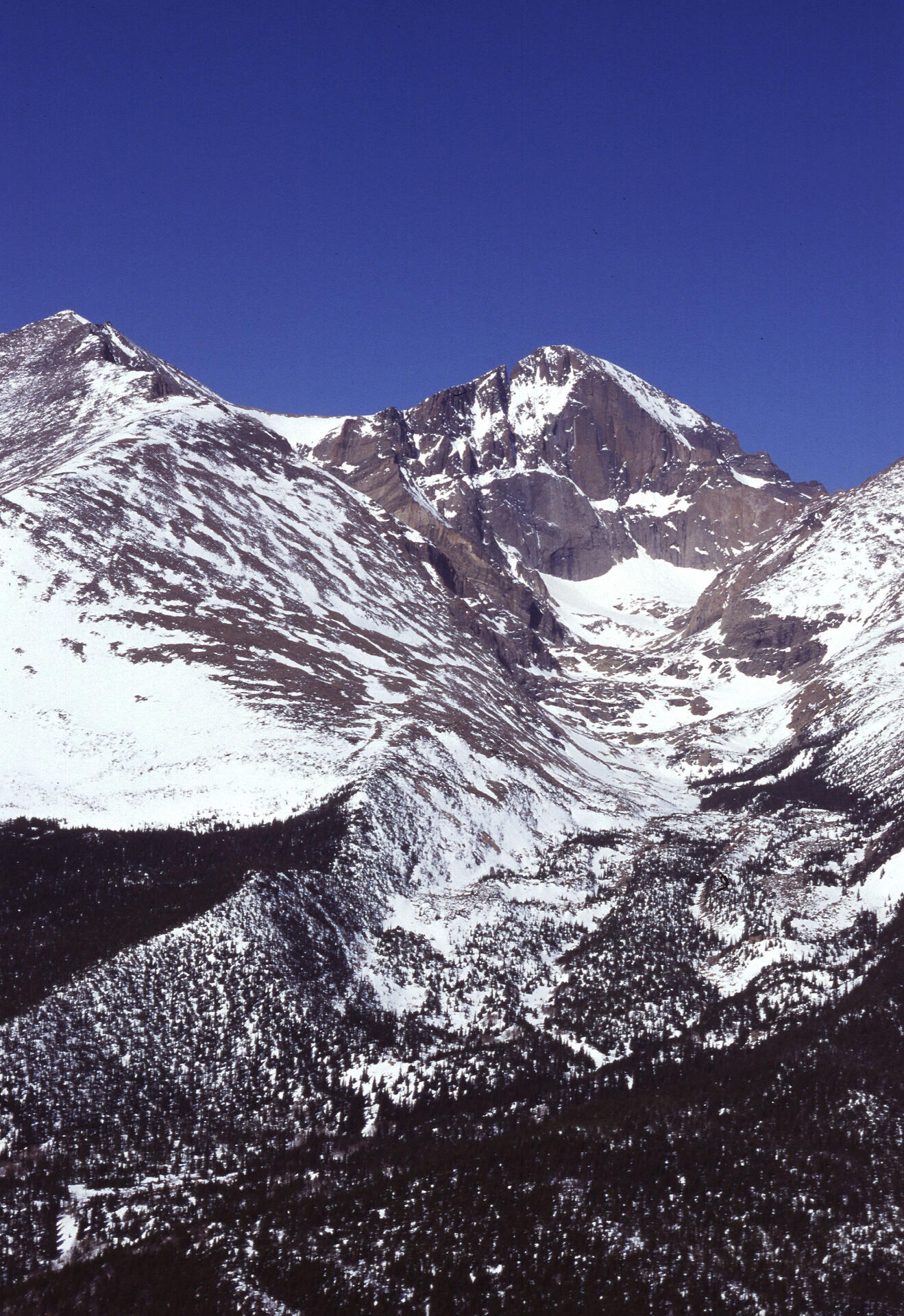
Photo by Scott Bauer., Public domain
World Heritage Research
Discover scientific research and academic studies that deepen our understanding of Canadian Rocky Mountain Parks from its history and significance to its conservation, management, and contemporary challenges.
-
Reconnection and reconciliation in Canadian Rocky Mountain Parks: Jasper National Park, Canada
Jasper National Park, part of the UNESCO Canadian Rocky Mountain Parks World Heritage site, stands out for its vast expanse (11,228 km²) and its role as a critical habitat for Rocky Mountain mammals such as caribou, grizzly bears, wolves, bighorn sheep, and mountain goats. It also safeguards the headwaters of major rivers like the Athabasca, contributing to Canada's ecological and hydrological heritage. The park exemplifies the unique physical and biological features of the Rocky Mountain Biogeographical Province, while adjacent fossil sites in Yoho and Mount Robson Provincial Parks provide invaluable insights into Earth's evolutionary history. Additionally, its glacial geological processes, including ice fields and remnant valley glaciers, offer exceptional examples of erosion and deposition, underscoring its significance as a natural laboratory for studying both biodiversity and geological dynamics.
Ball, C., Meropoulis, S., Stewart, A., & Cardiff, S. (2012). Reconnection and reconciliation in Canadian Rocky Mountain Parks: Jasper National Park, Canada. World Heritage, 158–168. https://doi.org/10.1017/cbo9781139567657.018
View Publication Record | Read Publication -
Biogeochemical responses of two alpine lakes to climate change and atmospheric deposition, Jasper and Banff National parks, Canadian Rocky Mountains
Alpine lakes in the Canadian Rocky Mountain Parks exhibit distinct biogeochemical responses to climate change and atmospheric deposition, revealing varied ecological impacts over the past 500 years. Curator Lake in Jasper shows strong sensitivity to thermal stratification driven by warming, with no significant changes in reactive nitrogen (Nr) cycling. In contrast, McConnell Lake in Banff demonstrates a complex response mediated by glacial activity and Nr inputs, underscoring the diverse limnological effects of abiotic stressors on similar ecosystems. The study combines paleoecological measures—such as primary production and diatom community structure—with geochemical proxies to trace these changes, providing critical insights into the ecological footprint of recent environmental transformations in mountain park environments.
Hobbs, W. O., Vinebrooke, R. D., & Wolfe, A. P. (2011). Biogeochemical responses of two alpine lakes to climate change and atmospheric deposition, Jasper and Banff National parks, Canadian Rocky Mountains. Canadian Journal of Fisheries and Aquatic Sciences, 68(8), 1480–1494. https://doi.org/10.1139/f2011-058
View Publication Record | Read Publication