World Heritage Identification Number: 701
World Heritage since: 1994
Category: Natural Heritage
WHE Type: Protected Areas & National Parks
Transboundary Heritage: No
Endangered Heritage: No
Country: 🇻🇪 Venezuela (Bolivarian Republic of)
Continent: Americas
UNESCO World Region: Latin America and the Caribbean
Map
Canaima National Park: A Geological Marvel and Biodiversity Haven
Canaima National Park, a sprawling expanse of approximately 3 million hectares in southeastern Venezuela that borders Guyana and Brazil, covers nearly the entirety of the Gran Sabana region. This vast protected area was designated a World Heritage Site by UNESCO in 1994 due to its exceptional geological features and rich biodiversity.
The park's most distinctive topographical characteristic is the presence of table mountains, or tepuis, which cover around 65 percent of the park's surface. These towering sandstone and quartzite plateaus, dating back 1.7–2 billion years, rise abruptly from the surrounding plains, their flat summits often supporting unique cloud forest ecosystems.
The sheer cliffs give rise to spectacular waterfalls, including Angel Falls (Salto Ángel), the world’s tallest waterfall. With a total height of 979 meters and an uninterrupted plunge of 807 meters, it falls from Auyán-tepui, creating one of the most dramatic landscapes on Earth.
One of the most famous tepuis within the park is Mount Roraima, which forms part of the triple border between Venezuela, Guyana, and Brazil. This massive tabletop mountain has been the subject of numerous scientific expeditions and even inspired Sir Arthur Conan Doyle's novel The Lost World. The tepuis collectively form a distinct biogeographical region, hosting flora and fauna, including endemic species of frogs, lizards, birds, orchids, and carnivorous plants, found nowhere else on the planet.
Canaima National Park supports a remarkable diversity of plants and animals. While some species are endemic to the tepuis, the lowlands and savannas host jaguars, giant armadillos, giant otters, black caimans, and a variety of birds. The tepui summits harbor unique plants such as Heliamphora pitcher plants, endemic orchids, and rare tepui frogs, reflecting the park’s extraordinary ecological isolation. This ecosystem is also the ancestral home of the indigenous Pemon people, who revere the tepuis as sacred "houses of the gods."
The park's unique ecosystem is largely attributed to its isolation and the diverse microclimates created by the tepuis. Rainfall is high across the region, typically ranging from 1,200 mm per year in the savanna areas to over 3,000 mm in the rainforests and cloud forests. This abundance of water supports a wide range of habitats, from savannas and grasslands to rainforests and cloud forests.
Despite its remote location and protection status, Canaima National Park faces numerous challenges, primarily from illegal mining activities, gold panning, and the pressures of unregulated tourism. Ongoing conservation efforts aim to mitigate these threats and ensure the long-term preservation of this remarkable natural wonder.
Overall, Canaima National Park stands as a testament to the wonders of nature and the importance of conservation. Its unique geology, rich biodiversity, and stunning landscapes make it a must-visit destination for anyone seeking adventure, discovery, and a deeper appreciation for the planet's natural treasures.
UNESCO Description of the World Heritage Site
Canaima National Park is spread over 3 million ha in south-eastern Venezuela along the border between Guyana and Brazil. Roughly 65% of the park is covered by table mountain (tepui) formations. The tepuis constitute a unique biogeological entity and are of great geological interest. The sheer cliffs and waterfalls, including the world's highest (1,000 m), form a spectacular landscape.
Encyclopedia Record: Canaima National Park
Canaima National Park is a 30,000 km2 (12,000 sq mi) park in south-eastern Venezuela that roughly occupies the same area as the Gran Sabana region. It is located in Bolívar State, reaching the borders with Brazil and Guyana. The park was named a World Heritage Site by UNESCO.Additional Site Details
Area: 3e+06 hectares
Number of Components: 1
(viii) — Outstanding example representing major earth stages
(ix) — Outstanding example representing ecological and biological processes
(x) — Contains most important habitats for biodiversity
Coordinates: 5.337994 , -62.037883
IUCN World Heritage Outlook
The 2025 Conservation Outlook on Canaima National Park reports the following assessment:
Source: International Union for Conservation of Nature (IUCN) · View assessment
Image
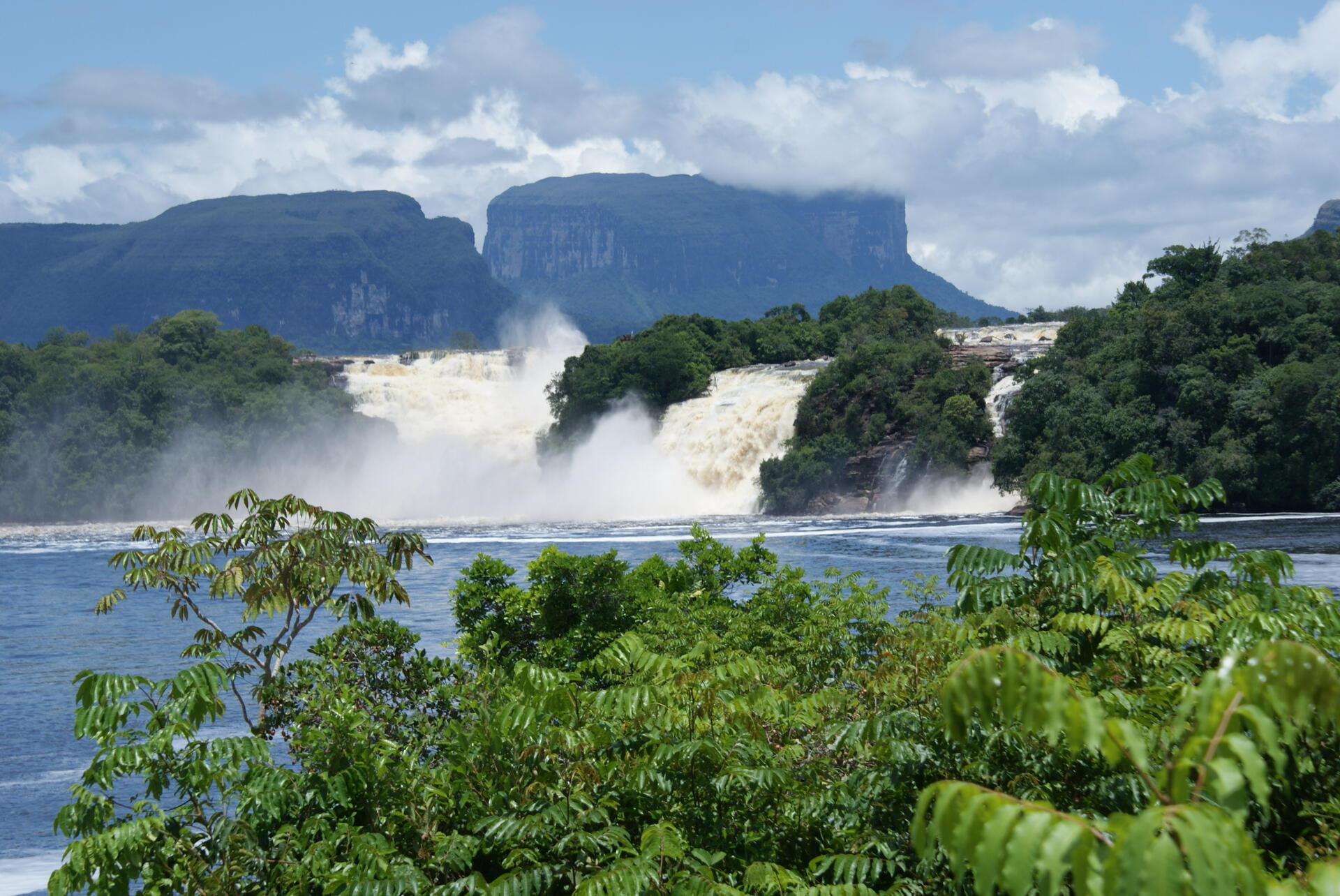
© Tyraelux, CC BY-SA 3.0 Resized from original. (This derivative is under the same CC BY-SA license.)