World Heritage Identification Number: 751
World Heritage since: 1996
Category: Cultural Heritage
WHE Type: Infrastructure & Industry
Transboundary Heritage: No
Endangered Heritage: No
Country: 🇫🇮 Finland
Continent: Europe
UNESCO World Region: Europe and North America
Map
Verla Groundwood and Board Mill: A Testimony to 19th Century Lumber Industry and Worker Life
The Verla Groundwood and Board Mill, located in Jaala, Kouvola, Finland, stands as a remarkable testament to the lumber industry of the 19th century and the lives of the industrial workers during this period. Inscribed on the UNESCO World Heritage List in 1996, this mill village offers a unique insight into the rural industrial settlements associated with pulp, paper, and board production that thrived in Northern Europe and North America during the 19th and early 20th centuries.
More to come…UNESCO Description of the World Heritage Site
The Verla groundwood and board mill and its associated residential area is an outstanding, remarkably well-preserved example of the small-scale rural industrial settlements associated with pulp, paper and board production that flourished in northern Europe and North America in the 19th and early 20th centuries. Only a handful of such settlements survive to the present day.
UNESCO Justification of the World Heritage Site
Criterion (iv): The Verla Groundwood and Board Mill and its associated habitation are an outstanding and remarkably well preserved example of the small-scale rural industrial settlement associated with pulp, paper, and board production that flourished in northern Europe and North America in the 19th and early 20th centuries, of which only a handful survives to the present day.
Encyclopedia Record: Verla
Verla at Jaala, Kouvola, Finland, is a well-preserved 19th-century mill village. Situated along the northern Kymi River, the mill, nearby power plants, and residential houses were inscribed on the UNESCO World Heritage List in 1996 due to its testimony to the lumber industry in the 19th century and the lives of the industrial workers of that time.Additional Site Details
Area: 22.778 hectares
Number of Components: 1
Coordinates: 61.06194 , 26.64083
Image
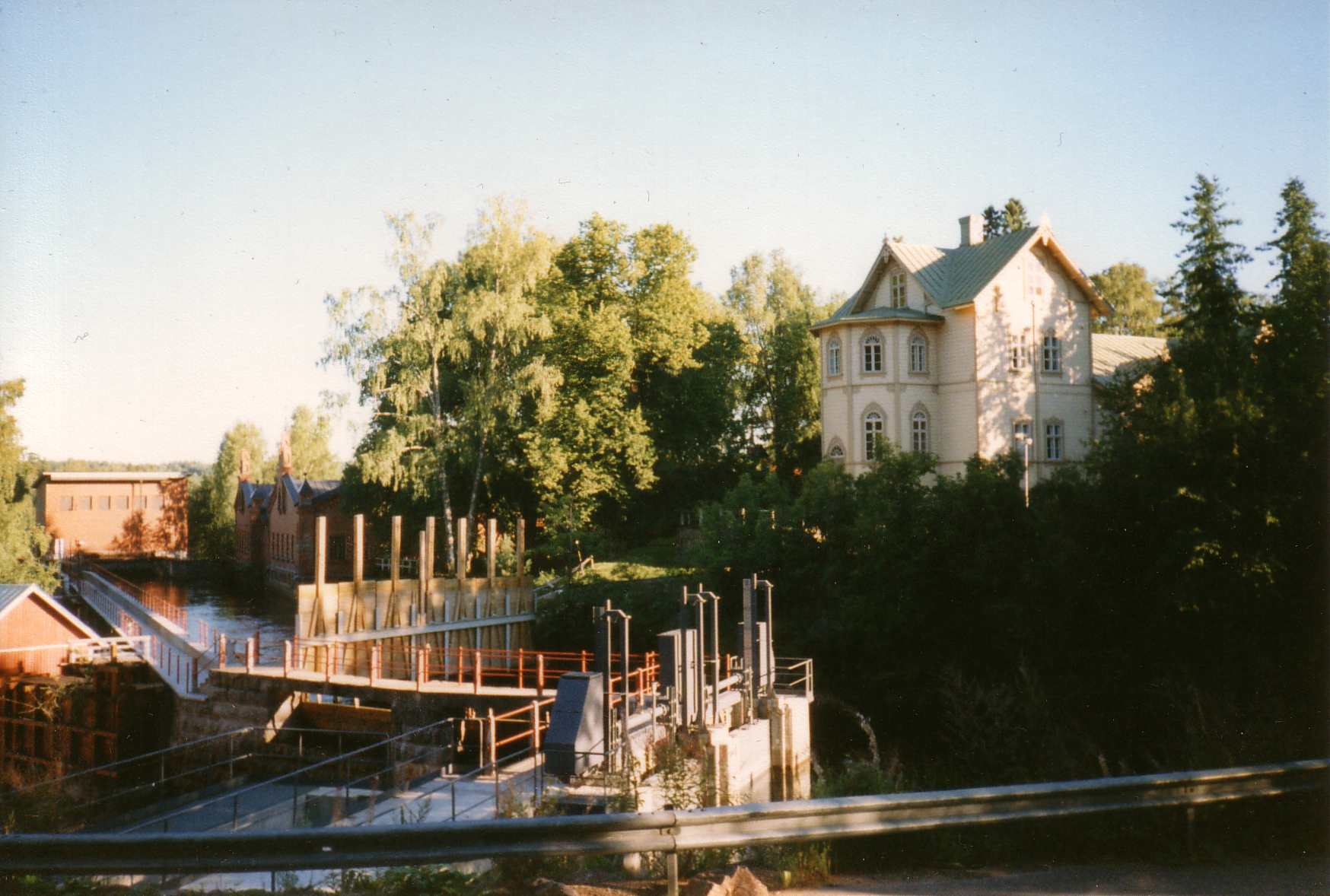
© Picture taken by user:michaelXXLF, August 1997, CC BY-SA 3.0 Resized from original. (This derivative is under the same CC BY-SA license.)
World Heritage Research
Discover scientific research and academic studies that deepen our understanding of Verla Groundwood and Board Mill from its history and significance to its conservation, management, and contemporary challenges.
-
Local and Glocal: The specifics of the formation and development of tourism brands of industrial locations
Industrial cities and monotowns can be more effectively promoted as tourist attractions through the development of a unifying 'glocal' brand that balances local identity with global significance. This approach, demonstrated using Verla Groundwood and Board Millchallenges negative stereotypes about industrial regions while enhancing their inclusion in tourism routes. The research highlights the potential of integrated branding strategies to boost the tourist appeal of industrial locations, supported by examples of diverse forms of industrial tourism.
Bugrova, E. (2023). Local and Glocal: The specifics of the formation and development of tourism brands of industrial locations. E3S Web of Conferences, 435, 3002. https://doi.org/10.1051/e3sconf/202343503002
View Publication Record | Read Publication -
Tehdas yhdistää ja erottaa Verlassa 1880-luvulta 1960-luvulle
A study on the Verla Groundwood and Board Mill reveals how industrial communities in Finland evolved from the 1880s to the 1960s, marked by periods of unity and division. The research highlights the mill's role as a social and economic hub, analyzing its impact on local labor dynamics, class structures, and community life. By examining historical records, labor statistics, and oral histories, the study maps shifts in industrialization, urbanization, and societal changes, offering insights into the broader transformations of Finnish industrial communities during this period.
Niemi, S. A. (2010). Tehdas yhdistää ja erottaa Verlassa 1880-luvulta 1960-luvulle. Scandinavian Economic History Review, 58(2), 172–174. https://doi.org/10.1080/03585522.2010.481854
View Publication Record | Read Publication