World Heritage Identification Number: 1272
World Heritage since: 2010
Category: Cultural Heritage
WHE Type: Buildings & Architectural Ensembles
Transboundary Heritage: No
Endangered Heritage: No
Country: 🇧🇷 Brazil
Continent: Americas
UNESCO World Region: Latin America and the Caribbean
Map
São Francisco Square in the Town of São Cristóvão: A Glimpse into the Architectural and Historical Richness of Northeastern Brazil
The São Francisco Square in the town of São Cristóvão, located in the state of Sergipe, Brazil, stands as a testament to the architectural and historical richness of northeastern Brazil. Inscribed as a UNESCO World Heritage Site in 2010, this monumental ensemble offers visitors a unique opportunity to explore the region's past, particularly its ties to the Franciscan Order.
More to come…UNESCO Description of the World Heritage Site
São Francisco Square, in the town of São Cristovão, is a quadrilateral open space surrounded by substantial early buildings such as São Francisco Church and convent, the Church and Santa Casa da Misericórdia, the Provincial Palace and the associated houses of different historical periods surrounding the Square. This monumental ensemble, together with the surrounding 18th- and 19th- century houses, creates an urban landscape which reflects the history of the town since its origin. The Franciscan complex is an example of the typical architecture of the religious order developed in north-eastern Brazil.
UNESCO Justification of the World Heritage Site
Criterion (ii): The São Francisco Square represents the outcome of the merging of the modes of territorial occupation and settlement of Portugal and Spain according to which urban settlements were established in their respective colonial empires. This property exhibits an important fusion of urban models, which occurred during the unification under one crown of two rival Empires.
Criterion (iv): The São Francisco Square is an outstanding example of harmonious and coherent architectural ensemble that has been preserved as a social landmark of the town and a place for important cultural and social manifestations. It shows a paradigm of integrated rational town planning and adaptation to the specificities of the local topography.
Encyclopedia Record: São Francisco Square
São Francisco Square is a historic plaza in São Cristóvão, Sergipe, Brazil. The square, or praça, is an open space surrounded by Portuguese colonial-period buildings such as the Church and Convent of Santa Cruz, the Misericórdia Hospital and Church, the Provincial Palace and buildings from later periods. The complex is a well-preserved example of both the Spanish colonial and the Portuguese Franciscan architecture of north-eastern Brazil.Additional Site Details
Area: 3 hectares
Number of Components: 1
(iv) — Outstanding example of a type of building or landscape
Coordinates: -11.0136554428 , -37.2053747585
Image
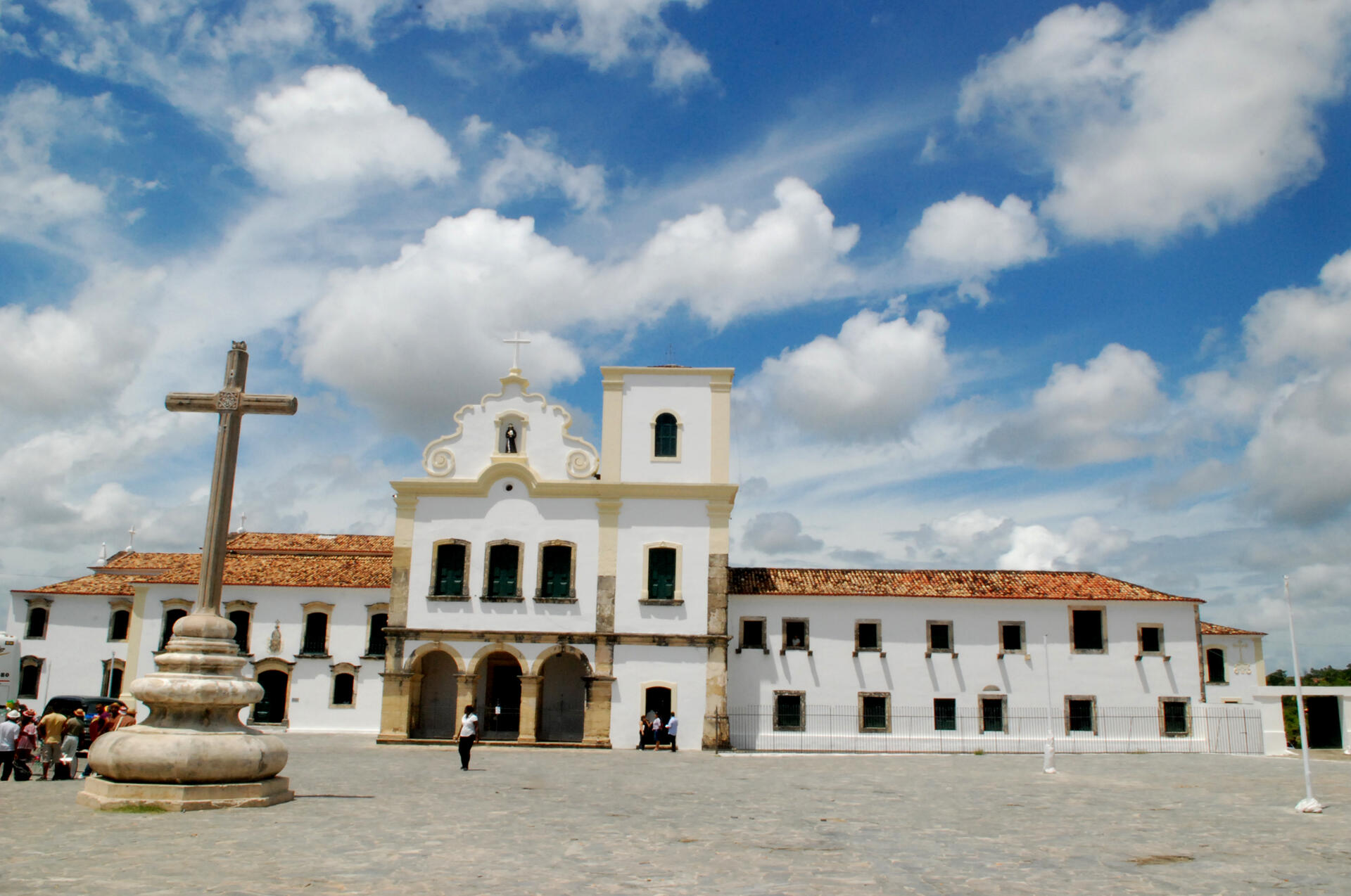
© E-Sergipe, CC BY-SA 2.0 Resized from original. (This derivative is under the same CC BY-SA license.)
World Heritage Research
Discover scientific research and academic studies that deepen our understanding of São Francisco Square in the Town of São Cristóvão from its history and significance to its conservation, management, and contemporary challenges.
-
Colors on the Architectural Surfaces of the Church and Casa da Misericordia/ Lar Imaculada Conceição in São Cristóvão Se/Br
A comprehensive analysis of the pigments and chromatic characteristics on the architectural surfaces of São Francisco Square's historic buildings in São Cristóvão, Brazil, reveals insights into their color composition and potential preservation methods. The study identified distinct hues, brightness levels, and saturation degrees using advanced color measurement systems like the NCS and Munsell tables, alongside a digital colorimeter (RM200). These findings not only contribute to the understanding of traditional color usage in heritage conservation but also suggest pathways for restitution and preservation, leveraging both ancient techniques and modern methodologies. The research, part of a broader initiative under UNESCO's World Heritage Site designation, sheds light on the cultural significance and material properties of these landmarks, aiding in their long-term conservation.
da Silva, E. D., Nogueira, A. D., Lima, A. C. M. A., de Oliveira, M. F., & Iriarte, S. S. (2025). COLORS ON THE ARCHITECTURAL SURFACES OF THE CHURCH AND CASA DA MISERICORDIA/ LAR IMACULADA CONCEIÇÃO IN SÃO CRISTÓVÃO SE/BR. Studies on Art - 2° Edição. https://doi.org/10.56238/edimpacto2025.052-005
View Publication Record | Read Publication -
Acessibilidade em espaços públicos patrimônio da humanidade: diagnóstico da praça São Francisco em São Cristóvão, SE
A comprehensive assessment of São Francisco Square, a UNESCO World Heritage Site in São Cristóvão, SE, reveals significant accessibility gaps that hinder mobility for individuals with disabilities or reduced mobility. The study identifies critical barriers such as uneven sidewalks, inadequate ramps, and irregular paving, which pose safety risks and limit autonomy. Despite existing adaptations, these fail to meet national accessibility standards like NBR 9050, further exacerbated by disconnected pathways and lack of resting points for pedestrians. The research, combining bibliographic review and field observations including photographic documentation, underscores the urgent need for integrated urban interventions that balance heritage preservation with inclusive design. Collaboration among architects, urban planners, policymakers, and communities is highlighted as essential to achieving sustainable accessibility solutions.
Fontes, M. M., Marinho, J. F., Panta, V. R., & Soares, M. J. N. (2025). Acessibilidade em espaços públicos patrimônio da humanidade: diagnóstico da praça São Francisco em São Cristóvão, SE. Revista Brasileira de Planejamento E Desenvolvimento, 14(3), 770. https://doi.org/10.3895/rbpd.v14n2.20043
View Publication Record | Read Publication -
“To the North, the Heirs…”: Undivided Lands, Social Networks, and the Transmission of Sugar Mills in the Vaza-Barris River Basin (São Cristóvão, Sergipe, Nineteenth Century)
In the mid-19th century, sugar mill ownership in Ribeira do Vaza-Barris, a district of São Cristóvão (Sergipe), was intricately linked to family cohesion and social networks. This study reveals that land acquisition and transfer were not merely legal processes but were shaped by kinship dynamics, either preserving undivided property or allowing external access. Using probate records, parish documents, and Social Network Analysis, researchers mapped relationships among mill owners, demonstrating how social strategies influenced the 'realization' of sugar mill ownership. The findings highlight the fluid nature of property rights in this period, challenging traditional notions of land division.
Jesus, L. O. d., Malaquias, C. d. O., & Costa, D. S. d. (2025). “TO THE NORTH, THE HEIRS…”: UNDIVIDED LANDS, SOCIAL NETWORKS, AND THE TRANSMISSION OF SUGAR MILLS IN THE VAZA-BARRIS RIVER BASIN (SÃO CRISTÓVÃO, SERGIPE, NINETEENTH CENTURY). Baraúnas: Revista de História, 3(4). https://doi.org/10.13102/barh.v3i4.12494
View Publication Record | Read Publication -
A Marca da Cidade de São Cristóvão - Se: Patrimônio Cultural Sob a Ótica da Proteção Sui Generis
Research demonstrates that the 'Visit São Cristóvão' brand effectively promotes São Cristóvão's cultural heritage, enhancing its socioeconomic benefits while highlighting the importance of Sui Generis protection. The study analyzed the relationship between the destination branding strategy and local cultural preservation, using a combination of bibliographic research and exploratory analysis of the official tourism website. Findings suggest that strategic branding can serve as a powerful tool for preserving and showcasing intangible cultural expressions, contributing to sustainable development in heritage-rich tourist destinations.
Wanderley, N. S. C., & De Santana, J. R. (2024). A MARCA DA CIDADE DE SÃO CRISTÓVÃO - SE: PATRIMÔNIO CULTURAL SOB A ÓTICA DA PROTEÇÃO SUI GENERIS. Geoconexões, 3(20), 351–372. https://doi.org/10.15628/geoconexes.2024.17738
View Publication Record | Read Publication