World Heritage Identification Number: 557
World Heritage since: 1994
Category: Cultural Heritage
WHE Type: Archaeological Sites
Transboundary Heritage: No
Endangered Heritage: No
Country: 🇸🇪 Sweden
Continent: Europe
UNESCO World Region: Europe and North America
Map
Unraveling the Mysteries of the Rock Carvings in Tanum: A Journey into the Past
The Rock Carvings in Tanum, located in the northern region of Bohuslän, Sweden, stand as a testament to the rich artistic achievements of the Bronze Age. Inscribed as a UNESCO World Heritage Site in 1994, these petroglyphs offer a captivating glimpse into the lives, beliefs, and culture of ancient European societies.
More to come…UNESCO Description of the World Heritage Site
The rock carvings in Tanum, in the north of Bohuslän, are a unique artistic achievement not only for their rich and varied motifs (depictions of humans and animals, weapons, boats and other subjects) but also for their cultural and chronological unity. They reveal the life and beliefs of people in Europe during the Bronze Age and are remarkable for their large numbers and outstanding quality.
UNESCO Justification of the World Heritage Site
Criterion (i): The rock carvings of the Tanum region constitute an outstanding example of Bronze Age art of the highest quality.
Criterion (iii): The range of motifs on the Tanum rock carvings provides exceptional evidence of many aspects of life in the European Bronze Age.
Criterion (iv): The continuity of settlement and the ongoing practice of agriculture, as illustrated by the Tanum region’s rock carvings, archaeological vestiges, and modern landscape features, combine to demonstrate a remarkable permanence during eight thousand years of human history.
Encyclopedia Record: Rock Carvings in Tanum
The Rock Carvings in Tanum are a collection of petroglyphs near Tanumshede, Bohuslän, Sweden, which were declared a World Heritage Site by UNESCO in 1994 because of their high concentration.Additional Site Details
Area: 4,137.609 hectares
Number of Components: 1
(iii) — Unique or exceptional testimony to a cultural tradition
(iv) — Outstanding example of a type of building or landscape
Coordinates: 58.70111 , 11.34111
Image
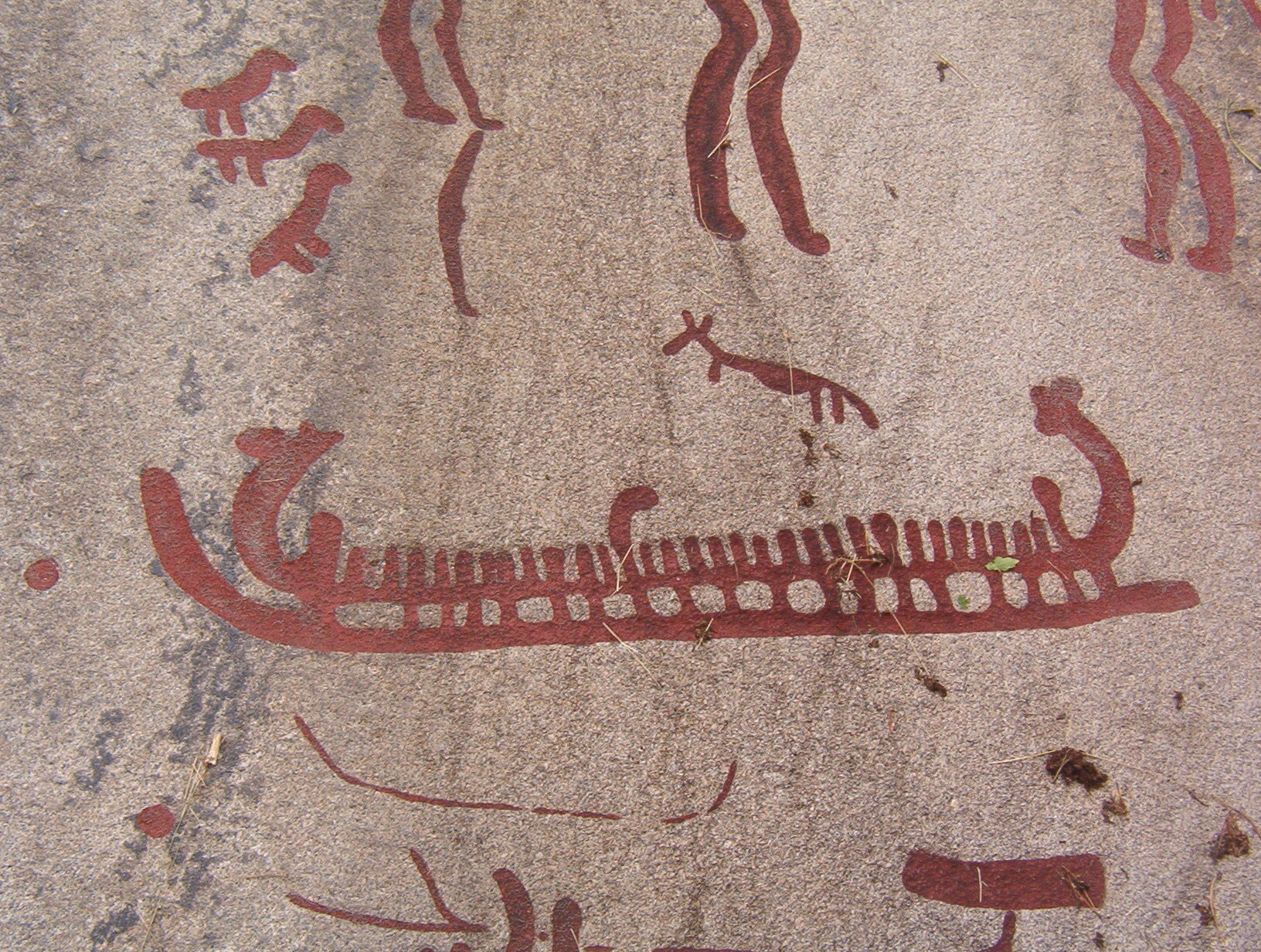
Unknown, Public domain
World Heritage Research
Discover scientific research and academic studies that deepen our understanding of Rock Carvings in Tanum from its history and significance to its conservation, management, and contemporary challenges.
-
Nordic rock art and Nazi mythology: the Ahnenerbe and the search for Germanic origins
A detailed analysis of the Ahnenerbe's expeditions to Swedish rock carvings reveals how Nazi Germany's pseudoscientific pursuits involved creating meticulous casts of ancient artworks, ostensibly for archaeological study but driven by racist ideologies. The research examines the production and interpretation of these casts, challenging the notion that their primary purpose was scholarly when, in reality, they were part of a broader effort to falsify history for political propaganda. By scrutinizing archival materials, this study exposes the methods and motivations behind such expeditions, underscoring the intersection of archaeology and Nazi mythology.
Legnér, M. (2026). Nordic rock art and Nazi mythology: the Ahnenerbe and the search for Germanic origins. Antiquity, 1–17. https://doi.org/10.15184/aqy.2026.10430
View Publication Record | Read Publication -
Rock carving depth reflects carvers’ geological insight
Bronze Age rock carvers in Tanum demonstrated remarkable geological insight by selecting and engraving panels with pre-existing microfracture zones, allowing deeper carvings than previously thought possible. The study reveals that carvings, averaging 0.96–1.52 mm deep, were confined to the first weak layer of Bohus granite, exceeding post-glacial weathering limits (≤1 mm). Using ultrasonic B-scans and photogrammetry, researchers identified reflective horizons at ~8-20 mm depth, consistent with paraglacial stress-relief microfractures. This suggests carvers strategically chose locations based on geological conditions, challenging the assumption that weathering was the sole limiting factor for carving depth.
Liebl, C., Peternell, M., Horn, C., Ling, J., Moyano Di Carlo, J., Green, A., & Potter, R. (2026). Rock carving depth reflects carvers’ geological insight. PLOS One, 21(9), e0358075. https://doi.org/10.1371/journal.pone.0358075
View Publication Record | Read Publication -
Everyone Has to Start Somewhere: Democratisation of Digital Documentation and Visualisation in 3D
A significant shift towards democratizing digital documentation and visualization in archaeology is highlighted, emphasizing the potential to broaden access to complex digital methods without compromising specialization. The study, focusing on carved rock art at Tanum, introduces key criteria for effective democratization, such as self-reflection and future-proofing publication practices. It argues that expanding digital data analysis and dissemination benefits all stakeholders by fostering innovation and reducing the lag between technological advancement and widespread adoption. This approach aims to stimulate broader discussions on 'digital affect' and methodological curation in archaeological research.
Potter, R., Pitman, D., Shaw, L., & Horn, C. (2025). Everyone Has to Start Somewhere: Democratisation of Digital Documentation and Visualisation in 3D. Open Archaeology, 11(1). https://doi.org/10.1515/opar-2025-0054
View Publication Record | Read Publication -
Acessing centuries of documentation - Resources to improve access to Swedish rock art documentation and metadata
A significant advancement in the accessibility of Swedish rock art documentation has been achieved through a collaboration between GRIDH and SHFA. The project has developed new digital resources, including a Django-based solution, to enhance access to an extensive archive of rock art images spanning from the 17th century to modern high-resolution 3D recordings. This initiative aims to improve data availability for archaeologists and researchers, potentially transforming rock art research by providing unprecedented access to detailed documentation and metadata. The study reflects on the impact of these new resources, highlighting their potential to bridge gaps in historical documentation and facilitate broader research.
Green, A., Bridge, T., Horn, C., Humlesjö, S., Karimi, A., Ling, J., & Westin, J. (2024). Acessing centuries of documentation - Resources to improve access to Swedish rock art documentation and metadata. Proceedings of the Huminfra Conference (HiC 2024), 205, 154–160. https://doi.org/10.3384/ecp205021
View Publication Record | Read Publication -
Tracing the carvers on the rocks
A groundbreaking study on the UNESCO World Heritage Site of Tanum's rock carvings reveals new insights into Bronze Age carvers' techniques and societal roles. By analyzing carving methods, bedrock choices, and style variations, researchers have begun to bridge gaps in our understanding of these ancient artisans. The project employs advanced AI algorithms to quantify motifs and grain structures, offering a novel approach to studying rock art. Unlike previous work that focused on 'pecking,' this study emphasizes the broader concept of carving, providing a more nuanced perspective on Bronze Age society's technical skills and scientific knowledge.
Liebl, C., Peternell, M., Ling, J., Lindhé, C., Horn, C., Meijer, E., & Moyano, J. (2024). Tracing the carvers on the rocks. Adoranten. https://doi.org/10.65611/ador.vi.63376
View Publication Record | Read Publication -
Prehistoric history in Swedish primary school education: pupils’ expression of empathy after visiting a cultural heritage site
A field trip to Vitlycke, a UNESCO-listed rock carving site in Sweden, significantly enhanced primary school pupils' historical empathy by integrating cognitive and affective dimensions. The study found that immersive sensory experiences deepened their understanding of Bronze Age life while fostering emotional connections, demonstrating the importance of both imagination and structured follow-up in developing empathy. This approach broadens the potential for educational engagement with cultural heritage sites.
Almqvist Nielsen, L. (2023). Prehistoric history in Swedish primary school education: pupils’ expression of empathy after visiting a cultural heritage site. Education 3-13, 53(3), 378–392. https://doi.org/10.1080/03004279.2023.2191631
View Publication Record | Read Publication -
Swedish Rock Art Research Archives
Swedish Rock Art Research Archives (SHFA) have significantly advanced the study of Scandinavian Bronze Age rock art, providing unprecedented access to original documentation that has long been a bottleneck for research. This collection, spanning 1700-500 BC, offers critical insights into Bronze Age ideology, religion, society, and social complexity, with depictions of boats, wagons, weapons, humans, animals, and ritual features. The SHFA's establishment in 2007 has catalyzed a surge in academic interest, leading to an explosion of national and international doctoral dissertations and monographs on the topic. By addressing historical gaps in documentation, the SHFA has not only deepened our understanding of Bronze Age cultures but also highlighted parallels with contemporary societal concerns such as organized conflict, rituals, and social inequality.
Ling, J. (2023). Swedish Rock Art Research Archives. Adoranten, 30–34. https://doi.org/10.65611/ador.vi.63786
View Publication Record | Read Publication