World Heritage Identification Number: 556
World Heritage since: 1993
Category: Cultural Heritage
WHE Type: Buildings & Architectural Ensembles
Transboundary Heritage: No
Endangered Heritage: No
Country: 🇸🇪 Sweden
Continent: Europe
UNESCO World Region: Europe and North America
Map
The Engelsberg Ironworks: A Pioneer in Swedish Industrialization
The Engelsberg Ironworks, located in Ängelsberg, a picturesque village in Fagersta Municipality, Västmanland County, Sweden, stands as a testament to the country's industrial prowess during the 17th and 18th centuries. Inscribed as a UNESCO World Heritage Site in 1993, this ironworks represents the epitome of Swedish iron production and its significant role in global trade.
More to come…UNESCO Description of the World Heritage Site
Sweden's production of superior grades of iron made it a leader in this field in the 17th and 18th centuries. This site is the best-preserved and most complete example of this type of Swedish ironworks.
UNESCO Justification of the World Heritage Site
Criterion (iv): Engelsberg is an outstanding example of an influential European industrial complex of the 17th-19th centuries, with important technological remains and the associated administrative and residential buildings intact.
Encyclopedia Record: Engelsberg Ironworks
Engelsberg Ironworks is an ironworks in Ängelsberg, a village in Fagersta Municipality in Västmanland County, Sweden. It was built in 1681 by Per Larsson Gyllenhöök (1645–1706) and developed into one of the world's most modern ironworks in the period 1700–1800. It is listed as a UNESCO World Heritage Site since 1993.Additional Site Details
Area: 9.596 hectares
Number of Components: 1
Coordinates: 59.97 , 16.01
Image
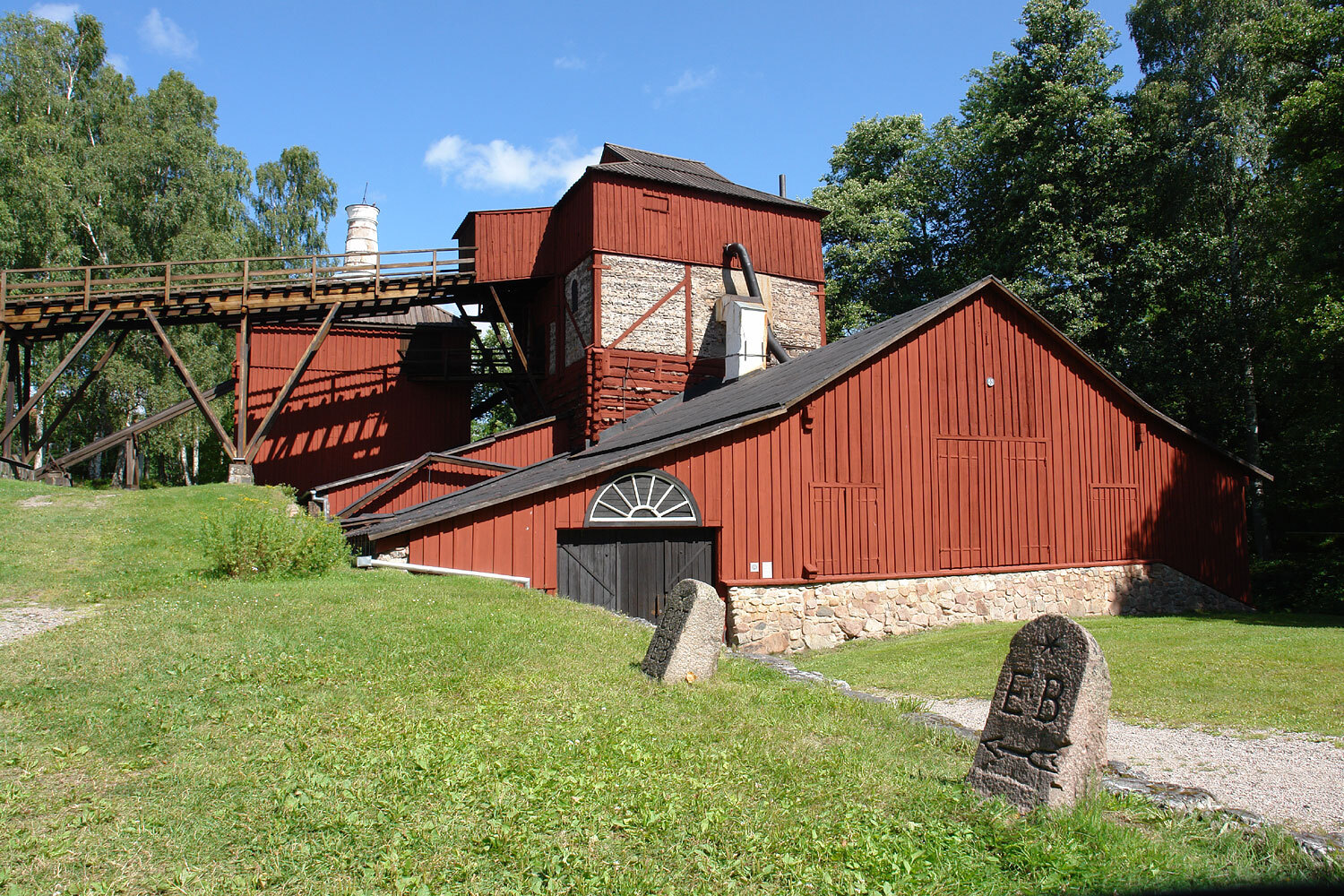
© Jürgen Howaldt, CC BY-SA 2.0 de Resized from original. (This derivative is under the same CC BY-SA license.)
World Heritage Research
Discover scientific research and academic studies that deepen our understanding of Engelsberg Ironworks from its history and significance to its conservation, management, and contemporary challenges.
-
Jernverk som håndverksmessige, naturvitenskapelige og kulturelle kunnskapssteder: Eksempelet Båseland og Næs 1665–1884
Engelsberg Ironworks, established in 1665 and later operated by Jacob Aall after 1799, functioned as a unique hub of craftsmanship, scientific knowledge, and cultural exchange during Norway's early modern period. This study reveals how such private knowledge centers thrived on the integration of diverse expertise—ranging from metallurgy to cultural practices—and sustained innovation without formal institutional structures. By analyzing Næs Ironworks' operations from 1665 to 1800, the research maps the origins and interplay of its knowledge systems, demonstrating how local craftsmanship, scientific inquiry, and cultural transmission coexisted. The findings highlight the understudied role of these sites in preserving and advancing specialized skills during a pivotal era.
Meyer, F. (2025). Jernverk som håndverksmessige, naturvitenskapelige og kulturelle kunnskapssteder: Eksempelet Båseland og Næs 1665–1884. Heimen, 62(2), 156–171. https://doi.org/10.18261/heimen.62.2.5
View Publication Record | Read Publication -
Representations of industrial heritage in tourism marketing materials: Analysing androcentric discourse in textual and visual content
Marketing materials for UNESCO World Heritage Sites in Bergslagen, Sweden, perpetuate patriarchal narratives that exclude female and alternative perspectives on industrial heritage. This study, using post-feminist theory, analyzed textual and visual content from three sites—Långban, Axmar Bruk, and Engelsberg Ironworks—and found a persistent reliance on male-dominated representations. The research highlights how contemporary tourism communication reinforces gender polarization, despite the region's rich history of mining, smelting, and cultural development. By examining online materials, the study identifies dominant narratives while also uncovering gaps in diverse storytelling, offering insights into the role of marketing in shaping heritage interpretations.
Funk, M., & Pashkevich, A. (2020). Representations of industrial heritage in tourism marketing materials: Analysing androcentric discourse in textual and visual content. Dos Algarves: A Multidisciplinary E-Journal, 36, 41–58. https://doi.org/10.18089/damej.2020.36.3
View Publication Record | Read Publication