World Heritage Identification Number: 652
World Heritage since: 1999
Category: Natural Heritage
WHE Type: Protected Areas & National Parks
Transboundary Heritage: No
Endangered Heritage: No
Country: 🇵🇭 Philippines
Continent: Asia
UNESCO World Region: Asia and the Pacific
Map
Exploring the Underground Wonders of Puerto-Princesa Subterranean River National Park
The Puerto-Princesa Subterranean River National Park, located in the island province of Palawan in the Philippines, offers a unique blend of natural beauty and geological wonders. Inscribed as a UNESCO World Heritage Site in 1999, this park showcases a remarkable limestone karst landscape, featuring an underground river that stands out for its distinctive characteristics.
More to come…UNESCO Description of the World Heritage Site
This park features a spectacular limestone karst landscape with an underground river. One of the river's distinguishing features is that it emerges directly into the sea, and its lower portion is subject to tidal influences. The area also represents a significant habitat for biodiversity conservation. The site contains a full 'mountain-to-sea' ecosystem and has some of the most important forests in Asia.
UNESCO Justification of the World Heritage Site
Criterion (vii): The Puerto-Princesa Subterranean River National Park features a spectacular limestone or karst landscape. It contains an underground river that flows directly to the sea. The lower half of the river is brackish and subject to ocean tide. The associated tidal influence on the river makes this a significant natural phenomenon. The river’s cavern exhibits dramatic speleothems and several large chambers of as much as 120m wide and 60m high. Its accessibility and navigability up to 4.5km inland allows it to be experienced by the general public, who can view the magnificent rock formations on a river cruise unequalled by any other similar experience elsewhere in the world.
Criterion (x): The property contains globally significant habitat for biodiversity conservation. It includes a full mountain-to-sea ecosystem, protecting the most significant forest area within the Palawan Biogeographic Province. There are eight intact forest formations: forest on ultramafic soil, forest on limestone soil, montane forest, freshwater swamp forest, lowland evergreen tropical rainforest, riverine forest, beach forest, and mangrove forest, included in the property. It contains outstanding biodiversity with the Palawan Moist Forest recognized by the WWF’s Global Report as containing the richest tree flora, with high levels of regional and local endemism and as being the largest and most valuable limestone forest in Asia.
Encyclopedia Record: Puerto Princesa Subterranean River National Park
The Puerto Princesa Subterranean River National Park is a protected area in the Philippines.Additional Site Details
Area: 22,202 hectares
Number of Components: 1
(x) — Contains most important habitats for biodiversity
Coordinates: 10.16666667 , 118.9166667
IUCN World Heritage Outlook
The 2025 Conservation Outlook on Puerto-Princesa Subterranean River National Park reports the following assessment:
Source: International Union for Conservation of Nature (IUCN) · View assessment
Image
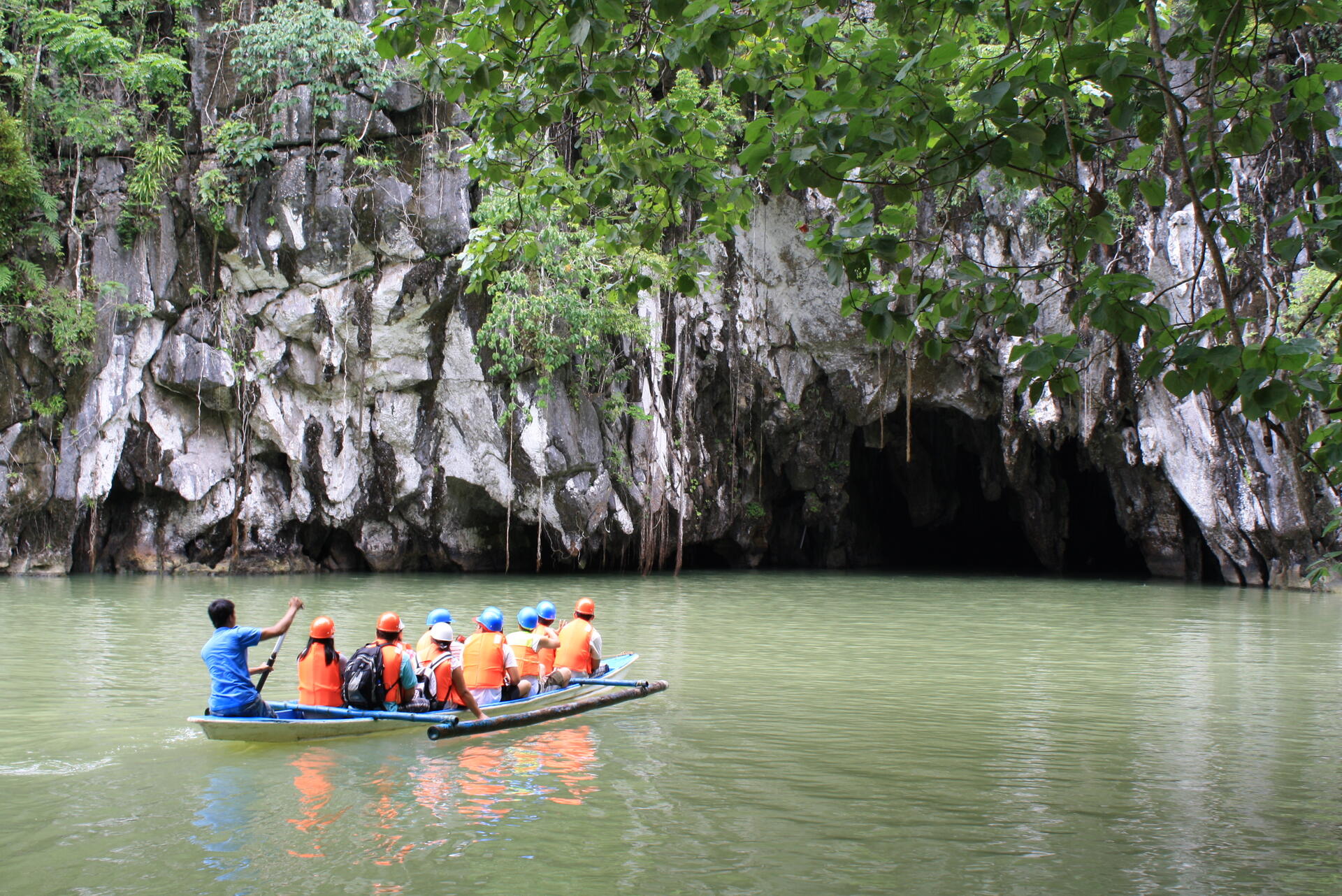
© Mike Gonzalez, CC BY-SA 3.0 Resized from original. (This derivative is under the same CC BY-SA license.)
World Heritage Research
Discover scientific research and academic studies that deepen our understanding of Puerto-Princesa Subterranean River National Park from its history and significance to its conservation, management, and contemporary challenges.
-
Nepenthes megastoma (Nepenthaceae), a micro-endemic pitcher plant from Puerto Princesa Subterranean River National Park, Palawan, Philippines
Researchers have discovered and described Nepenthes megastoma, a new species of carnivorous pitcher plant endemic to Puerto Princesa Subterranean River National Park, a UNESCO World Heritage Site in Palawan, Philippines. This micro-endemic species is critically endangered, known only from three locations within the Mount Saint Paul karst formation, where it thrives on vertical limestone walls. N. megastoma is distinguished by its highly branched stems, bell-shaped pitchers, and unique floral morphology, including dimorphic upper pitchers and unidirectionally upturned female flowers. Phylogenetic analysis suggests a close affinity with the widespread Palawan endemic N. philippinensis, despite morphological convergence with Borneo's N. campanulata. The discovery underscores the park's biodiversity significance while highlighting urgent conservation concerns due to its restricted range and small population size.
ALTOMONTE, J. C. A., COLLANTES, J. P. R., MANGUSSAD, V., BUSTAMANTE, R. A. A., & ROBINSON, A. S. (2025). Nepenthes megastoma (Nepenthaceae), a micro-endemic pitcher plant from Puerto Princesa Subterranean River National Park, Palawan, Philippines. Phytotaxa, 728(2), 93–107. https://doi.org/10.11646/phytotaxa.728.2.1
View Publication Record | Read Publication -
Marine Turtle Conservation Program at Puerto Princesa Subterranean River National Park: Challenges and Opportunities During COVID-19 Pandemic
During the COVID-19 pandemic, the Marine Turtle Conservation Program (MTCP) at Puerto Princesa Subterranean River National Park faced significant challenges and opportunities. The program, located in the Coral Triangle—a global biodiversity hotspot—successfully conserved three marine turtle species: green turtles (Chelonia mydas), hawksbills (Eretmochelys imbricata), and olive ridley turtles (Lepidochelys olivacea). Hatchling success averaged 82% from 2015 to 2021, with a peak of 2,476 hatchlings in 2019-2020. Key challenges included debris from Typhoon Odette, while the absence of noise during nesting seasons presented new opportunities for conservation efforts. The study used documentary analysis, net-notgraphy, virtual discussions, and structured questionnaires to assess these impacts.
Acero, L. (2023). MARINE TURTLE CONSERVATION PROGRAM AT PUERTO PRINCESA SUBTERRANEAN RIVER NATIONAL PARK: CHALLENGES AND OPPORTUNITIES DURING COVID-19 PANDEMIC. Biotropia, 30(1), 106–115. https://doi.org/10.11598/btb.2023.30.1.1915
View Publication Record | Read Publication -
Nuisance behaviors of macaques in Puerto Princesa Subterranean River National Park, Palawan, Philippines
A study on nuisance behaviors of Long-tailed Macaques in Puerto Princesa Subterranean River National Park, Philippines, found that while littering was the most common behavior observed by researchers, locals primarily reported crop eating as a concern. Despite occasional aggressive tourist-macaque encounters, human-macaque interactions were relatively mild, attributed to positive local attitudes and effective park management. The research, combining direct observation, surveys, and complaint databases, also revealed that while nuisance behaviors exist, they are largely linked to the macaques' food security, with only a small percentage of locals engaging in negative practices like hunting or pet-keeping.
Gamalo, L. E., Baril, J., Dimalibot, J., Asis, A., Anas, B., Puna, N., & Paller, V. G. (2019). Nuisance behaviors of macaques in Puerto Princesa Subterranean River National Park, Palawan, Philippines. Journal of Threatened Taxa, 11(3), 13287–13294. https://doi.org/10.11609/jott.4702.11.3.13287-13294
View Publication Record | Read Publication -
Three new species of Begonia endemic to the Puerto Princesa Subterranean River National Park, Palawan
Researchers have discovered three new species of Begonia endemic to the Puerto Princesa Subterranean River National Park, highlighting the unique flora supported by its limestone habitats. This finding underscores the biodiversity richness and the importance of protecting this UNESCO World Heritage Site. The study employed field surveys and morphological analyses to characterize these new species, demonstrating that significant botanical diversity remains undocumented even in well-studied areas.
Rubite, R. R., Hughes, M., Blanc, P., Chung, K.-F., Yang, H.-A., Kono, Y., Alejandro, G. J. D., De Layola, L. B., Virata, A. G. N., & Peng, C.-I. (2015). Three new species of Begonia endemic to the Puerto Princesa Subterranean River National Park, Palawan. Botanical Studies, 56(1). https://doi.org/10.1186/s40529-015-0099-1
View Publication Record | Read Publication -
Violent enclosures, violated livelihoods: environmental and military territoriality in a Philippine frontier
This research reveals how overlapping environmental and military governance in the buffer zone of Puerto Princesa Subterranean River National Park exacerbates livelihood vulnerabilities for indigenous communities, particularly the Tagbanua. The study demonstrates that 'violent enclosures'—where conservation and military interventions converge—create coercive governance structures that criminalize local behavior, merging ecological and political control. By analyzing local experiences in Palawan, Philippines, the authors show that these contested frontiers, though seemingly less governable, are highly politicized spaces where scarce resources are tightly managed. The findings underscore the need for policy makers to critically engage with how governance processes yield structural violence, enabling indigenous peoples to navigate the double bind of overlapping enclosures. This work contributes to understanding the complex interplay between conservation, militarization, and agrarian change in protected areas.
Dressler, W. H., & Guieb, E. R. (2015). Violent enclosures, violated livelihoods: environmental and military territoriality in a Philippine frontier. The Journal of Peasant Studies, 42(2), 323–345. https://doi.org/10.1080/03066150.2014.991718
View Publication Record | Read Publication -
Tourismus im UNESCO Weltnaturerbe: Einkommen steigen, Disparitäten bleiben im philippinischen Puerto-Princesa Subterranean River National Park
Tourism in the Puerto Princesa Subterranean River National Park has significantly boosted local incomes but has not reduced disparities. The study found that while tourism creates new job opportunities and income sources for residents of Cabayugan, a rural area near Puerto Princesa City, benefits are unevenly distributed, often increasing or maintaining existing inequalities. The research analyzed how tourism impacts livelihood strategies, infrastructure access, and social and environmental changes in the region. Despite its potential as pro-poor tourism, the growth in visitor numbers to the famous underground river has not led to equitable economic development for all local communities.
Seiler, C., & Backhaus, N. (2014). Tourismus im UNESCO Weltnaturerbe. Zeitschrift Für Tourismuswissenschaft, 6(2), 213–218. https://doi.org/10.1515/tw-2014-0207
View Publication Record | Read Publication -
Green governmentality and swidden decline on Palawan Island
Environmental governance initiatives on Palawan Island, Philippines, are reshaping local swidden farming practices through a process termed 'green governmentality.' This study reveals how technical knowledge and sustainability narratives, deployed by diverse institutions, influence Tagbanua farmers to shift from long fallow cultivation to permanent agriculture. While governmental discourse is flexibly interpreted, it systematically reinforces swidden decline, increasing livelihood risks and marginalization. The research combines case studies with spatial analysis to demonstrate the convergence of global governance agendas with local political economies, highlighting unintended social and environmental consequences.
Dressler, W. (2013). Green governmentality and swidden decline on Palawan Island. Transactions of the Institute of British Geographers, 39(2), 250–264. Portico. https://doi.org/10.1111/tran.12026
View Publication Record | Read Publication -
Local People's Perception on the Impacts and Importance of Ecotourism in Sabang, Palawan, Philippines
A significant increase in livelihood opportunities and economic development has been observed in Sabang, Palawan, following the rise of ecotourism around the Puerto Princesa Subterranean River National Park (PPSRNP), recognized as one of the new seven wonders of nature. The study reveals that while local residents perceive ecotourism positively—highlighting benefits such as income generation and urban development—they often overlook its ecological underpinnings, despite showing high awareness and involvement in environmental protection efforts. This disconnect stems from a heavy dependence on tourism, which overshadows the understanding of ecotourism as a sustainable practice tied to natural resource conservation. The research, based on surveys and interviews with householders and key informants in Sabang, underscores the need for broader community education on the ecological foundations of ecotourism to ensure its long-term sustainability.
Jalani, J. O. (2012). Local People’s Perception on the Impacts and Importance of Ecotourism in Sabang, Palawan, Philippines. Procedia - Social and Behavioral Sciences, 57, 247–254. https://doi.org/10.1016/j.sbspro.2012.09.1182
View Publication Record | Read Publication -
First to third nature: the rise of capitalist conservation on Palawan Island, the Philippines
Capitalist conservation is accelerating agrarian change and commodifying nature at the Puerto Princesa Subterranean River National Park. The study reveals how translocal capitalist pressures revalue rural lands and ecosystems as marketable assets to finance development, transforming shared resources into capital under the guise of conservation. Using the concepts of 'first' and 'third nature,' it demonstrates that resource partitioning, objectification, and commodification have intensified differentiation among rural communities, driven by private investments that align with modern Philippine ideals. While this process revalues nature in market terms, its effects remain recursive and context-dependent, blending conservation and development in partial ways.
Dressler, W. H. (2011). First to third nature: the rise of capitalist conservation on Palawan Island, the Philippines. Journal of Peasant Studies, 38(3), 533–557. https://doi.org/10.1080/03066150.2011.582580
View Publication Record | Read Publication -
Population densities of understorey birds across a habitat gradient in Palawan, Philippines: implications for conservation
A study of understorey bird populations in Puerto Princesa Subterranean River National Park, Philippines, reveals that old-growth forests are critical for conserving Palawan's endemic and threatened birds. While some species thrive in disturbed habitats like cultivation, the highest densities of 11 species—including five endemics and three threatened ones—were found in undisturbed forests. The research highlights the importance of retaining large trees to sustain suitable microhabitats, cautioning against expanding cultivated areas within protected zones. Though population estimates for threatened species may be higher than previously thought, the study underscores the need for stronger conservation management across Palawan's protected areas.
Mallari, N. A. D., Collar, N. J., Lee, D. C., McGowan, P. J. K., Wilkinson, R., & Marsden, S. J. (2011). Population densities of understorey birds across a habitat gradient in Palawan, Philippines: implications for conservation. Oryx, 45(2), 234–242. https://doi.org/10.1017/s0030605310001031
View Publication Record | Read Publication