World Heritage Identification Number: 871
World Heritage since: 1998
Category: Cultural Heritage
WHE Type: Historic Cities & Urban Areas
Transboundary Heritage: No
Endangered Heritage: No
Country: 🇸🇪 Sweden
Continent: Europe
UNESCO World Region: Europe and North America
Map
The Naval Port of Karlskrona: A Unique Example of a Late-17th Century Planned Naval City
The Naval Port of Karlskrona, located in the southeastern region of Blekinge, Sweden, stands as a remarkable testament to the architectural prowess and strategic vision of the late 17th century. Inscribed as a UNESCO World Heritage Site in 1998, this naval city offers a unique insight into the planning, construction, and evolution of European naval towns during this period.
More to come…UNESCO Description of the World Heritage Site
Karlskrona is an outstanding example of a late-17th-century European planned naval city. The original plan and many of the buildings have survived intact, along with installations that illustrate its subsequent development up to the present day.
UNESCO Justification of the World Heritage Site
Criterion (ii): Karlskrona is an exceptionally well preserved example of a European planned naval town, which incorporates elements derived from earlier establishments in other countries and which was in its turn to serve as the model for subsequent towns with similar functions.
Criterion (iv): Naval bases played an important role in the centuries during which naval power was a determining factor in European Realpolitik, and Karlskrona is the best preserved and most complete of those that survive.
Encyclopedia Record: Karlskrona Naval Base
The Karlskrona Naval Base is the largest naval base of the Swedish Navy. Located in Blekinge in southern Sweden, the base has close ties with the city of Karlskrona. It has an exceptionally well-sheltered location: arcs of islands provide a strong defense not only from the sea but also from land attacks. Two of Sweden's three naval warfare flotillas are based there. It contains the Marinmuseum and the Ropewalk, the longest wooden building in the country.Additional Site Details
Area: 320.417 hectares
Number of Components: 11
(iv) — Outstanding example of a type of building or landscape
Coordinates: 56.16667 , 15.58333
Image
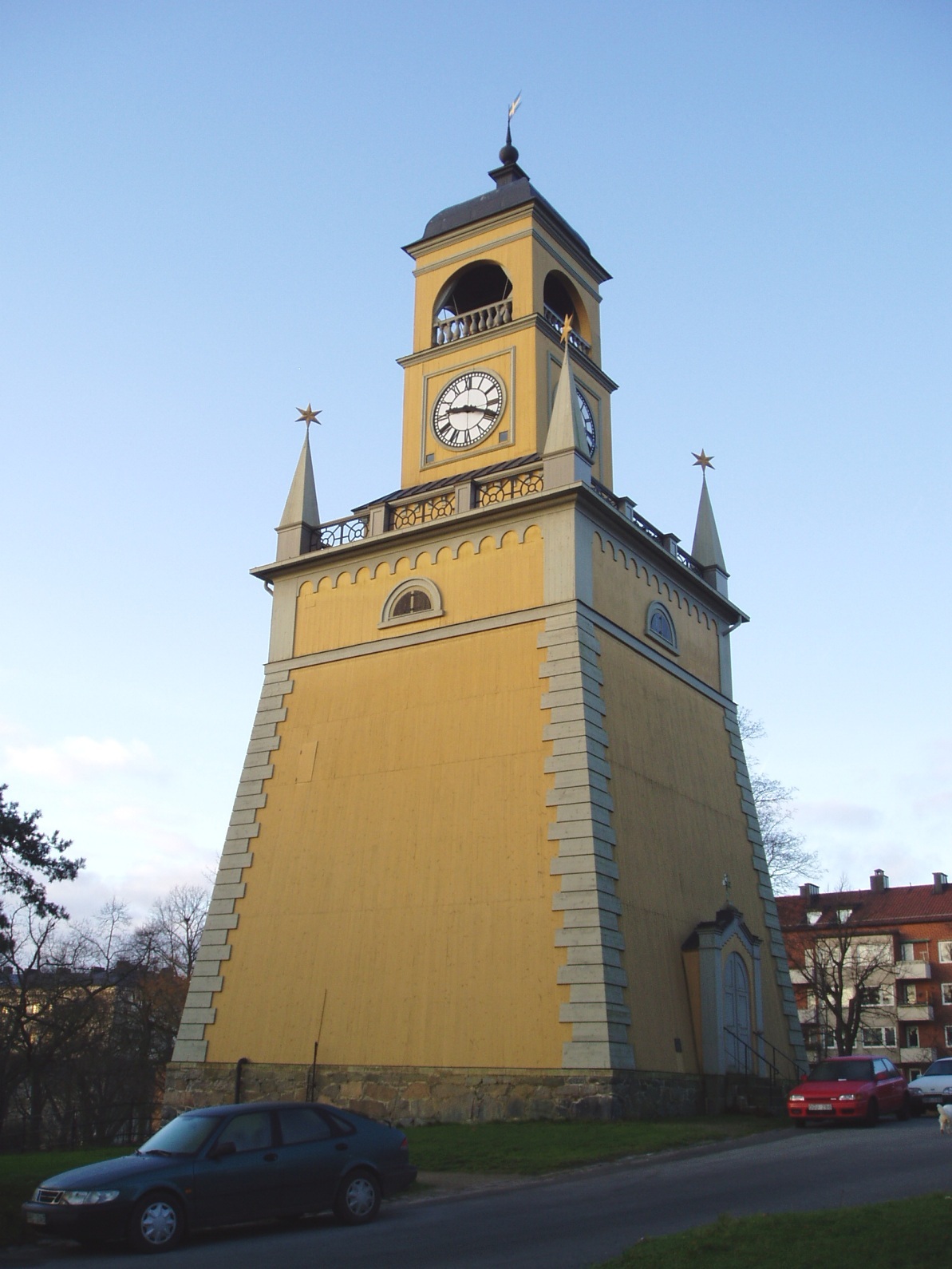
© Udo Schröter, CC BY-SA 2.5 Resized from original. (This derivative is under the same CC BY-SA license.)
World Heritage Research
Discover scientific research and academic studies that deepen our understanding of Naval Port of Karlskrona from its history and significance to its conservation, management, and contemporary challenges.
-
Storytelling about Shipwrecks and Scuttled Ships from the 17–19th Century in the UNESCO World Heritage Site ‘Naval Port of Karlskrona’ in Sweden
Scuttled ships, long dismissed for their perceived lack of archaeological value due to the absence of artefacts, play a crucial role in understanding and strengthening the Outstanding Universal Value (OUV) of UNESCO World Heritage Sites. A study focusing on the Naval Port of Karlskrona in Sweden demonstrates how storytelling about these shipwrecks can effectively engage interest and highlight their historical significance. By employing various narrative methods, researchers have shown that scuttled ships contribute significantly to discussions on cultural heritage preservation, usage, and development. This approach challenges traditional perceptions and underscores the importance of integrating such elements into broader heritage management strategies.
Stråkendal, P. (2024). Storytelling about Shipwrecks and Scuttled Ships from the 17–19th Century in the UNESCO World Heritage Site ‘Naval Port of Karlskrona’ in Sweden. Acta Archaeologica, 94(1), 189–198. https://doi.org/10.1163/16000390-09401056
View Publication Record | Read Publication -
The Case of Fabian Philip, Karlskrona’s First Jewish Entrepreneur: A Swedish example of the Port Jews Phenomenon?
Karlskrona, Sweden's naval port, challenges historical perceptions by demonstrating successful Jewish integration contrary to past assumptions. This study reinterprets archival sources, including newly discovered ones, to argue that Karlskrona—alongside Gothenburg—served as a Swedish example of the 'Port Jews' phenomenon, where internationally oriented naval cities fostered Jewish entrepreneurship despite restrictive settlement laws. By adopting this concept, the research reveals that Karlskrona was not an unfriendly environment for Jews in early modern Sweden, as previously thought, but rather a hub for economic activity and cultural exchange within the Swedish Royal Navy's global network.
Svensson, H. R. (2014). The Case of Fabian Philip, Karlskrona’s First Jewish Entrepreneur: A Swedish example of the Port Jews Phenomenon? 1700-Tal: Nordic Journal for Eighteenth-Century Studies, 11, 69–89. https://doi.org/10.7557/4.3084
View Publication Record | Read Publication