World Heritage Identification Number: 1586
World Heritage since: 2023
Category: Cultural Heritage
WHE Type: Memorial Sites
Transboundary Heritage: No
Endangered Heritage: No
Country: 🇷🇼 Rwanda
Continent: Africa
UNESCO World Region: Africa
Map
Memorial Sites of the Genocide: A Commemoration of Tragedy and Resilience
The Memorial Sites of the Genocide, inscribed as a UNESCO World Heritage Site in 2023, stand as poignant reminders of the atrocities committed during the 1994 Rwandan Genocide. Comprising four distinct locations – Nyamata, Murambi, Gisozi, and Bisesero – these memorial sites serve as testaments to the resilience of the Rwandan people and their unwavering determination to honor the memory of those lost.
More to come…UNESCO Description of the World Heritage Site
Between April and July 1994, an estimated one million people were killed across Rwanda by armed militias called Interahamwe that targeted Tutsi, but also executed moderate Hutu and Twa people. The victims of the genocide are commemorated in this serial property composed of four memorial sites. Two of the component parts were scenes of massacres: a Catholic church built in the hill of Nyamata in 1980, and a technical school built in the hill of Murambi in 1990. The hill of Gisozi in Kigali City hosts the Kigali Genocide Memorial built in 1999, where more than 250,000 victims have been buried, while the hill of Bisesero in the Western Province hosts a memorial built in 1998, to remember the fight of those who resisted their perpetrators for over two months before being exterminated.UNESCO Justification of the World Heritage Site
Criterion (vi): The memorial sites of the Genocide: Nyamata, Murambi, Gisozi and Bisesero are of Outstanding Universal Value because of the sudden intensity of the genocide, the scale of the massacre perpetrated against the Tutsis over 100 days and the extermination of civilians by family members, neighbours and militias. All these factors prompted the United Nations General Assembly in 2003 to designate 7 April as the International Day of Reflection on the 1994 Genocide against the Tutsi in Rwanda. The four memorial sites represent more than 200 places of worship, public places and places of resistance in Rwanda where massacres were committed. The Nyamata Catholic Church and Murambi Technical School are direct and tangible reminders of the genocide sites, the burial site on Gisozi hill reflects the scale of the tragedy, and Bisesero is associated with the struggle of those who resisted.
Encyclopedia Record: List of Rwandan genocide memorials
This is a non-exhaustive list of memorial sites of the 1994 Rwandan genocide. It does not include individual graves or private tributes.Additional Site Details
Area: 24.65 hectares
Number of Components: 5
Coordinates: -2.4555277778 , 29.5677222222
Image
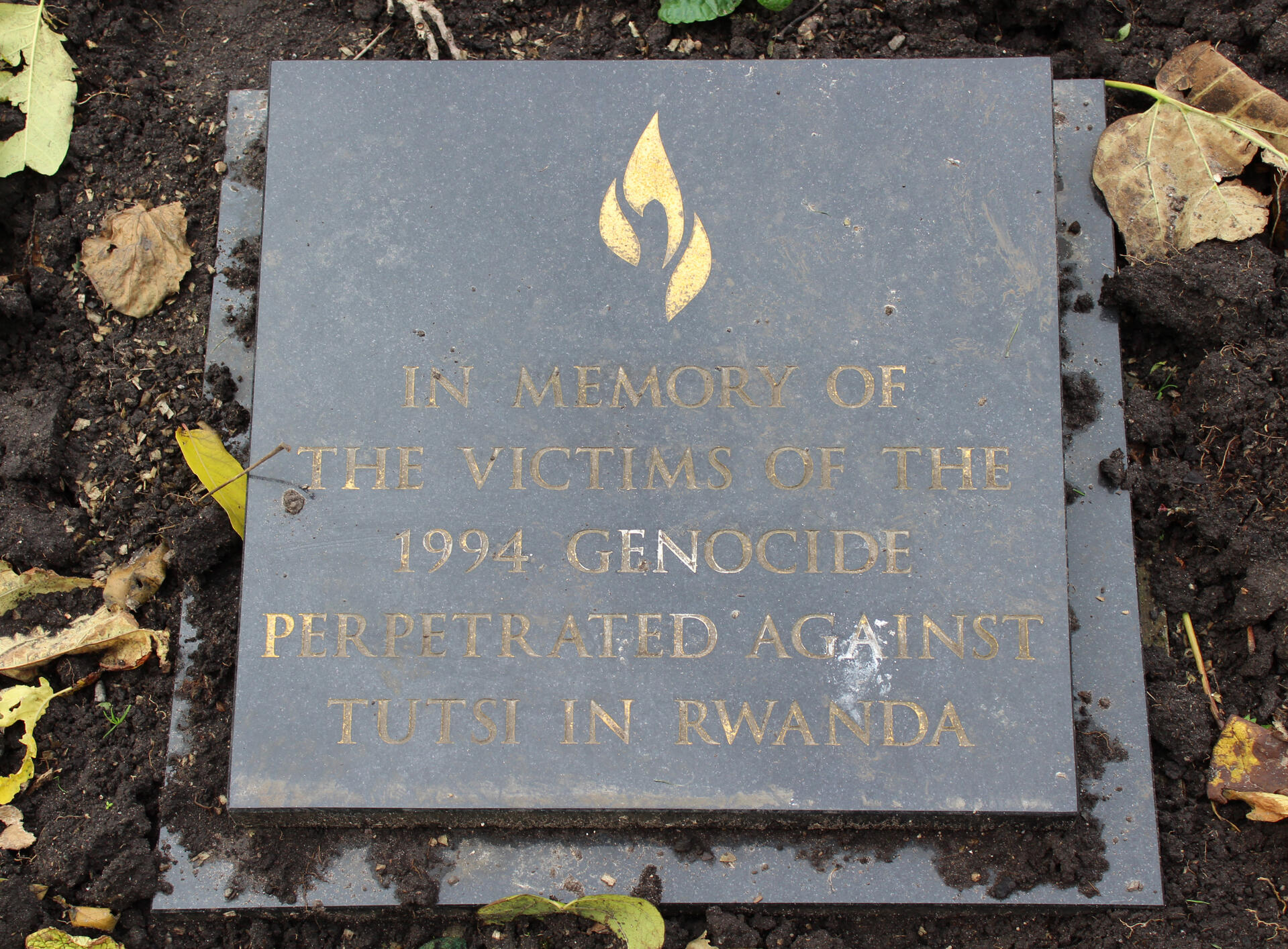
© Rodhullandemu, CC BY-SA 4.0 Resized from original. (This derivative is under the same CC BY-SA license.)
World Heritage Research
Discover scientific research and academic studies that deepen our understanding of Memorial sites of the Genocide: Nyamata, Murambi, Gisozi and Bisesero from its history and significance to its conservation, management, and contemporary challenges.
-
Survivor Agency in the Post-Genocide Memorialization Process in Rwanda
Survivor agency plays a pivotal role in shaping post-genocide memorialization processes, yet it has been largely overlooked in academic discourse. This study highlights how survivors, alongside local communities and organizations, actively contribute to the creation and narrative of memorial sites, particularly at the grassroots level, rather than being passive recipients of state-driven initiatives. Through extensive fieldwork and survivor testimonies, researchers demonstrate that memorialization is a multifaceted process involving state efforts, institutional actors, and grassroots participation. This challenges the dominant narrative that reduces memorialization to questions of state power, enriching the discourse on transitional justice and collective memory.
Wolfe, S., Ndizeye, O., & de Beer, A.-M. (2025). Survivor Agency in the Post-Genocide Memorialization Process in Rwanda. Journal of Genocide Research, 27(2), 131–154. https://doi.org/10.1080/14623528.2025.2488084
View Publication Record | Read Publication -
Building Peace at Sites of Memory: Community Relationships with UNESCO World Heritage in Post-Genocide Rwanda
Rwanda's recent inscription of genocide memorials (Nyamata, Murambi, Gisozi, and Bisesero) on UNESCO's World Heritage List highlights the tension between peacebuilding, community participation, and political constraints in post-genocide contexts. While the management plan for these sites marks a shift toward greater community engagement compared to past Rwandan heritage practices, it still faces significant limitations due to narrative inclusivity challenges, national politics around genocide memory, and international World Heritage regime influences. This study analyzes these dynamics, revealing how even peace-oriented sites grapple with the complexities of participation and governance in post-conflict settings.
Bolin, A. (2025). Building Peace at Sites of Memory: Community Relationships with UNESCO World Heritage in Post-Genocide Rwanda. Heritage & Society, 18(2), 163–185. https://doi.org/10.1080/2159032x.2025.2506132
View Publication Record | Read Publication -
Memorial museums and burial sites: Rwanda’s unfinished memory work
Rwanda's memorial museums, initially built by survivors and local communities to bury genocide victims, have evolved into interactive spaces that engage with visitors while reflecting the country's mourning culture. A study highlights how the aesthetic design choices of Rwandan architect Vedaste Ngarambe in three memorial sites—Bisesero, Gatwaro, and Ngoma—encode both the stories of massacres and the local community's grief. The research reveals that these memorials shift from functional burial sites to artistic, trauma-informed spaces, demonstrating a broader trend in memorialization practices. By analyzing architectural design, the study offers insight into how memory is constructed, preserved, and experienced in post-genocide Rwanda.
de Beer, A.-M., Wolfe, S., & Ndizeye, O. (2024). Memorial museums and burial sites: Rwanda’s unfinished memory work. Memory Studies, 18(4), 778–797. https://doi.org/10.1177/17506980241270808
View Publication Record | Read Publication -
Design elements evoke embodiment at cultural sites in Rwanda and South Africa
Design elements at memorial sites can significantly enhance visitor emotional engagement with historical atrocities, fostering deeper empathy and connection. A visual essay examines three genocide or apartheid memorials—Bisesero (Rwanda), Apartheid Museum, and Prestwich Memorial (South Africa)—revealing how architectural details and object placement encourage physical and emotional interaction. These strategies move visitors beyond intellectual understanding toward embodied experiences that promote healing, reconciliation, and a more profound response to humanitarian tragedy.
Stanford, R. (2023). Design elements evoke embodiment at cultural sites in Rwanda and South Africa. Memory Studies, 16(3), 611–620. https://doi.org/10.1177/17506980231162326
View Publication Record | Read Publication -
The micro-politics of remembering “the 1994 genocide against the Tutsi” in Rwanda
State-funded genocide memorials in Rwanda, designed to commemorate victims of the 1994 Genocide against the Tutsi, may inadvertently perpetuate political tension and spiritual violence. Research reveals that the politicization of anonymous human remains—central to the government's efforts to establish irrefutable evidence of the genocide—has transformed these sites into sources of conflict rather than healing. Qualitative studies conducted since 2007 among memorial staff, survivors, bystanders, and other affected individuals in Karongi district highlight how authoritarian governance prioritizes state interests over survivor needs, leading to negative mental and physical health consequences. This study underscores the complex interplay between commemoration, politics, and trauma in post-conflict contexts.
Jessee, E. (2022). The micro-politics of remembering “the 1994 genocide against the Tutsi” in Rwanda. Localising Memory in Transitional Justice, 83–106. https://doi.org/10.4324/9780429330841-6
View Publication Record | Read Publication -
Dark tourism and Rwandan media industries: Promoting nation and the mythology of memory
Rwandan memorial sites, particularly those associated with the genocide, reveal a complex interplay between national narratives and local meanings. While official memorials like Nyamata, Murambi, Gisozi, and Bisesero present curated, reconciliatory stories, unofficial sites such as unmarked burials carry deeper emotional significance for communities. This duality challenges the unified narratives promoted by the government and international bodies, highlighting how public and private spaces in Rwanda are repurposed with multifaceted meanings. The study examines this dissonance through discourse analysis and fieldwork, offering insights into how memory is constructed, contested, and mythologized in post-genocide Rwanda.
Young, A. P. (2022). Dark tourism and Rwandan media industries: Promoting nation and the mythology of memory. Tourist Studies, 22(4), 311–327. https://doi.org/10.1177/14687976221129643
View Publication Record | Read Publication -
Trauma Heritage as Memory Justice: Sites and Dilemmas in Rwanda
Trauma heritage sites, such as those in Rwanda—Nyamata, Murambi, Gisozi, and Bisesero—serve as powerful tools for memory justice, preserving evidence of the 1994 genocide to confront impunity and negligence. These sites, emerging from a broader 'era of trauma heritage' in the Global South, challenge marginalized narratives by spatializing memories of violence, fostering truth-telling, and promoting societal repair. However, their visibility remains elusive, both for those directly affected and distant observers, highlighting inherent tensions in such memorialization efforts.
Wendel, D. D. B. (2022). Trauma Heritage as Memory Justice: Sites and Dilemmas in Rwanda. Future Anterior: Journal of Historic Preservation History, Theory, and Criticism, 19(2), 1–15. https://doi.org/10.1353/fta.2022.a940801
View Publication Record | Read Publication