World Heritage Identification Number: 331
World Heritage since: 1985
Category: Cultural Heritage
WHE Type: Historic Cities & Urban Areas
Transboundary Heritage: No
Endangered Heritage: No
Country: 🇲🇦 Morocco
Continent: Africa
UNESCO World Region: Arab States
Map
The Medina of Marrakesh: A Cultural and Historical Gem of Morocco
The Medina of Marrakesh, located in the heart of one of Morocco’s largest cities, is a testament to the rich history and cultural diversity of the region. Inscribed as a UNESCO World Heritage Site in 1985, this ancient walled city offers visitors a unique glimpse into the past, showcasing a predominantly Islamic and Amazigh (Berber) architectural heritage, with subtle influences from the colonial period.
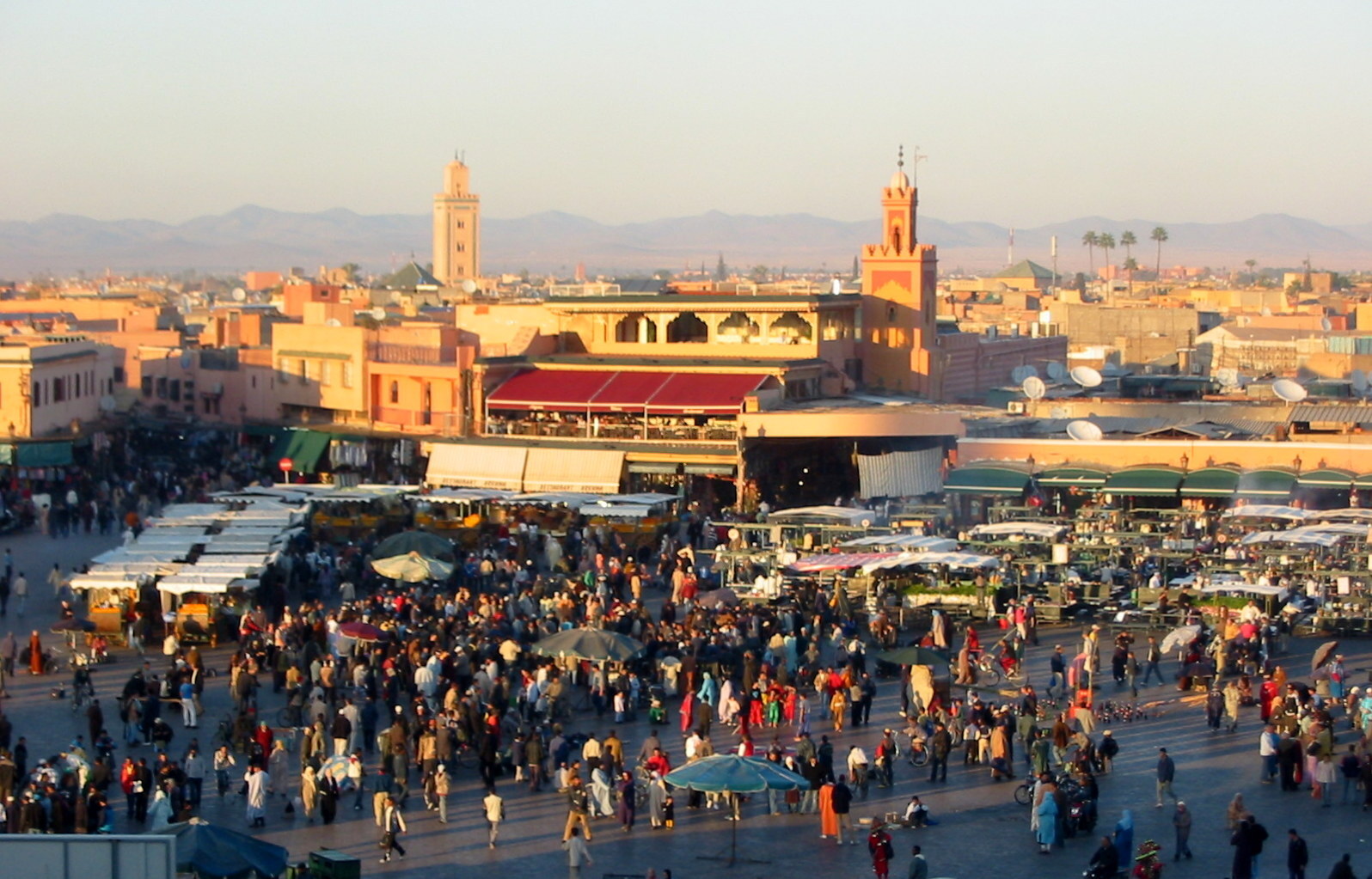
Founded in the late 11th century by the Almoravids, a Berber dynasty, Marrakesh quickly rose to prominence as a major political, economic, and cultural center. Its influence extended far beyond Morocco, reaching as far as Andalusia in Spain. This historical significance is evident in the numerous impressive monuments that still stand today, such as the Koutoubia Mosque, the city's most iconic landmark. Completed in the early 12th century during the Almohad period, the Koutoubia Mosque's distinctive minaret, adorned with intricate geometric patterns, can be seen from various points around the city.
Another notable structure within the Medina is the Kasbah district, a fortified royal quarter expanded under the Almohad Caliphate in the 12th century. The Kasbah includes royal palaces and administrative structures, some of which are still in use today. The surrounding ramparts and gates offer stunning views of the city and its surroundings, particularly at sunset.
One of the most visited sites within the Medina is Jemaa el-Fnaa, a bustling public square that serves as the city's social heart. It is world-renowned for its street performers, musicians, and traditional storytellers performing in a circular gathering known as halqa. This vibrant open-air space offers a dynamic, living insight into Moroccan cultural traditions that have remained largely unchanged for centuries.
Later architectural highlights include the El Badi Palace, built in the late 16th century during the reign of the Saadian sultan Ahmad al-Mansur. Although largely in ruins today, its vast courtyard and remnants of intricate decoration still reflect the former opulence of the Saadian dynasty. Another significant site is the Saadian Tombs, a burial complex containing members of the Saadian royal family, renowned for its richly decorated marble, stucco, and cedar wood craftsmanship.
In addition to these well-known landmarks, the Medina of Marrakesh is home to a vast network of lesser-known but equally significant historic sites, including madrasas (Islamic schools), mosques, traditional merchant houses (riads), fondouks (caravanserais), hammams (bathhouses), and private gardens hidden behind unassuming walls. These structures reflect centuries of continuous urban development, shaped by successive dynasties, trade routes, and cultural exchanges across North Africa, the Mediterranean, and the wider Islamic world.
Overall, the Medina of Marrakesh stands as a powerful symbol of Morocco’s historical depth and cultural richness. Its architectural diversity, ranging from monumental religious buildings to intricate residential spaces, illustrates the city’s evolution over nearly a millennium. Combined with its vibrant street life and enduring traditions, the Medina remains not only a major historical site but also a living, evolving urban environment. As a result, it continues to be one of North Africa’s most compelling and culturally significant destinations.
UNESCO Description of the World Heritage Site
Founded in 1070–72 by the Almoravids, Marrakesh remained a political, economic and cultural centre for a long period. Its influence was felt throughout the western Muslim world, from North Africa to Andalusia. It has several impressive monuments dating from that period: the Koutoubiya Mosque, the Kasbah, the battlements, monumental doors, gardens, etc. Later architectural jewels include the Bandiâ Palace, the Ben Youssef Madrasa, the Saadian Tombs, several great residences and Place Jamaâ El Fna, a veritable open-air theatre.
UNESCO Justification of the World Heritage Site
Criterion (i): Marrakesh contains an impressive number of masterpieces of architecture and art (ramparts and monumental gates, Koutoubia Mosque, Saâdians tombs, ruins of the Badiâ Palace, Bahia Palace, Ménara water feature and pavilion) each one of which could justify, alone, a recognition of Outstanding Universal Value.
Criterion (ii): The capital of the Almoravids and the Almohads has played a decisive role in medieval urban development. Capital of the Merinids, Fès Jedid (the New town), integral part of the Medina of Fez, inscribed in 1981 on the World Heritage List, is an adaptation of the earlier urban model of Marrakesh.
Criterion (iv): Marrakesh, which gave its name to the Moroccan empire, is a completed example of a major Islamic capital of the western Mediterranean.
Criterion (v): In the 700 hectares of the Medina, the ancient habitat, rendered vulnerable due to demographic change, represents an outstanding example of a living historic town with its tangle of lanes, its houses, souks, fondouks, artisanal activities and traditional trades.
Encyclopedia Record: Marrakesh
Marrakesh or Marrakech is the fourth-largest city in Morocco. It is one of the four imperial cities of Morocco and is the capital of the Marrakesh-Safi region. The city lies west of the foothills of the Atlas Mountains.Additional Site Details
Area: 1,107 hectares
Number of Components: 2
(ii) — Significant interchange of human values
(iv) — Outstanding example of a type of building or landscape
(v) — Outstanding example of traditional human settlement
Coordinates: 31.63139 , -7.98667