World Heritage Identification Number: 356
World Heritage since: 1985
Category: Cultural Heritage
WHE Type: Historic Cities & Urban Areas
Transboundary Heritage: No
Endangered Heritage: No
Country: 🇹🇷 Türkiye
Continent: Asia
UNESCO World Region: Europe and North America
Map
Historic Areas of Istanbul: Crossroads of Civilizations
The Historic Areas of Istanbul, inscribed as a UNESCO World Heritage Site in 1985, stand as a testament to the city's rich history spanning over two millennia. Situated on Istanbul's Historic Peninsula within the modern Fatih district, these historic areas have been the epicenter of significant political, religious, and artistic developments throughout history.
Istanbul's strategic position on the Bosphorus Strait, forming part of the maritime route linking the Black Sea to the Mediterranean through the Sea of Marmara and the Dardanelles, has made it a coveted location since antiquity. The city has been ruled by successive empires, including the Roman Empire, the Eastern Roman (Byzantine) Empire, the Latin Empire, and the Ottoman Empire, each leaving an indelible mark on its cityscape.
The Historic Areas of Istanbul comprise four principal conservation zones: the Archaeological Park, the Süleymaniye Conservation Area, the Zeyrek Conservation Area, and the Land Walls Conservation Area. Together, these areas preserve an extraordinary concentration of monuments spanning the Byzantine and Ottoman periods. Recognized for their Outstanding Universal Value, the site exemplifies exceptional architectural achievements, historical significance, and a lasting influence on the cultural development of Europe and the Near East.
One of the most iconic landmarks within the Historic Areas is the Hippodrome of Constantine. Originally established during the reign of Emperor Septimius Severus around AD 203 and later greatly expanded by Emperor Constantine I, this grand structure served as the center of chariot races, public ceremonies, political gatherings, and other civic events during the Byzantine period. Today, three principal monuments survive: the Obelisk of Theodosius, the Serpent Column, and the Walled Obelisk.
Another notable site is Hagia Sophia, completed in AD 537 during the reign of Emperor Justinian I. Renowned for its massive dome and magnificent mosaics, this architectural masterpiece was originally built as a cathedral before being converted into a mosque following the Ottoman conquest of Constantinople in 1453. It was secularized and opened as a museum in 1935 before being reconverted into a mosque in 2020. Hagia Sophia remains part of the UNESCO World Heritage Site and continues to welcome visitors outside prayer times.
The Historic Areas also include several outstanding examples of Byzantine architecture and engineering. The Zeyrek Mosque, originally the Monastery of Christ Pantokrator, is one of the finest surviving religious complexes from the Middle Byzantine period. Nearby, Hagia Irene, one of Istanbul's oldest churches, reflects the city's early Christian heritage and is notable for never having been converted into a mosque. Beneath the historic peninsula, the Basilica Cistern stands as a remarkable feat of Byzantine engineering, with its vast subterranean chambers and rows of marble columns illustrating the ingenuity of Constantinople's ancient water supply system.
The 16th century brought another architectural masterpiece to Istanbul: the Süleymaniye Mosque. Commissioned by Sultan Süleyman the Magnificent and designed by the renowned architect Mimar Sinan, the mosque was completed in 1557 and stands as the crowning achievement of classical Ottoman architecture. Perched atop one of Istanbul's seven hills, its soaring dome and elegant minarets dominate the city's skyline.
Among the other remarkable monuments within the World Heritage Site is Topkapı Palace, which served as the principal residence of the Ottoman sultans and the administrative heart of the empire from the 15th to the 19th century. Equally significant are the Theodosian Land Walls, constructed in the 5th century during the reign of Emperor Theodosius II. Stretching for several kilometers across the western side of the historic peninsula, these formidable fortifications protected Constantinople for nearly a thousand years and are widely regarded as one of the greatest surviving defensive systems of the medieval world.
However, these historic treasures face numerous challenges in the 21st century. Urbanization, population growth, industrial pollution, tourism pressures, and uncontrolled development pose significant threats to their preservation. Efforts continue to protect and conserve these cultural landmarks while balancing the demands of modern infrastructure, economic development, and the needs of a growing metropolis.
Today, the Historic Areas of Istanbul represent a priceless legacy of human history, culture, and artistic achievement. They stand as a reminder of the city's remarkable past and offer invaluable insights into the evolution of civilizations across Europe and Asia. By preserving these irreplaceable monuments, we safeguard our shared cultural heritage and ensure that future generations can continue to appreciate the extraordinary historical legacy embodied by Istanbul's Historic Areas.
UNESCO Description of the World Heritage Site
With its strategic location on the Bosphorus peninsula between the Balkans and Anatolia, the Black Sea and the Mediterranean, Istanbul has been associated with major political, religious and artistic events for more than 2,000 years. Its masterpieces include the ancient Hippodrome of Constantine, the 6th-century Hagia Sophia and the 16th-century Süleymaniye Mosque, all now under threat from population pressure, industrial pollution and uncontrolled urbanization.
UNESCO Justification of the World Heritage Site
Criterion (i): The Historic Areas of Istanbul include monuments recognised as unique architectural masterpieces of Byzantine and Ottoman periods such as Hagia Sophia, which was designed by Anthemios of Tralles and Isidoros of Miletus in 532-537 and the Suleymaniye Mosque complex designed by architect Sinan in 1550-1557.
Criterion (ii): Throughout history the monuments in Istanbul have exerted considerable influence on the development of architecture, monumental arts and the organization of space, both in Europe and the Near East. Thus, the 6,650 meter terrestrial wall of Theodosius II with its second line of defence, created in 447, was one of the leading references for military architecture; Hagia Sophia became a model for an entire family of churches and later mosques, and the mosaics of the palaces and churches of Constantinople influenced both Eastern and Western art.
Criterion (iii): Istanbul bears unique testimony to the Byzantine and Ottoman civilizations through its large number of high quality examples of a great range of building types, some with associated artworks. They include fortifications, churches and palaces with mosaics and frescos, monumental cisterns, tombs, mosques, religious schools and bath buildings. The vernacular housing around major religious monuments in the Süleymaniye and Zeyrek quarters provide exceptional evidence of the late Ottoman urban pattern.
Criterion (iv): The city is an outstanding set of monuments, architectural and technical ensembles that illustrate very distinguished phases of human history. In particular, the Palace of Topkapi and the Suleymaniye Mosque complex with its caravanserai, madrasa, medical school, library, bath building, hospice and imperial tombs, provide supreme examples of ensembles of palaces and religious complexes of the Ottoman period.
Encyclopedia Record: Historic Areas of Istanbul
The Historic Areas of Istanbul are a group of sites in the capital district of Fatih in the city of Istanbul, Turkey. These areas were added to the UNESCO World Heritage List in 1985.Additional Site Details
Area: 765.5 hectares
Number of Components: 4
(ii) — Significant interchange of human values
(iii) — Unique or exceptional testimony to a cultural tradition
(iv) — Outstanding example of a type of building or landscape
Coordinates: 41.00847 , 28.97993
Image
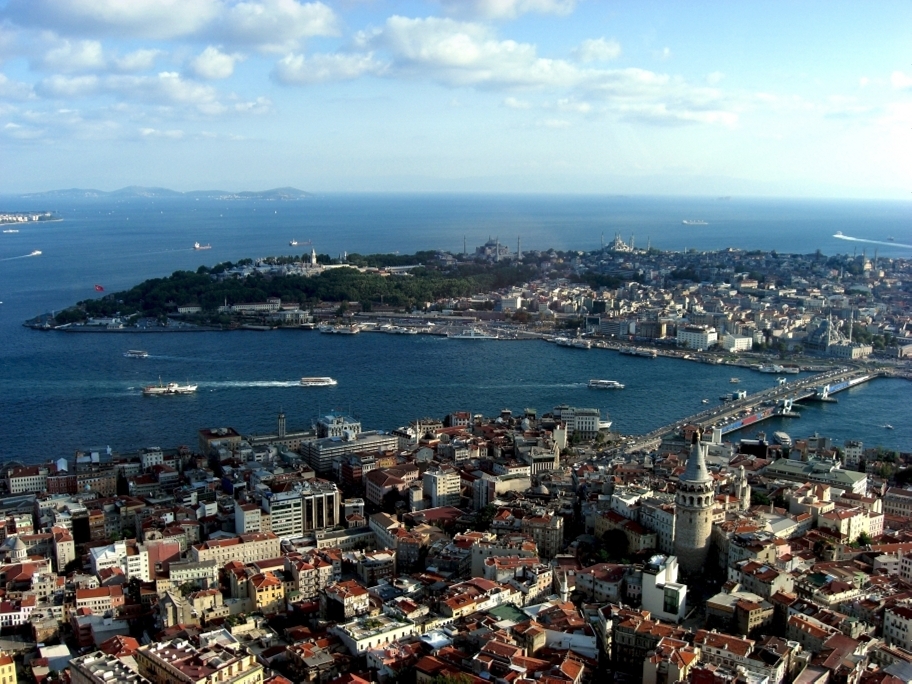
© please put the following link as a backlink in your article: Istanbul Tipps - Picture by Selda Yildiz and Erol Gülsen ., CC BY-SA 3.0 de Resized from original. (This derivative is under the same CC BY-SA license.)