World Heritage Identification Number: 849
World Heritage since: 1998
Category: Cultural Heritage
WHE Type: Archaeological Sites
Transboundary Heritage: No
Endangered Heritage: No
Country: 🇹🇷 Türkiye
Continent: Asia
UNESCO World Region: Europe and North America
Map
Unraveling the Mysteries of the Archaeological Site of Troy
The Archaeological Site of Troy, nestled within the hill of Hisarlık in modern-day northwestern Turkey and designated a UNESCO World Heritage Site in 1998, stands as a testament to a rich cultural heritage spanning millennia. Long associated with the legendary Trojan War, this ancient city has captivated scholars, historians, and visitors alike, offering a unique glimpse into the ancient world.
Troy's origins can be traced back to the Early Bronze Age, with evidence indicating settlement as early as the third millennium BCE. The site remained inhabited—with interruptions—until the Byzantine period (around the 5th century CE). However, it was not until the 19th century that the site gained international attention when German archaeologist Heinrich Schliemann began excavations in 1870. Although Schliemann's methods would be considered destructive by modern archaeological standards, his work paved the way for subsequent research that revealed layer upon layer of human habitation, each representing a distinct phase in the city’s long history.
Archaeological research has identified nine principal settlement phases at Troy, conventionally labeled Troy I through Troy IX, each subdivided into further building stages. Troy I–V (c. 3000–1700 BCE) represent successive Early and Middle Bronze Age communities characterized by evolving domestic architecture and expanding fortifications. Troy VI and VII (c. 1700–1200 BCE), belonging to the Late Bronze Age, mark a period of greater urban development and monumental defensive walls. Troy VIII reflects the Hellenistic Greek city of Ilion, while Troy IX corresponds to the Roman city that flourished under imperial patronage.
In archaeological terms, Troy is one of the most significant sites illustrating long-term interaction between Anatolia and the Aegean world. Its strategic location near the Dardanelles (ancient Hellespont) positioned it along key trade routes linking the Black Sea, Anatolia, and the Mediterranean. Excavations have uncovered a wealth of material culture—including pottery, jewelry, fortification walls, and weapons—providing valuable insights into the social, economic, and political structures of successive communities.
One of the most intriguing aspects of Troy is its association with the Trojan War, as recounted in the Iliad, traditionally attributed to the ancient Greek poet Homer. While the historicity of the Trojan War remains debated among scholars, many associate a possible historical conflict with the Late Bronze Age layers known as Troy VI or Troy VIIa.
Regardless of its historical basis, the Trojan War narrative has profoundly shaped Western literature and art. From the Aeneid by Virgil to the Odyssey, traditionally attributed to Homer, the legend of Troy has inspired creative expression for over two millennia. Beyond the classical canon, the story continues to resonate in modern literature, visual arts, theater, and broader popular culture, demonstrating its enduring power within the collective imagination.
Visitors to Troy today can walk among the remains of fortification walls, towers, gates, and foundations that testify to the city’s long and complex history. The site also features a modern wooden replica of the Trojan Horse, inspired by later literary traditions such as the Aeneid. Although the horse itself is mythological rather than archaeological, it serves as a powerful symbol of Troy’s enduring allure and its connection to some of humanity’s most influential stories.
Overall, the Archaeological Site of Troy stands as one of the world’s most important archaeological landmarks. Its extensive remains illuminate the development of urban society, the dynamics of cross-cultural exchange, and the enduring power of myth to shape cultural memory. As such, Troy continues to inspire scholarship and imagination alike, securing its place among the most significant sites of the ancient world.
UNESCO Description of the World Heritage Site
Troy, with its 4,000 years of history, is one of the most famous archaeological sites in the world. The first excavations at the site were undertaken by the famous archaeologist Heinrich Schliemann in 1870. In scientific terms, its extensive remains are the most significant demonstration of the first contact between the civilizations of Anatolia and the Mediterranean world. Moreover, the siege of Troy by Spartan and Achaean warriors from Greece in the 13th or 12th century B.C., immortalized by Homer in the Iliad, has inspired great creative artists throughout the world ever since.
UNESCO Justification of the World Heritage Site
The archaeological site of Troy is of immense significance in the understanding of the development of European civilization at a critical stage in its early development. It is, moreover, of exceptional cultural importance because of the profound influence of Homer’s Iliad on the creative arts over more than two millennia.
Encyclopedia Record: Troy
Troy or Ilion was an ancient city located in present-day Hisarlik, Turkey. It is best known as the setting for the Greek myth of the Trojan War. The archaeological site is open to the public as a tourist destination, and was added to the UNESCO World Heritage list in 1998.Additional Site Details
Area: 158 hectares
(iii) — Unique or exceptional testimony to a cultural tradition
(vi) — Directly associated with events or living traditions
Coordinates: 39.95644 , 26.239
Image
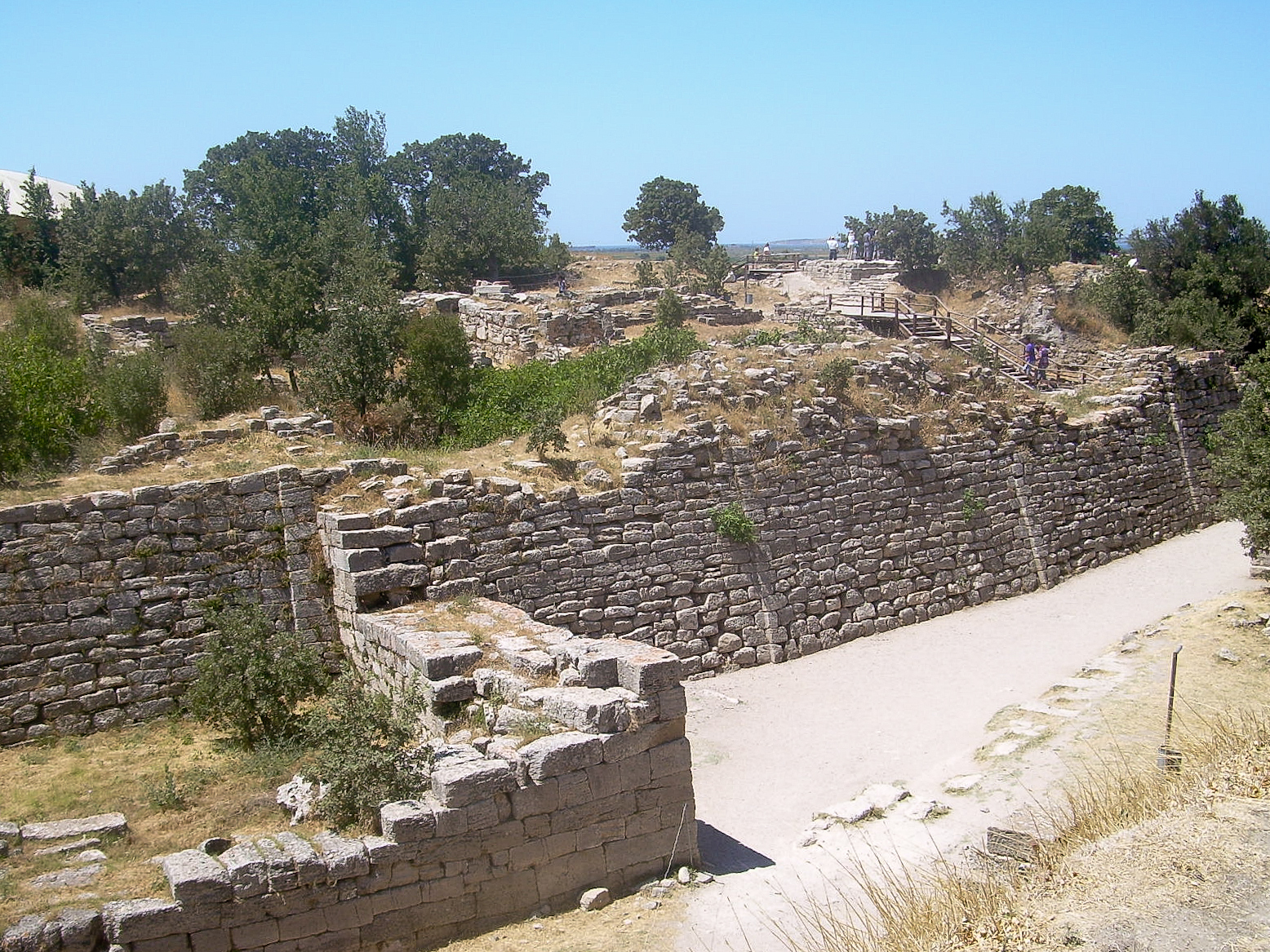
© CherryX, CC BY-SA 3.0 Resized from original. (This derivative is under the same CC BY-SA license.)