World Heritage Identification Number: 487
World Heritage since: 1988
Category: Natural Heritage
WHE Type: Natural Landscapes & Geographic Features
Transboundary Heritage: No
Endangered Heritage: No
Country: 🇬🇧 United Kingdom of Great Britain and Northern Ireland
Continent: Europe
UNESCO World Region: Europe and North America
Map
Henderson Island: A Remote Haven of Biodiversity
Henderson Island, a remote atoll in the eastern South Pacific, is one of the most pristine and unique ecosystems on Earth. This uninhabited island, measuring approximately 9.6 by 5.1 kilometers, forms part of the Pitcairn Island Group, along with Pitcairn, Oeno, and Ducie Islands. With an area of 37.3 square kilometers, Henderson Island lies 193 kilometers northeast of Pitcairn Island, the only inhabited island in the group.
More to come…UNESCO Description of the World Heritage Site
Henderson Island, which lies in the eastern South Pacific, is one of the few atolls in the world whose ecology has been practically untouched by a human presence. Its isolated location provides the ideal context for studying the dynamics of insular evolution and natural selection. It is particularly notable for the 10 plants and four land birds that are endemic to the island.
UNESCO Justification of the World Heritage Site
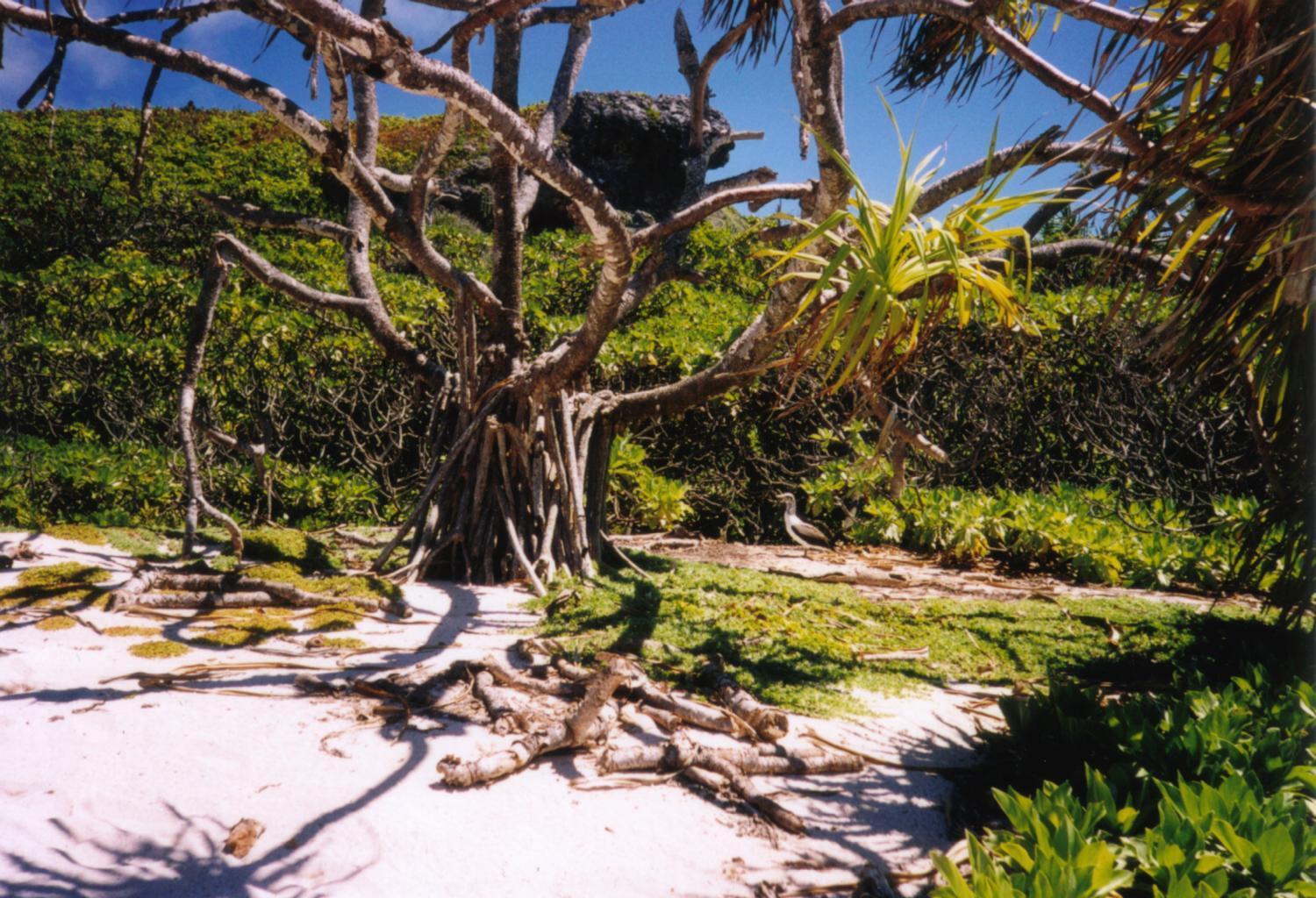
Criterion (vii): As one of the last near-pristine limestone islands of significant size in the world, Henderson Island retains its exceptional natural beauty with its white, sandy beaches, limestone cliffs, and rich and almost undisturbed vegetation. With its vast numbers of breeding seabirds, the island is an outstanding example of a raised and forested oceanic coral atoll with its fundamental features intact.
Criterion (x): While isolated coral atolls are typically species-poor, all four of Henderson’s land birds are endemic including the very distinct flightless Henderson Crake. At least four other endemic and one native species of bird are believed to have become extinct following human colonization. The island today is the only known breeding site of the endangered Henderson Petrel and is an important breeding area for at least ten other seabird species. While the flora is also typically poor with some 57 native vascular species recorded, these include six endemic species, three endemic varieties and another species endemic to Henderson and Pitcairn. As the island has never been intensively studied it seems likely that other as yet unidentified endemics occur. For example, the island's invertebrate fauna is little known but about one-third of the insects and gastropods so far collected are endemic.
Encyclopedia Record: Henderson Island (Pitcairn Islands)
Henderson Island is an uninhabited island in the south Pacific Ocean. It is part of the Pitcairn Island Group, together with Pitcairn, Oeno, and Ducie Islands. Measuring 9.6 by 5.1 kilometres, it has an area of 37.3 km2 (14.4 sq mi) and is located 193 km northeast of Pitcairn Island, which is the only inhabited island of the group. It has poor soil and little fresh water, and is unsuitable for agriculture. There are three beaches on the northern end and the remaining coast comprises steep cliffs up to 15 m (50 ft) in height. In 1902, it was annexed to the Pitcairn Islands colony, which is now a British Overseas Territory.Additional Site Details
Area: 3,700 hectares
Number of Components: 1
(x) — Contains most important habitats for biodiversity
Coordinates: -24.3666666667 , -128.333333333
IUCN World Heritage Outlook
The 2025 Conservation Outlook on Henderson Island reports the following assessment:
Source: International Union for Conservation of Nature (IUCN) · View assessment
Image
© Makemake at German Wikipedia, CC BY-SA 3.0 Resized from original. (This derivative is under the same CC BY-SA license.)
World Heritage Research
Discover scientific research and academic studies that deepen our understanding of Henderson Island from its history and significance to its conservation, management, and contemporary challenges.
-
Low and steady: Minimal change in plastic exposure in Kermadec Petrels in the remote South Pacific
A study on Henderson Island reveals that plastic ingestion in Kermadec Petrels (Pterodroma neglecta) has remained consistent at low levels over more than 30 years, with only 23.1% of fledglings sampled in 2025 containing small quantities of microplastics (mean ± SD: 0.0113 ± 0.0061 g). This finding contrasts sharply with plastic ingestion rates in closely related species, suggesting that Kermadec Petrels may selectively avoid plastic or forage in areas with lower pollution densities. The research, conducted on uninhabited Henderson Island and Oeno Atoll, highlights the potential for these birds to serve as sentinels for pollution in remote South Pacific regions, offering valuable insights into species-specific vulnerability to marine debris.
Lavers, J. L., Christian, J., & Bond, A. L. (2026). Low and steady: Minimal change in plastic exposure in Kermadec Petrels in the remote South Pacific. Marine Pollution Bulletin, 227, 119522. https://doi.org/10.1016/j.marpolbul.2026.119522
View Publication Record | Read Publication -
Birds of Oeno Atoll, Pitcairn Islands, in September 2025
A 2025 survey of Oeno Atoll, Pitcairn Islands, reveals significant seabird population recovery following the eradication of invasive Polynesian rats in 1997. The study highlights asynchronous breeding patterns and high reproductive success across multiple species, with colony sizes surpassing pre-eradication estimates. In contrast, Henderson Island's ground-nesting seabirds continue to face predation pressures. The research emphasizes the importance of long-term monitoring to understand breeding phenology and population trends, underscoring Oeno Atoll's role as a critical seabird stronghold in recovery.
Bond, A. L., Christian, J., Wolstenholme, H. L., Christian, S., Christian, R., Warren-Peu, T. J., Warren-Peu Christian, T., Warren-Peu, T. K., & Lavers, J. L. (2026). Birds of Oeno Atoll, Pitcairn Islands, in September 2025. Notornis, 73(2), 225. https://doi.org/10.63172/212655icfmwd
View Publication Record | Read Publication -
Assessing strategies for remote island beach cleanups: Lessons from the Pacific and Alaska
Effective remote island beach cleanups require careful planning, local engagement, and innovative technologies to balance benefits with potential harms. A study comparing Henderson Island in the South Pacific and Kruzof Island in Southeast Alaska identified key strategies for managing plastic pollution in isolated regions. Using a six-step cleanup framework, researchers evaluated approaches based on feasibility, cost-effectiveness, and co-benefits. The findings highlight that while downstream cleanups are necessary, they must be executed with caution to avoid ecological disruption or unintended consequences. This research provides actionable insights for marine debris management in remote locations.
Dijkstra, H., & Tirman, K. (2025). Assessing strategies for remote island beach cleanups: Lessons from the Pacific and Alaska. Marine Pollution Bulletin, 216, 117934. https://doi.org/10.1016/j.marpolbul.2025.117934
View Publication Record | Read Publication -
The Henderson Island microcosm: plastic pollution accumulation in the South Pacific
A significant reduction in plastic accumulation on Henderson Island, a remote UNESCO World Heritage Site in the South Pacific, was observed following a 2019 cleanup. Annual accumulation rates dropped from 284.75 g/m² (2015–2019) to just 16.8 g/m² (2019–2024), though litter density remains high at 53 items/m², primarily maritime debris. This study leverages decade-long longitudinal data to demonstrate the effectiveness of large-scale cleanups while highlighting persistent pollution challenges. It underscores Henderson Island's role as a microcosm for monitoring oceanic plastic dynamics, emphasizing the need for ongoing community-led efforts, larger sample sizes, and stricter maritime regulations to address lingering debris. Seasonal variability and methodological differences in data collection were also identified as key factors influencing results.
Dijkstra, H. (2025). The Henderson Island microcosm: plastic pollution accumulation in the South Pacific. Marine Pollution Bulletin, 219, 118095. https://doi.org/10.1016/j.marpolbul.2025.118095
View Publication Record | Read Publication -
New distribution records of the coconut crab (Birgus latro) in eastern Polynesia on Oeno Atoll, Henderson Island, and Ducie Atoll, Pitcairn Islands
Researchers have extended the known eastern range of coconut crabs (Birgus latro) by over 600 kilometers, documenting their presence on Oeno Atoll, Henderson Island, and Ducie Atoll in the Pitcairn Islands. This discovery challenges previous assumptions about the species' distribution limits in the Indo-Pacific region. While populations remain sparse, suitable habitat and prey suggest larger numbers may exist, particularly on Henderson Island. The study relied on narratives and occurrence records to identify these new distribution points. Edge-of-range populations are often vulnerable, but the remoteness of the Pitcairn Islands may provide protection from threats affecting other regions.
Bond, A. L., & Lavers, J. L. (2024). New distribution records of the coconut crab (Birgus latro) in eastern Polynesia on Oeno Atoll, Henderson Island, and Ducie Atoll, Pitcairn Islands. Pacific Conservation Biology, 30(6). https://doi.org/10.1071/pc24043
View Publication Record | Read Publication -
Confirmation of a new breeding area for humpback whales (Megaptera novaeangliae) in the central South Pacific
Research confirms the waters around Henderson Island and nearby Pitcairn Island as a new breeding ground for humpback whales (Megaptera novaeangliae) in the central South Pacific. Observations from 2019 to 2021 revealed small, mixed groups of adult males, mothers with calves, and escort whales, exhibiting behaviors such as surface-active movements and unrecorded singing, indicative of mating and calving. Calves were estimated to be newly born, suggesting these islands serve as critical habitats during the austral winter and spring. While the study did not track individual whales, it hints at a possible connection between these isolated breeding groups and larger populations in French Polynesia, though further research is needed to establish this link.
Irving, R. A., O’Keefe, S., Warren, P., Koldewey, H. J., & Dawson, T. P. (2023). Confirmation of a new breeding area for humpback whales (Megaptera novaeangliae) in the central South Pacific. J. Cetacean Res. Manage., 18(1), 119–125. https://doi.org/10.47536/jcrm.v18i1.440
View Publication Record | Read Publication -
Records of Brown Booby Sula leucogaster in the Pitcairn Islands with additional observations during 2015–19
A comprehensive review of the avifauna of the Pitcairn Islands, including Henderson Island, reveals that while Henderson supports five endemic bird species, Ducie and Oeno lack any endemic species. The study highlights the significant scientific attention given to Henderson's birds since the early 20th century, with notable expeditions such as the Sir Peter Scott Memorial Expedition (1991–92) providing extensive data on the island's avian life. Recent studies have also focused on the impact of introduced Pacific Rats on Henderson's native fauna and the abundance of various species. The avifauna of the Pitcairn group has been described in key works, including those by Williams (1960), Brooke (1995b), Thibault & Cibois (2017), and a review by Bourne & David (1983).
Bond, A. L., & Lavers, J. L. (2020). Records of Brown Booby Sula leucogaster in the Pitcairn Islands with additional observations during 2015–19. Bulletin of the British Ornithologists’ Club, 140(1), 99. https://doi.org/10.25226/bboc.v140i1.2020.a11
View Publication Record | Read Publication