
World Heritage Identification Number: 1715
World Heritage since: 2026
Category: Cultural Heritage
WHE Type: Historic Cities & Urban Areas
Transboundary Heritage: No
Endangered Heritage: No
Country: 🇵🇱 Poland
Continent: Europe
UNESCO World Region: Europe and North America
Map
Gdynia Modernist City Centre: A Unique Blend of Modernist Architecture and Urban Planning
The Gdynia Modernist City Centre, inscribed as a UNESCO World Heritage Site in 2026, offers a remarkable example of modernist architecture and urban planning that significantly shaped the development of the city of Gdynia on the Baltic Sea coast. This unique ensemble reflects the large-scale application of modernist ideas in architectural design during the interwar period, creating a distinctive, compact complex that stands out for its robust individual architectural expressions.
More to come…UNESCO Description of the World Heritage Site
Located on the Baltic Sea coast, “Gdynia Modernist City Centre” encompasses the two most significant east-west and north-south streets, featuring interwar planning blocks and the majority of the city centre’s preserved buildings from that period, which reflect the large-scale application of modernist ideas in architectural design. The result is an urban organism that harnesses a building-block-based planning approach to develop a characteristic, compact complex of modernist architecture, with robust individual architectural expressions. The city centre, with its buildings, villas on Kamienna Góra hill, and other residential buildings of this period, illustrates a critical break with historicism in the progression of turning the village of Gdynia into a new major sea gateway of the first Polish Republic between the First and Second World Wars.Encyclopedia Record: Downtown, Gdynia
Śródmieście (meaning 'city centre', 'downtown') is the central borough (dzielnica) of the city of Gdynia. It borders the following districts: Oksywie, Obłuże, Pogórze (all three from the north), Chylonia, Leszczynki, Grabówek (all three from the west), Forest Plots and Kamienna Góra (from the south), and the Baltic Sea.Additional Site Details
Area: 87.9 hectares
Number of Components: 1
Coordinates: 54.51936 , 18.54253
Image
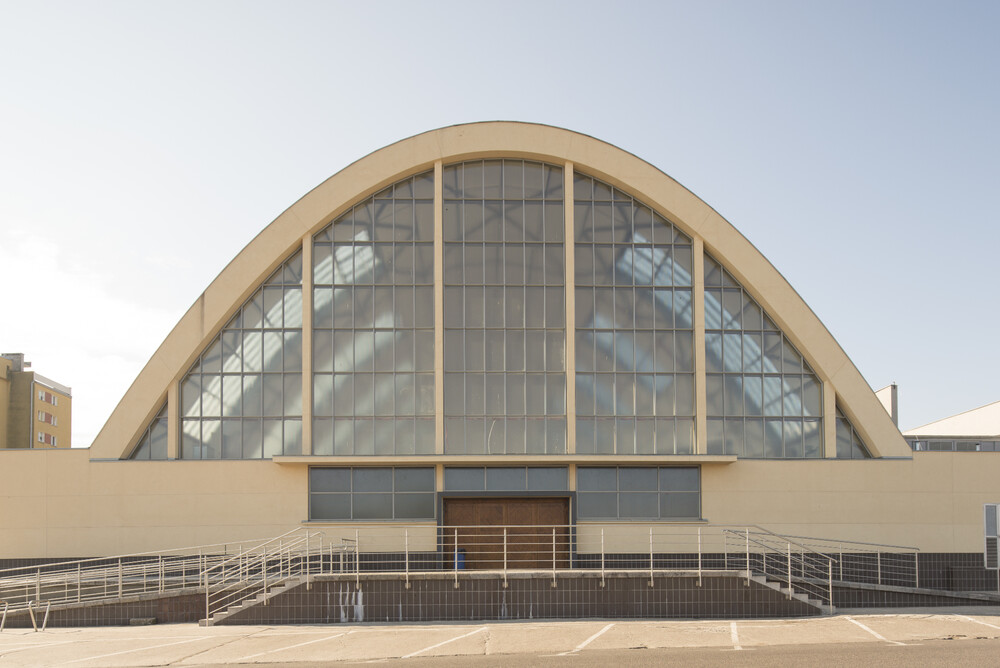
© Gdynia City Hall. Used with permission.
World Heritage Research
Discover scientific research and academic studies that deepen our understanding of Gdynia Modernist City Centre from its history and significance to its conservation, management, and contemporary challenges.
-
Gardens, Parks and Landscapes of Interwar Poland – Current Issues of Identification, Conservation and Identity of The Place
Interwar Poland's modernist parks and gardens exhibit significant diversity, shaped by local context, location, and function. A recent study identified the individuality of green space solutions and characteristic forms across Polish cities such as Warsaw, Kraków, Katowice, Gdynia, and Wrocław. The research developed a multidimensional framework for action to address conservation challenges, focusing on the relationship between understanding the value of these places, shaping local identity, adopting appropriate conservation approaches, and supporting sustainable development. This framework aims to eliminate identified problems while adapting historic green spaces to climate change, ensuring public accessibility and preserving their cultural significance.
Łakomy, K. (2026). Gardens, Parks and Landscapes of Interwar Poland – Current Issues of Identification, Conservation and Identity of The Place. Proceedings of the International Conference of Contemporary Affairs in Architecture and Urbanism-ICCAUA, 9(1), 2610343. https://doi.org/10.38027/iccaua2026en0343
View Publication Record | Read Publication -
Gdynia Modernist City Centre as a UNESCO World Urban Heritage
Gdynia Modernist City Centre stands as a globally significant example of urban planning and architecture from the interwar period, showcasing the transformative impact of Modernism. This study, conducted between 2022 and 2025, evaluates its Outstanding Universal Value (OUV) to support its nomination for UNESCO World Heritage List inscription under Criterion IV. Using a historical-comparative method, the research analyzes literature and original data to identify key attributes that reflect a pivotal stage in human urban development. The findings underscore Gdynia's unique position as a downtown area built from scratch during this era, providing a compelling case for its recognition on the UNESCO World Heritage List.
Sołtysik, M. J. (2026). Gdynia Modernist City Centre as a UNESCO World Urban Heritage. Architectus, (2(86)). https://doi.org/10.37190/arc260203
View Publication Record | Read Publication -
‘Gdynia Modernist City Centre’ jako polski kandydat na WHL UNESCO. Perspektywy i wnioski.
Gdynia Modernist City Centre has strong potential for inclusion on the UNESCO World Heritage List (WHL), according to an evaluation by ICOMOS. Although the 2025 submission required additional documentation and clarifications, the site's well-preserved condition and consistent heritage protection efforts since the 1990s suggest a high likelihood of success in future applications. If recognized, this would mark a significant achievement for Poland, highlighting Gdynia as a symbol of post-war architectural innovation and urban development. The study, conducted by directly involved researchers, analyzes the site's eligibility criteria, challenges, and broader implications for heritage conservation.
Hirsch, R., & Łozowska, C. (2025). ‘Gdynia Modernist City Centre’ as a Polish Candidate for the UNESCO World Heritage List. Protection of Cultural Heritage, (24), 143–157. https://doi.org/10.35784/odk.8748
View Publication Record | Read Publication -
Ochrona i rewaloryzacja przestrzeni publicznych miasta modernistycznego na przykładzie trzech ulic zabytkowego śródmieścia Gdyni
A key insight from this study is that preserving the public spaces of a modernist city center, such as Gdynia's historic streets, requires balancing historical integrity with contemporary urban needs. The research highlights that while architectural conservation often focuses on buildings, the public realm—streets, plazas, and open spaces—equally demands attention for a cohesive heritage experience. Using three streets in Gdynia's modernist city center (built in the 1920s–30s), the study analyzes their distinct conditions, renovation challenges, and societal expectations, revealing how these factors lead to varied conservation outcomes. This approach offers a novel perspective on protecting relatively young historical areas (under 100 years old) by integrating urban planning, heritage preservation, and community engagement.
Hirsch, R., & Łozowska, C. (2023). Protection and renovation of public areas in a modernist city – the case of three streets in the historic city centre of Gdynia. Protection of Cultural Heritage, (15), 125–143. https://doi.org/10.35784/odk.3669
View Publication Record | Read Publication -
Gdynia 1920–1939: Poland’s Gateway to the World
Gdynia's rapid transformation from a small fishermen’s village to Poland's premier Baltic port between 1920 and 1939 symbolized the nation's ambition for modernization, global trade, and overseas expansion. The study reveals that this development was driven by intensive propaganda across multiple media—including exhibitions, literature, film, and public events—while also reflecting economic realities and Poland's strategic shift away from its historical position between Germany and Russia/USSR. By analyzing contemporary rhetoric and publications, the research contrasts Gdynia’s propagandistic image with its actual growth, highlighting how it became a metaphor for Poland's 'gateway to the world.' This dual perspective offers insight into interwar Poland's national identity and aspirations.
Grzechnik, M. (2022). Gdynia 1920–1939: Poland’s Gateway to the World. Studia Historica Gedanensia, 13, 204–224. https://doi.org/10.4467/23916001hg.22.014.17434
View Publication Record | Read Publication -
The role and scope of architectural and conservation research procedures in the process of restoring the splendour of an architectural monument created after 1945 on the example of the Suburban Railway Station in Gdynia
Architectural and conservation research procedures play a pivotal role in restoring the original splendour of post-1945 monuments, as demonstrated by the case study of Gdynia's Suburban Railway Station. The study highlights that meticulous documentation, material analysis, and historical context reconstruction are essential for effective restoration, ensuring both structural integrity and aesthetic authenticity. By employing advanced techniques such as non-destructive testing and digital modeling, researchers can accurately assess degradation patterns and guide conservation interventions. This approach not only preserves the architectural heritage but also informs future preservation strategies for similar structures.
Orchowska-Smolińska, A., & Kriegseisen, A. (2022). The role and scope of architectural and conservation research procedures in the process of restoring the splendour of an architectural monument created after 1945 on the example of the Suburban Railway Station in Gdynia. Architectus, (4(72)). https://doi.org/10.37190/arc220411
View Publication Record | Read Publication -
Threats to Cultural Heritage Caused by the Global Sea Level Rise as a Result of the Global Warming
Even modest rises in global sea level due to climate change could permanently endanger cultural heritage sites, including those in Gdynia's Modernist City Centre. A study assessed threats using elevation data and ArcGIS Pro 2.7 under three sea-level rise scenarios, revealing potential irreparable damage to historic monuments. The research highlights the dual risks of economic and cultural loss if climate action is delayed.
Ciski, M., & Rząsa, K. (2021). Threats to Cultural Heritage Caused by the Global Sea Level Rise as a Result of the Global Warming. Water, 13(18), 2577. https://doi.org/10.3390/w13182577
View Publication Record | Read Publication
