World Heritage Identification Number: 936
World Heritage since: 1999
Category: Cultural Heritage
WHE Type: Archaeological Sites
Transboundary Heritage: No
Endangered Heritage: No
Country: 🇦🇷 Argentina
Continent: Americas
UNESCO World Region: Latin America and the Caribbean
Map
Cueva de las Manos, Río Pinturas: A Unique Testimony of Prehistoric Art
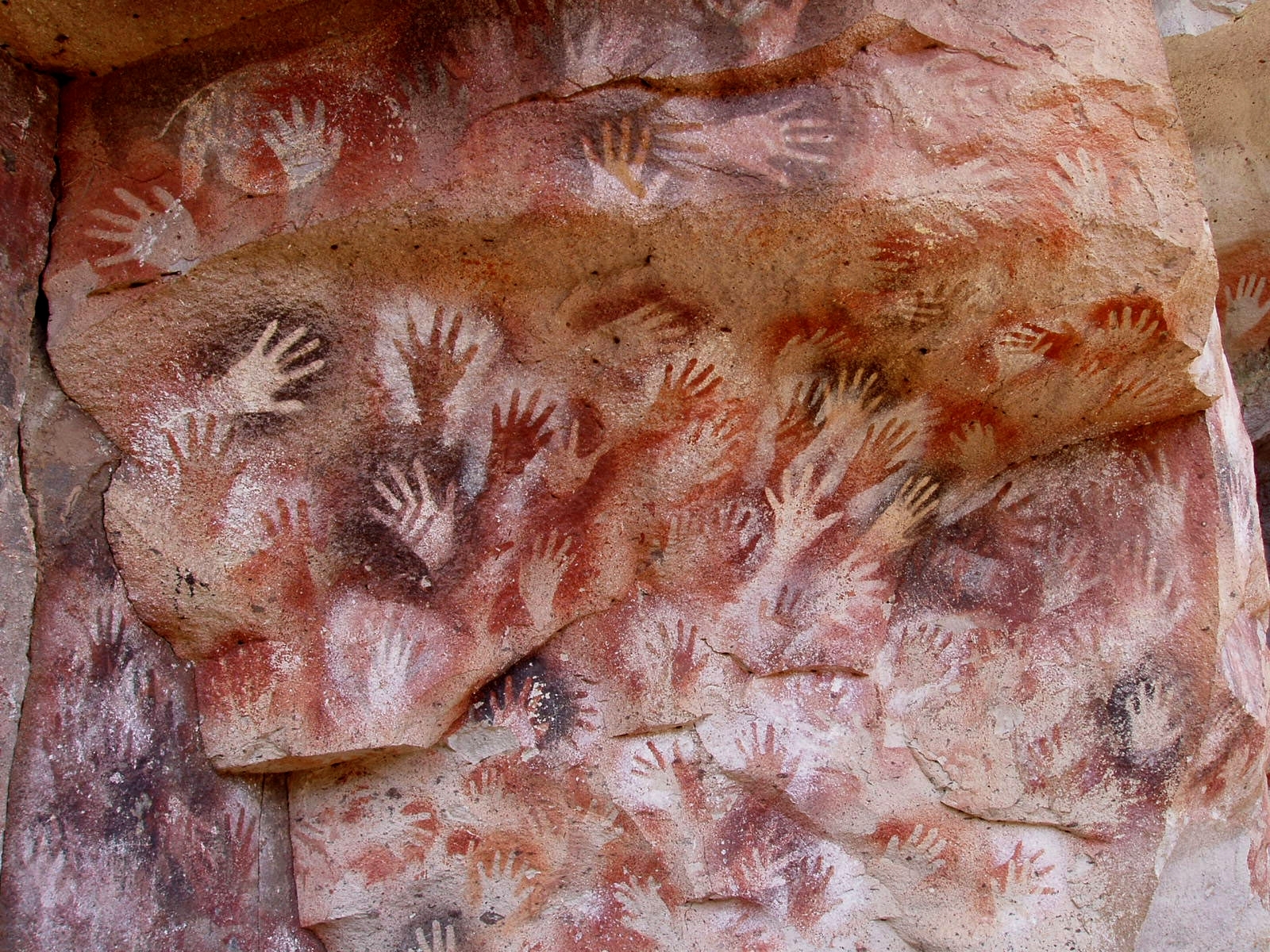
The Cueva de las Manos, Río Pinturas, located in the Santa Cruz Province of Argentina, stands as a remarkable testament to the artistic prowess of ancient human societies. Inscribed as a UNESCO World Heritage Site in 1999, this cave complex offers a captivating glimpse into the lives of the prehistoric inhabitants of Patagonia.
More to come…UNESCO Description of the World Heritage Site
The Cueva de las Manos, Río Pinturas, contains an exceptional assemblage of cave art, executed between 13,000 and 9,500 years ago. It takes its name (Cave of the Hands) from the stencilled outlines of human hands in the cave, but there are also many depictions of animals, such as guanacos (Lama guanicoe ), still commonly found in the region, as well as hunting scenes. The people responsible for the paintings may have been the ancestors of the historic hunter-gatherer communities of Patagonia found by European settlers in the 19th century.
UNESCO Justification of the World Heritage Site
Criterion (iii): The Cueva de las Manos contains an outstanding collection of prehistoric rock art which bears witness to the culture of the earliest human societies in South America.
Encyclopedia Record: Cueva de las Manos
Cueva de las Manos is a cave and complex of rock art sites in the province of Santa Cruz, Argentina, 163 km (101 mi) south of the town of Perito Moreno. It is named for the hundreds of paintings of hands stenciled, in multiple collages, on the rock walls. The art was created in several waves between 7,300 BC and 700 AD, during the Archaic period of pre-Columbian South America. The age of the paintings was calculated from the remains of bone pipes used for spraying the paint on the wall of the cave to create the artwork, radiocarbon dating of the artwork, and stratigraphic dating.Additional Site Details
Area: 600 hectares
Number of Components: 1
Coordinates: -47.15 , -70.66666667
World Heritage Research
Discover scientific research and academic studies that deepen our understanding of Cueva de las Manos, Río Pinturas from its history and significance to its conservation, management, and contemporary challenges.
-
Ese asunto de volver: producción y significación en el arte rupestre de Cueva de las Manos, Patagonia meridional andina
The art rupestre of Cueva de las Manos, a UNESCO World Heritage Site in Patagonia, reveals a unique pattern of repeated painting over 2600 years without obliterating previous images. This study identifies key factors driving this persistent practice: frequent returns to the site for guanaco hunting, didactic representation of collective hunting scenes, use of images as territorial markers, repeated hand stencil imprints, and the maintenance of a collective memory archive. The research employs a comparative analysis of superimposed visual layers, tracing stylistic evolution and contextual significance across temporal strata.
Aschero, C., Schneier, P.,. (2023). Ese asunto de volver: producción y significación en el arte rupestre de Cueva de las Manos, Patagonia meridional andina. Boletín Del Museo Chileno de Arte Precolombino, 28(2), 91–110. https://doi.org/10.56522/bmchap.0050020280003
View Publication Record | Read Publication -
Expanded Visual Anthropology: Cave Art and Mixed Reality in the archaeological site Cueva de las Manos (Argentina).
A groundbreaking integration of mixed reality (MR) technologies into visual anthropology has redefined the sensory and narrative experience of exploring UNESCO World Heritage Sites, exemplified by Cueva de las Manos in Argentina. This study demonstrates that MR, combining low-cost tools like Oculus Rift with hand tracking, 3D design, and archaeological software, introduces a novel spatial and cinematic sensoriality to cave art interpretation. By blending immersive visualization with traditional anthropological methods, the research expands disciplinary boundaries, offering a multi-dimensional approach to understanding and preserving cultural heritage. The findings highlight MR's potential to stimulate affective engagement, bridging technical innovation with humanistic inquiry in archaeological contexts.
Gutiérrez De Angelis, M. (2021). Expanded Visual Anthropology: Cave Art and Mixed Reality in the archaeological site Cueva de las Manos (Argentina). Revista de Antropologia Visual, 2(29), 1–20. https://doi.org/10.47725/rav.029.01
View Publication Record | Read Publication -
Hunting scenes in Cueva de las Manos
A new analysis of painted hunting scenes in Cueva de las Manos, Argentina, reveals that the earliest depictions (dated ca. 9400–6800 bp) are uniquely preserved within this site, while later tonal series exhibit broader spatial dispersion, suggesting seasonal mobility circuits between highlands and steppe regions. Researchers examined tonal groups, superimpositions, design patterns, composition, panel locations, and micro-stratigraphy to link Cueva de las Manos with Cerro Casa de Piedra, proposing a dynamic cultural landscape during the late Pleistocene.
Aschero, C. A. (2018). Hunting scenes in Cueva de las Manos. Archaeologies of Rock Art, 209–237. https://doi.org/10.4324/9781315232782-9
View Publication Record | Read Publication -
Lost and Found in the Cueva de las Manos in Argentina
A groundbreaking open letter to the people of Cueva de las Manos, Río Pinturas, Argentina, sheds light on the cultural and historical significance of this UNESCO World Heritage Site. The study reveals the intricate relationship between the site's rock art, its natural environment, and the indigenous communities that have inhabited the region for millennia. By integrating geospatial analysis with ethnographic insights, the research offers a nuanced understanding of how these communities have preserved their heritage while navigating modern challenges. This approach not only highlights the importance of Cueva de las Manos as a living cultural landscape but also serves as a model for sustainable conservation practices in similar sites worldwide.
Duru, A. (2015). Lost and Found in the Cueva de las Manos in Argentina. GeoHumanities, 1(1), 179–184. https://doi.org/10.1080/2373566x.2015.1071673
View Publication Record | Read Publication