World Heritage Identification Number: 173
World Heritage since: 2000
Category: Cultural Heritage
WHE Type: Historic Cities & Urban Areas
Transboundary Heritage: No
Endangered Heritage: No
Country: 🇹🇿 United Republic of Tanzania
Continent: Africa
UNESCO World Region: Africa
Map
The Stone Town of Zanzibar: Cultural Fusion and Harmony in East Africa
The Stone Town of Zanzibar, officially recognized as a UNESCO World Heritage Site since 2000, stands as a testament to the rich cultural history of East Africa. Nestled on the western coast of Unguja, the primary island of the Zanzibar Archipelago, this historic urban district forms the old quarter of Zanzibar City, the principal metropolis of Zanzibar in Tanzania.
Known locally as Mji Mkongwe, Stone Town retains much of its historic urban fabric and layout, offering a vivid glimpse into centuries of cultural exchange across the Indian Ocean world, shaped especially between African, Arabian, Indian, and European influences. Stone Town developed primarily between the 18th and 19th centuries, reaching its peak as the capital of the Omani Sultanate of Zanzibar.
During this period, it became a major hub for the spice trade and a key center in the 19th-century Indian Ocean slave trade. Despite the decline of the sultanate and the establishment of a British protectorate in 1890, Stone Town remained the administrative and commercial heart of Zanzibar. Following the 1964 revolution and the union of Zanzibar with Tanganyika to form modern Tanzania, Zanzibar retained a semi-autonomous status, with Zanzibar City continuing as its principal urban and governmental center.
Stone Town is best understood within the broader context of Swahili coastal civilization, which developed along the East African coast long before the rise of the Omani Sultanate. Rather than being simply a meeting point of external influences, it is part of an established Swahili urban tradition shaped by centuries of Indian Ocean trade, Islam, and African cultural continuity.
One of the most striking aspects of Stone Town is its architectural diversity. Influenced by multiple civilizations over time, the city features coral stone buildings, intricately carved wooden doors, balconies, and verandas. Its Swahili architectural character is especially evident in elements such as interior courtyards, rooftop terraces, and decorative latticework, reflecting centuries of adaptation to climate, culture, and trade.
The historic core of Stone Town is also defined by several landmark buildings and public spaces that reflect its layered history. These include the House of Wonders (Beit-al-Ajaib), once the grand ceremonial palace of the sultan and a major historic monument currently undergoing ongoing conservation and restoration efforts following partial structural damage in recent years; the Old Fort (Ngome Kongwe), built in the 17th century for defense against Portuguese forces; and the former Slave Market site, now occupied by the Anglican Cathedral, which stands as a memorial to Zanzibar’s role in the 19th-century slave trade.
Zanzibar holds significant symbolic importance in the history of the suppression of the East African slave trade. As one of the region’s principal 19th-century slave-trading ports, Zanzibar—with Stone Town as its commercial center—played a central role in the trade networks of the Indian Ocean world. At the same time, it became a focal point in abolitionist discourse led by figures such as David Livingstone and supported by British missionary and naval campaigns.
Another important aspect of Stone Town is its vibrant cultural and religious life. The city is home to numerous mosques, churches, and Hindu temples, reflecting its long history as a multicultural trading port. Its markets offer spices, textiles, produce, and crafts that reflect Zanzibar’s historic role in the Indian Ocean trade network. Cultural events such as the Zanzibar International Film Festival are among the most notable contemporary celebrations associated with the city’s cultural identity.
In addition to its cultural and historical significance, Stone Town is also renowned for its natural beauty. The city is surrounded by picturesque beaches, mangrove ecosystems, and coral reefs teeming with marine life. These pristine environments provide opportunities for snorkeling, diving, and fishing, making Stone Town an attractive destination for eco-tourists seeking adventure and relaxation.
Efforts to preserve Stone Town’s heritage continue under institutions such as the Stone Town Conservation and Development Authority (STCDA), working in collaboration with national bodies and international partners like UNESCO. Through ongoing urban revitalization initiatives, authorities aim to restore the historic district's crumbling coral rag buildings while ensuring that it remains a vibrant, accessible space for locals and tourists alike.
Today, the Stone Town of Zanzibar stands as a remarkable testament to the rich cultural history of East Africa, valued for its architectural richness, layered cultural history, and connection to the Indian Ocean world. Ongoing preservation efforts aim to ensure that its unique character endures for future generations.
UNESCO Description of the World Heritage Site
The Stone Town of Zanzibar is a fine example of the Swahili coastal trading towns of East Africa. It retains its urban fabric and townscape virtually intact and contains many fine buildings that reflect its particular culture, which has brought together and homogenized disparate elements of the cultures of Africa, the Arab region, India, and Europe over more than a millennium.
UNESCO Justification of the World Heritage Site
Criterion (ii): The Stone Town of Zanzibar is an outstanding material manifestation of cultural fusion and harmonization.
Criterion (iii): For many centuries there was intense seaborne trading activity between Asia and Africa, and this is illustrated in an exceptional manner by the architecture and urban structure of the Stone Town.
Criterion (vi): Zanzibar has great symbolic importance in the suppression of slavery, since it was one of the main slave-trading ports in East Africa and also the base from which its opponents, such as David Livingstone, conducted their campaign.
Encyclopedia Record: Stone Town
Stonetown of Zanzibar, also known as Mji Mkongwe, is the old part of Zanzibar City, the main city of Zanzibar, in Tanzania. The newer portion of the city is known as Ng'ambo, Swahili for 'the other side'. Stone Town is located on the western coast of Unguja, the main island of the Zanzibar Archipelago. Former capital of the Zanzibar Sultanate, and flourishing centre of the spice trade as well as the Indian Ocean slave trade in the 19th century, it retained its importance as the main city of Zanzibar during the period of the British protectorate. When Tanganyika and Zanzibar joined each other to form the United Republic of Tanzania, Zanzibar kept a semi-autonomous status, with Stone Town as its local government seat.Additional Site Details
Area: 96 hectares
Number of Components: 1
(iii) — Unique or exceptional testimony to a cultural tradition
(vi) — Directly associated with events or living traditions
Coordinates: -6.16306 , 39.18917
Image
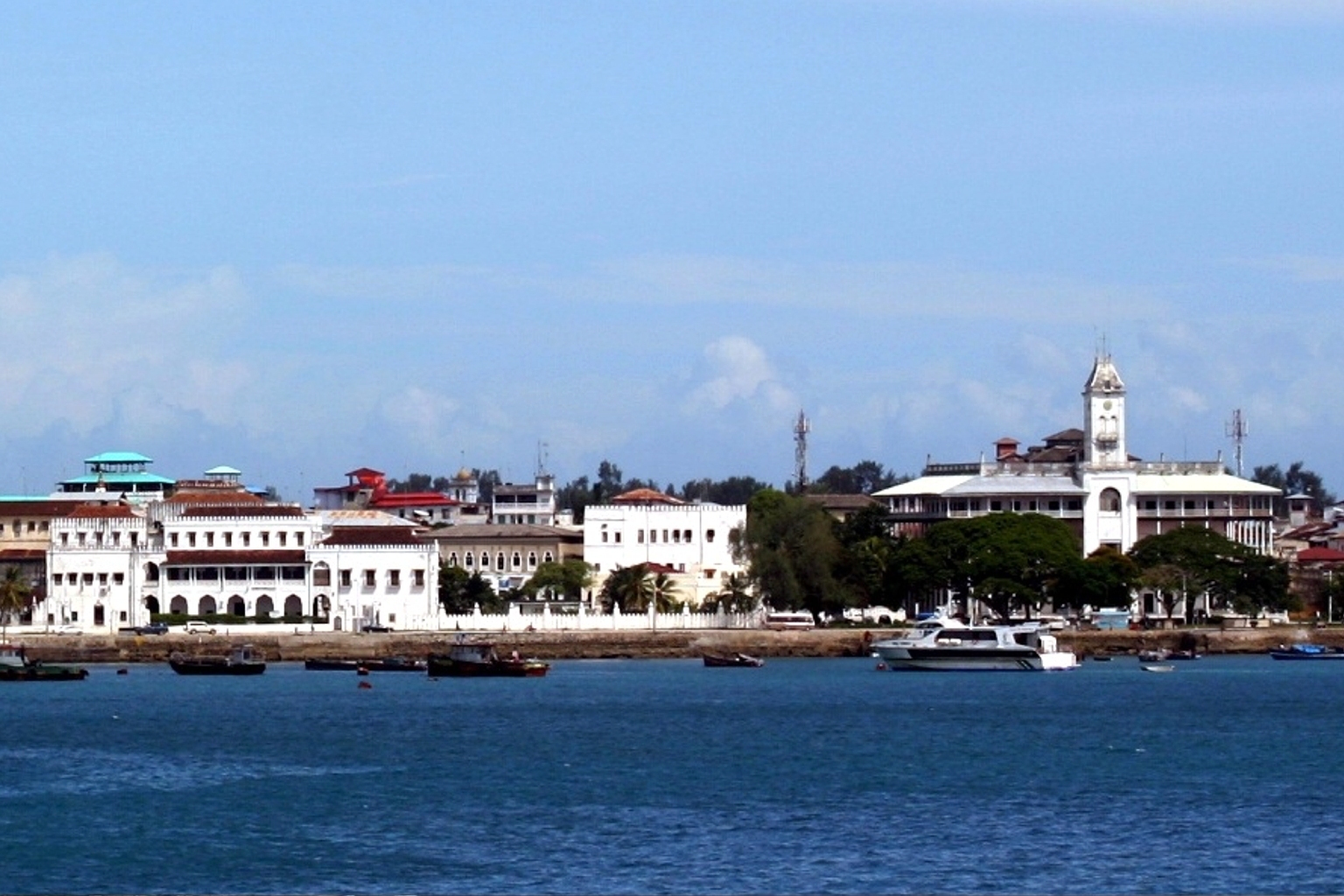
© No machine-readable author provided. Mbz1 assumed (based on copyright claims)., CC BY-SA 3.0 Resized from original. (This derivative is under the same CC BY-SA license.)