
World Heritage Identification Number: 866
World Heritage since: 1998
Category: Cultural Heritage
WHE Type: Archaeological Sites
Transboundary Heritage: Yes
Endangered Heritage: No
Country: Portugal, Spain
Continent: Europe
UNESCO World Region: Europe and North America
Map
Prehistoric Rock Art Sites in the Côa Valley and Siega Verde: A Transboundary Testimony of Human History
The Prehistoric Rock Art Sites in the Côa Valley and Siega Verde, inscribed as a UNESCO World Heritage Site in 1998, offer a captivating glimpse into the early chapters of human history. Situated along the rivers Agueda and Côa, tributaries of the Douro River, these sites span across the borders of Portugal and Spain, providing a testament to continuous human occupation dating back to the end of the Paleolithic Age.
More to come…UNESCO Description of the World Heritage Site
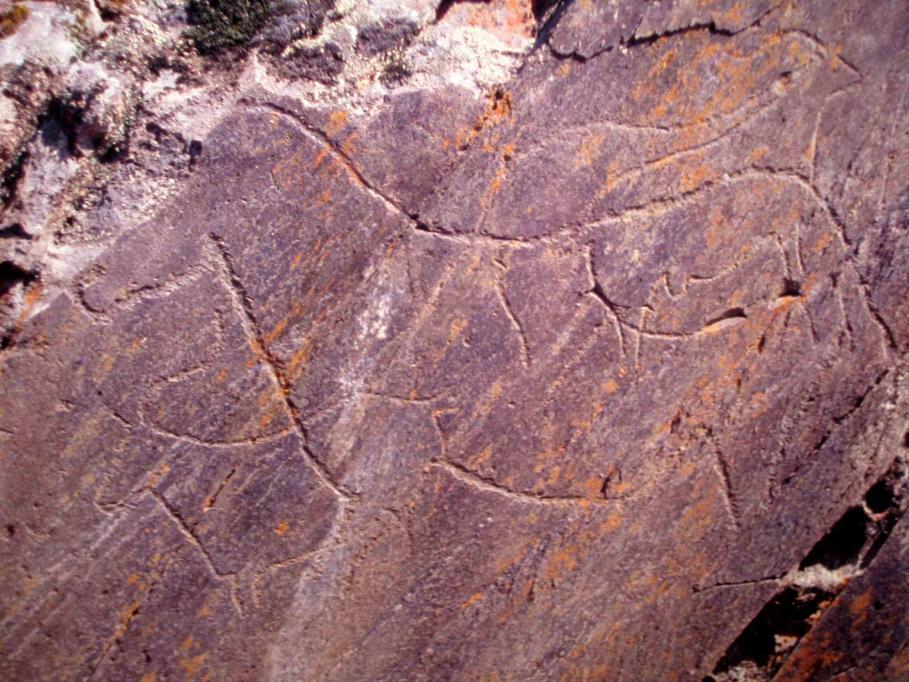
The two Prehistoric Rock Art Sites in the Côa Valley (Portugal) and Siega Verde (Spain) are located on the banks of the rivers Agueda and Côa, tributaries of the river Douro, documenting continuous human occupation from the end of the Paleolithic Age. Hundreds of panels with thousands of animal figures (5,000 in Foz Côa and around 440 in Siega Verde) were carved over several millennia, representing the most remarkable open-air ensemble of Paleolithic art on the Iberian Peninsula.
Côa Valley and Siega Verde provide the best illustration of the iconographic themes and organization of Paleolithic rock art, using the same modes of expression in caves and in the open air, thus contributing to a greater understanding of this artistic phenomenon. Together they form a unique site of the prehistoric era, rich in material evidence of Upper Paleolithic occupation.
UNESCO Justification of the World Heritage Site
Criterion (i): The rock engravings in Foz Côa and Siega Verde, dating from the Upper Palaeolithic to the final Magdalenian/ Epipalaeolithic (22.000 – 8.000 BCE), represent a unique example of the first manifestations of human symbolic creation and of the beginnings of cultural development which reciprocally shed light upon one another and constitute an unrivalled source for understanding Palaeolithic art.
Criterion (iii): The rock art of Foz Côa and Siega Verde, when considered together, throws an exceptionally illuminating light on the social, economic, and spiritual life of our early ancestors.
Encyclopedia Record: Prehistoric Rock Art Sites in the Côa Valley and Siega Verde
Prehistoric Rock Art Sites in the Côa Valley and Siega Verde are a United Nations Educational, Scientific and Cultural Organization (UNESCO) transboundary World Heritage Site, located in the Côa Valley of Portugal and Siega Verde, Spain.Additional Site Details
Area: Not available
Number of Components: 17
(iii) — Unique or exceptional testimony to a cultural tradition
Coordinates: 40.6975 , -6.6611111111
World Heritage Research
Discover scientific research and academic studies that deepen our understanding of Prehistoric Rock Art Sites in the Côa Valley and Siega Verde from its history and significance to its conservation, management, and contemporary challenges.
-
Southern Iberian Rock Art: The Territory That Holds the Clues to Decipher the Whole Symbolic Path of Humanity
Southern Iberia's Côa Valley and Siega Verde hold the highest concentration of prehistoric rock art, offering unparalleled insights into humanity's symbolic evolution. This region, spanning from the Strait of Gibraltar to the interior, provides a continuous record of rock paintings and engravings from early human expressions to recent historical periods. The area is critical for understanding transitions between Neanderthals and Homo sapiens, as well as the shift from hunter-gatherer-fisher societies to tribal communities. Current research analyzes these sites' significance while addressing threats and proposing conservation solutions, positioning Southern Iberia as a key territory for deciphering humanity's symbolic path.
Monge, G., Carretero, M. I., & Ruíz, F. (2026). Southern Iberian Rock Art: The Territory That Holds the Clues to Decipher the Whole Symbolic Path of Humanity. Quaternary, 9(1), 5. https://doi.org/10.3390/quat9010005
View Publication Record | Read Publication -
Images and Places in the Upper Palaeolithic of the Douro Basin, Iberian Peninsula: An Ontological Approach
Palaeolithic rock art in the Côa Valley and Siega Verde, Iberian Peninsula, suggests that Upper Palaeolithic societies likely operated under a totemic mode of identification, where animals held symbolic significance tied to social structure. This study breaks new ground by analyzing not just isolated images but their spatial context within landscapes ('taskscape'), revealing distinct patterns between densely concentrated Gravettian sites and more isolated Middle Solutrean ones. The research employs an ontological approach, contrasting local art traditions with broader Western European evidence to infer that similar totemic structures may have prevailed across the region. This shifts the focus from mere artistic expression to the social and symbolic appropriation of space, offering a novel framework for interpreting Palaeolithic rock art.
Santos, A. T. (2026). Images and Places in the Upper Palaeolithic of the Douro Basin, Iberian Peninsula: An Ontological Approach. EAZ – Ethnographisch-Archaeologische Zeitschrift, 59(2). https://doi.org/10.54799/oakh4354
View Publication Record | Read Publication -
Rethinking Governance in Transboundary Serial World Heritage Sites: Multi-Level Coordination, Institutional Diversity, and Cultural Diplomacy
A groundbreaking study reveals that the effectiveness of governance in transboundary serial World Heritage Sites, such as the Prehistoric Rock Art Sites in the Côa Valley and Siega Verde, hinges on the intensity and continuity of stakeholder interaction rather than institutional capacity. Through a qualitative comparative analysis of 15 sites' management plans, researchers identified four distinct governance models—ranging from multinational networks to community-led collaboration—and mapped their maturity levels using the Corporate Governance and Maturity Positioning Map. The findings underscore that trust, knowledge exchange, and diplomatic processes are pivotal in shaping governance dynamics, challenging traditional notions that prioritize legal or administrative structures.
Siklar, B., Akcakaya, Y., Halaç, H. H., & Bademci, F. (2026). Rethinking Governance in Transboundary Serial World Heritage Sites: Multi-Level Coordination, Institutional Diversity, and Cultural Diplomacy. Systems, 14(2), 220. https://doi.org/10.3390/systems14020220
View Publication Record | Read Publication -
Proteção do patrimônio cultural rupestre do parque nacional da Serra da Capivara (Brasil) e do parque arqueológico do Vale do Côa (Portugal): uma abordagem jurídico-institucional.
Robust legal frameworks protect rock art heritage in Brazil's Serra da Capivara National Park and Portugal's Côa Valley Archaeological Park, yet their effectiveness varies due to differences in governance structures, inter-institutional collaboration, and normative implementation. A qualitative analysis of legislation, institutional frameworks, management plans, and official documents reveals that while both sites benefit from strong legal protections, the integration of public actors and operationalization of norms significantly influence conservation outcomes. Strengthening interinstitutional arrangements and harmonizing regulations emerge as critical factors for enhancing heritage protection.
Badaró, J. H. M. (2026). Protection of the rock art cultural heritage of the Serra da Capivara national park (Brazil) and the Côa Valley archaeological park (Portugal): a legal-institutional approach. Revista Ft, 30(156), 01–21. https://doi.org/10.69849/tm6e0666
View Publication Record | Read Publication -
El Sitio de Fragas do Mourão/As Portas (Carrazedo de Montenegro, Portugal) en el Contexto del Arte Esquemático del Noroeste Peninsular
A significant discovery of prehistoric rock art, belonging to the Schematic Art tradition, has been made at Fragas do Mourão/As Portas in Carrazedo de Montenegro, Portugal. This site, one of the most westerly identified in the Iberian Peninsula, features a unique combination of typical Schematic Art iconography and unusual graphic compositions, along with a notable concentration of cup-marks (cazoletas) on a large quartzite cliff. The findings expand the known distribution of this artistic tradition, which was previously thought to be limited to the northeastern region of Portugal and southeastern Galicia. The site's striking visual and sensory impact, enhanced by water presence and distinctive geomorphological features, underscores its importance in the broader context of prehistoric art in the northwest Iberian Peninsula.
Rey, B. C. (2025). EL SITIO DE FRAGAS DO MOURÃO/AS PORTAS (CARRAZEDO DE MONTENEGRO, PORTUGAL) EN EL CONTEXTO DEL ARTE ESQUEMÁTICO DEL NOROESTE PENINSULAR. Estudos Do Quaternário Quaternary Studies, (25), 53–66. https://doi.org/10.30893/eq.v0i25.251
View Publication Record | Read Publication -
Can the study of Middle Palaeolithic Lithic assemblages of Cardina- Salto do Boi site (Côa Valley) help to understand site formation processes?
A shift in the preferred type of quartz used by Neanderthals between 51-39 ka and 80-51 ka has been identified at the Cardina-Salto do Boi site in Portugal, offering new insights into Middle Palaeolithic dwelling dynamics. This discovery was made through a detailed analysis of lithic assemblages from two test areas, N/O-15/17 and Z/A’-6/8, which were compared with findings from a previously studied area, H’/I’-17/19. The study involved raw material and technological analysis, revealing five distinct groups that suggest the most recent phase of Neanderthal occupation may be present at the base of the stratigraphic sequences in the newly analyzed areas.
Ramos, P., & Aubry, T. J. (2024). Can the study of Middle Palaeolithic Lithic assemblages of Cardina- Salto do Boi site (Côa Valley) help to understand site formation processes? https://doi.org/10.31219/osf.io/s3jd2
View Publication Record | Read Publication -
Cave Art
Cave Art, a comprehensive guide to Europe's decorated Ice Age caves, offers an unparalleled opportunity to experience humanity's artistic achievements from 30,000 to 10,000 years ago. This revised third edition serves as the first and only handbook of its kind, detailing over 50 accessible caves across the United Kingdom, France, Spain, Portugal, and Italy, along with relevant museums and centers. It provides a unique perspective by allowing visitors to stand in the original setting where prehistoric artists created their masterpieces, combining scientific insight with practical guidance for speleologists, holidaymakers, and enthusiasts alike.
Paul, B. (2024). Cave Art. https://doi.org/10.32028/9781803277639
View Publication Record | Read Publication