World Heritage Identification Number: 98
World Heritage since: 1979
Category: Natural Heritage
WHE Type: Protected Areas & National Parks
Transboundary Heritage: No
Endangered Heritage: No
Country: 🇭🇷 Croatia
Continent: Europe
UNESCO World Region: Europe and North America
Map
Plitvice Lakes National Park: A Natural Wonder of Croatia
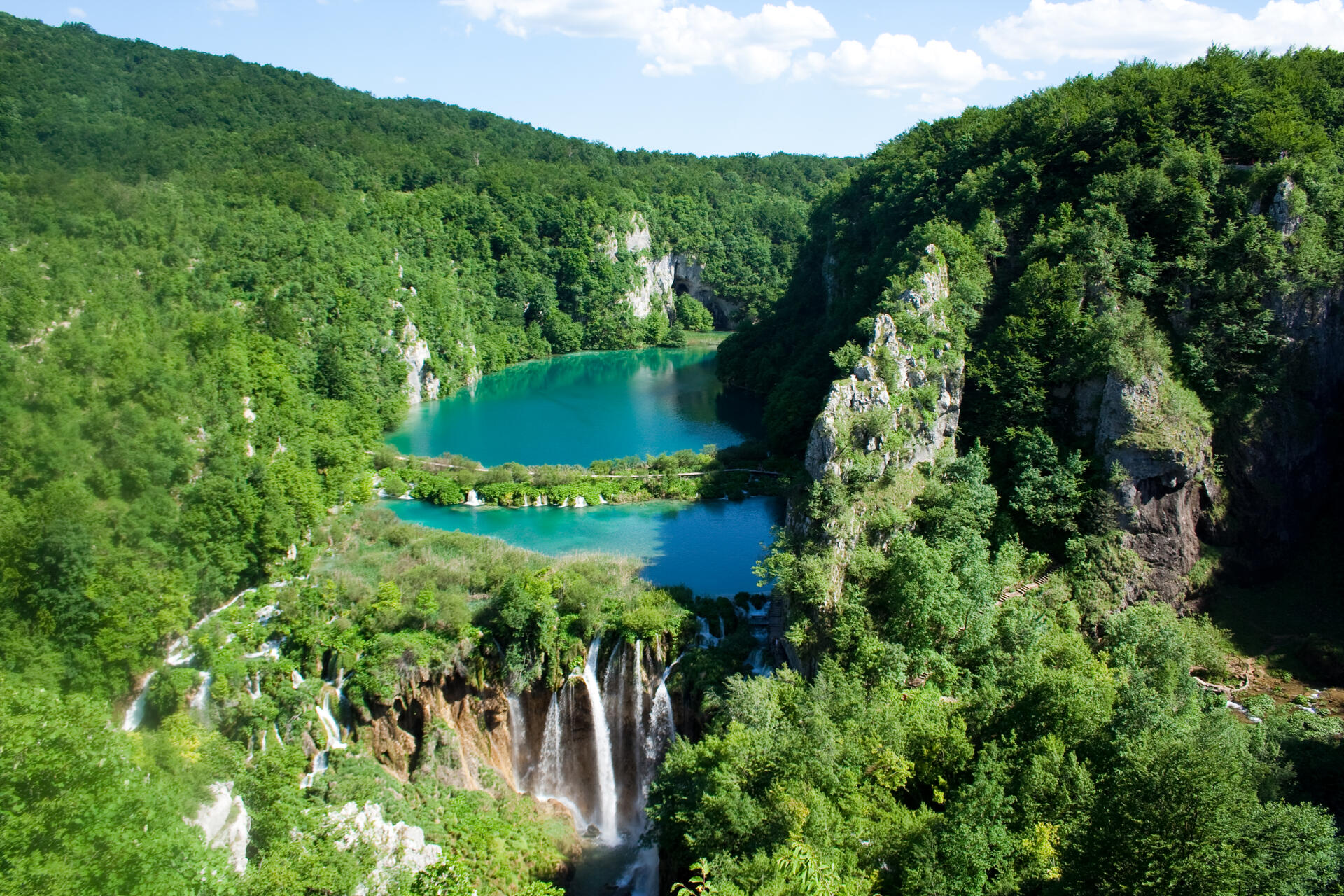
Plitvice Lakes National Park, located in central Croatia near the border with Bosnia and Herzegovina, is a breathtaking testament to the power of nature's geological processes. Established in 1949, it is one of the oldest and largest national parks in the country. This unique ecosystem was inscribed onto the UNESCO World Heritage List in 1979, recognizing its exceptional beauty and global geological significance.
The heart of the park is a system of 16 interconnected lakes, arranged in cascades that flow from the high mountains to the lower canyons. The lakes are formed by the deposition of travertine, a type of limestone, which results from the accumulation of calcium carbonate in the form of tufa, a soft sedimentary rock. Over thousands of years, these geological processes have created a series of stunning lakes, caves, and waterfalls that continue to evolve today.
The lakes themselves are a sight to behold, their crystal-clear waters ranging in color from azure to emerald green and turquoise, depending on the minerals they contain and the angle of sunlight. The waterfalls, the highest of which—the Veliki Slap—reaches 78 meters (256 feet), cascade gracefully into the basins below, creating a symphony of sound that defines the park's enchanting atmosphere.
In addition to its geological features, Plitvice Lakes National Park boasts a rich and diverse forest ecosystem. The park is home to a variety of wildlife, including brown bears, wolves, wild boars, and elusive bird species such as the Eurasian pygmy owl, the white-backed woodpecker, and the golden eagle. The forest floors are carpeted with vibrant wildflowers during the spring and summer months, providing a vital food source for the park's diverse fauna.
The 16 lakes are traditionally divided into two groups: the Upper Lakes (Gornja jezera), which sit on dolomite rock and are surrounded by thick forests and numerous cascading falls, and the Lower Lakes (Donja jezera), which are carved into a permeable limestone canyon and are characterized by their scale and dramatic cliffs. This arrangement creates a natural hydrological flow from mountain streams down to the Korana River, shaping the park’s dynamic water system.
Beyond its breathtaking scenery, the park is a site of significant scientific. Researchers from around the world study the formation of travertine barriers, the unique karst hydrology, and the rich biodiversity of both flora and fauna. Seasonal changes transform the landscape: from the lush greenery of spring to the fiery foliage of autumn and the frozen, snow-covered vistas of winter, each offering a distinct perspective on this resilient ecosystem.
Visitors can explore Plitvice Lakes National Park via a network of wooden walkways and scenic hiking trails that wind through cascading lakes, waterfalls, and dense forests. Walking along these paths, travelers can experience the park’s crystal-clear waters, listen to the soothing roar of waterfalls, and observe its diverse wildlife up close, making every step a journey through one of Europe’s most enchanting landscapes.
Altogether, Plitvice Lakes National Park is a must-visit for those seeking to experience the raw beauty and power of nature. Its unique geology, diverse wildlife, and stunning vistas make it a truly unforgettable destination. Whether you are a nature enthusiast, a photographer, or a traveler seeking a peaceful retreat, Plitvice Lakes National Park offers an experience that will leave you breathless and inspired.
UNESCO Description of the World Heritage Site
The waters flowing over the limestone and chalk have, over thousands of years, deposited travertine barriers, creating natural dams which in turn have created a series of beautiful lakes, caves and waterfalls. These geological processes continue today. The forests in the park are home to bears, wolves and many rare bird species.
UNESCO Justification of the World Heritage Site
Criterion (vii): Embedded in a mosaic of forests and meadows in the lower elevations of the Dinarides, Plitvice Lakes National Park conserves a strikingly beautiful and intact series of lakes formed by natural tufa barriers. The tufa barriers are the result of longstanding and ongoing interaction between water, air, sediments (geological foundation) and organisms. The extension of the dynamic, constantly evolving lake system, the proportion of the tufa barriers, jointly with the numerous dynamic waterfalls and clear water courses and the expression of colours, make Plitvice Lakes National Park an aesthetically outstanding natural spectacle of global importance.
Criterion (viii): The key extraordinary process which has been shaping and continues to shape the Plitvice lake system is the tufa creation which forms barriers across the watercourse. Due to the characteristics of karst base, the waters of Plitvice Lakes are naturally supersaturated with calcium carbonate. Under certain physico-chemical and biological conditions, the dissolved calcium carbonate is deposited on the bottoms and margins of the lakes, as well as on obstacles in the water courses. Over time, this process leads to the formation of porous, simultaneously hard and fragile limestone barriers, which retain the water of creeks and rivers. The lake system is a subject to constant changes largely due to the dynamics of growth and erosion of tufa barriers. A closer look of the barriers reveals the ubiquitous remains of mosses and other terrestrial and aquatic organisms inhabiting the highly specialized habitat. The scale and intactness of the tufa formation phenomena at Plitvice Lakes amount to an outstanding example of a largely undisturbed on-going process. Extensive research on the formation, age and structure and ecological characteristics illustrate the major scientific importance of the property.
Criterion (ix): Overlapping with the above geological criterion, Plitvice's famous process of the tufa creation is also the result of exceptional ecological processes. Living organisms play a decisive role in the sedimentation of calcium carbonate in Plitvice. More concretely, highly specialized mosses, algae and bacteria enable and enhance the sedimentation, thereby contributing to the creation of the natural barriers. This is why the presence of these easily overlooked organisms and micro-organisms is an integral and essential component of the ancient processes which gave rise to the outstanding lake system. It becomes clear that the process and system requires a water quality that permits the presence of the often sensitive organisms. The extensive tufa formations of the Plitvice Lakes National Park are a testimony of an exceptional interplay between sediments (geological foundation), water, air and living organisms.
Encyclopedia Record: Plitvice Lakes National Park
Plitvice Lakes National Park is one of the oldest and largest national parks in Croatia. In 1979, Plitvice Lakes National Park was inscribed on the UNESCO World Heritage list, for its outstanding and picturesque series of tufa lakes, caves, and connected waterfalls.Additional Site Details
Area: 29,630.77 hectares
Number of Components: 1
(viii) — Outstanding example representing major earth stages
(ix) — Outstanding example representing ecological and biological processes
Coordinates: 44.87778 , 15.61444
IUCN World Heritage Outlook
The 2025 Conservation Outlook on Plitvice Lakes National Park reports the following assessment:
Source: International Union for Conservation of Nature (IUCN) · View assessment