World Heritage Identification Number: 743
World Heritage since: 1995
Category: Cultural Heritage
WHE Type: Archaeological Sites
Transboundary Heritage: No
Endangered Heritage: No
Country: 🇨🇴 Colombia
Continent: Americas
UNESCO World Region: Latin America and the Caribbean
Map
Exploring the Rich Cultural Legacy: National Archaeological Park of Tierradentro
The National Archaeological Park of Tierradentro, located in the mountainous region of southwestern Colombia, offers a unique glimpse into the rich cultural history of pre-Columbian societies. Inscribed as a UNESCO World Heritage Site in 1995, this archaeological park showcases a remarkable collection of elaborate pre-Columbian hypogea, or underground tombs, dating from the 6th to the 10th century.
More to come…UNESCO Description of the World Heritage Site
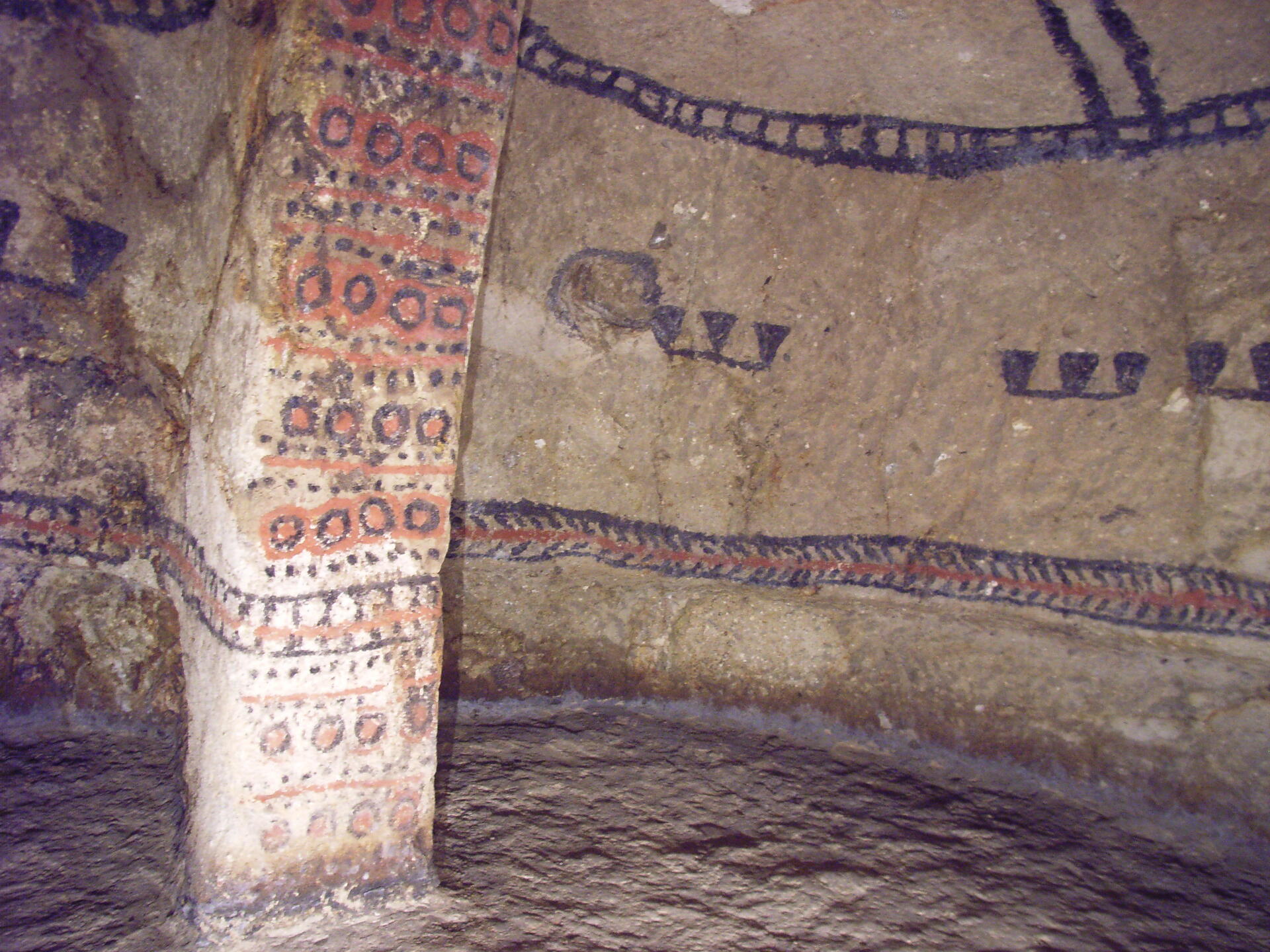
Several monumental statues of human figures can be seen in the park, which also contains many hypogea dating from the 6th to the 10th century. These huge underground tombs (some burial chambers are up to 12 m wide) are decorated with motifs that reproduce the internal decor of homes of the period. They reveal the social complexity and cultural wealth of a pre-Hispanic society in the northern Andes.
UNESCO Justification of the World Heritage Site
Criterion (iii): The archaeological area of Tierradentro, with its complex of hypogeal, are a unique testimony to the everyday life, ritual and the singular conception of burial space, of a developed and stable society. It also reveals the social complexity and cultural wealth of a pre-Hispanic society in the northern Andean region of South America. The site provides a unique testimony to the high level of artistic and social culture of the region over its long prehispanic history.
Encyclopedia Record: Tierradentro
Tierradentro is one of the ancient Pre-Columbian cultures of Colombia. It started to flourish around 200 BC in the mountains of southwest Colombia, and continued into the 17th century. The Tierradentro culture is particularly well known for its dense collection of elaborate pre-Columbian hypogea. It is considered part of San Agustín culture rather than a separate culture.Additional Site Details
Area: 38.84 hectares
Number of Components: 5
Coordinates: 2.583333333 , -76.03333333
World Heritage Research
Discover scientific research and academic studies that deepen our understanding of National Archeological Park of Tierradentro from its history and significance to its conservation, management, and contemporary challenges.
-
Más allá del parque arqueológico: un estado del arte de la investigación arqueológica en la región de Tierradentro, Cauca
Archaeological research in the Tierradentro region, Cauca, has been predominantly focused on the San Andrés creek basin, leaving significant gaps in knowledge about other areas such as the upper Páez River basin. This review highlights the need for expanded investigations to better understand the region's archaeological landscape, integrate Nasal perspectives on territory and material culture, and analyze post-16th-century social transformations and interactions. The study emphasizes the importance of broadening research beyond the established archaeological park to encompass a more comprehensive understanding of Tierradentro's historical significance.
Escobar Tovar, J. A. (2026). Beyond the Archaeological Park: A Review of Archaeological Research in the Tierradentro Region, Cauca. Arqueología Y Patrimonio, 6(1). https://doi.org/10.22380/26652773.3264
View Publication Record | Read Publication -
Treinta años de la inscripción como Patrimonio Mundial de los parques arqueológicos de San Agustín (Huila) y Tierradentro (Cauca)
Thirty years after their inscription as UNESCO World Heritage Sites, the archaeological parks of San Agustín (Huila) and Tierradentro (Cauca) stand as a testament to Colombia's rich cultural heritage. This milestone underscores their unique significance, serving as exceptional witnesses to both living and vanished civilizations. The study reflects on the diverse perspectives of stakeholders—including local communities, tour operators, archaeologists, and government agencies—highlighting the multifaceted importance of this recognition. While the article does not present new discoveries, it emphasizes the enduring value of these sites in preserving and celebrating Colombia's archaeological legacy.
Jaramillo E., L. G. (2026). Treinta años de la inscripción como Patrimonio Mundial de los parques arqueológicos de San Agustín (Huila) y Tierradentro (Cauca). Arqueología Y Patrimonio, 6(1). https://doi.org/10.22380/26652773.3314
View Publication Record | Read Publication -
Fragmentos de San Agustín y Tierradentro: los parques de los senderos que se bifurcan
Archaeological research at San Agustín and Tierradentro reveals their pivotal role in Colombia's social complexity, with Tierradentro receiving less attention despite its significance. This study highlights how these sites have shaped archaeological investigation, heritage protection, dissemination, and economic exploitation within the patrimonial economy. It provides a contextual analysis of the actors, societal dynamics, and the impact of conflict on these UNESCO World Heritage Sites, offering a foundational approach to understanding their historical and cultural importance.
Franco Arce, L. G. (2026). Fragments of San Agustín and Tierradentro: The Parks of the Forking Paths. Arqueología Y Patrimonio, 6(1). https://doi.org/10.22380/26652773.3229
View Publication Record | Read Publication -
Avifauna asociada a dos sistemas de producción de café en Tierradentro, San Andrés de Pisimbalá, Cauca, Colombia
Shaded coffee plantations exhibit significantly higher bird diversity compared to more intensively managed systems, likely due to greater vegetational heterogeneity. This study, conducted in the UNESCO-listed National Archeological Park of Tierradentro (Colombia), identified 80 bird species across four coffee farms, with Thraupidae, Tyrannidae, and Trochilidae being the most prevalent. The findings underscore the ecological benefits of less intensive, structurally diverse coffee production for avian biodiversity, providing critical baseline data to support sustainable ecotourism in this culturally and ecologically significant region.
Velasco-Rojas, G. D., Macias-Pinto, D. J., & Becoche-Mosquera, J. M. (2025). Avifauna associada a dois sistemas de produção de café em Tierradentro, San Andrés de Pisimbalá, Cauca, Colômbia. Revista Novedades Colombianas, 20(1), 71–88. https://doi.org/10.47374/novcol.2025.v20.2600
View Publication Record | Read Publication -
Sobre la edad de los hipogeos de Tierradentro, Colombia: intento de datación directa de la pintura roja mediante la magnetización remanente pictórica
A groundbreaking study on the UNESCO-listed National Archeological Park of Tierradentro, Colombia, has successfully dated the red paintings within its hypogeal tombs to between 1070 and 1150 AD using pictorial remanent magnetization analysis. This method, leveraging hematite grains' magnetic properties, revealed that the responsible minerals exhibit both ferromagnetic and antiferromagnetic characteristics. The findings align with a similar burial discovered at Rancho Grande in the La Cumbre-Pavas region, providing a significant contribution to resolving long-standing debates about the age of these culturally significant structures.
Cejudo, R., Montejo, F., Avto Goguitchaichvili, Morales, J., Bautista, F., & Reina, C. (2022). Sobre la edad de los hipogeos de Tierradentro, Colombia: intento de datación directa de la pintura roja mediante la magnetización remanente pictórica. https://doi.org/10.5281/ZENODO.6508774
View Publication Record | Read Publication -
Tierradentro in the Past and Present
The National Archeological Park of Tierradentro, located in the isolated highlands of southern Colombia's Cauca department, offers a unique glimpse into the resilience and independence of indigenous Paez communities. This study reveals how the region's rugged topography and strategic isolation enabled the Paez to maintain autonomy during the Spanish Conquest, contrasting with neighboring groups. The research also highlights the influence of climate, topography, and external interactions on agricultural practices, providing insights into the cultural and historical dynamics of the area. By analyzing historical accounts and regional characteristics, the study reconstructs the landscape and societal structure of Tierradentro, emphasizing its significance as a UNESCO World Heritage Site.
Ortiz, S. R. (2021). Tierradentro in the Past and Present. Uncertainties in Peasant Farming, 23–46. https://doi.org/10.4324/9781003135913-3
View Publication Record | Read Publication -
Capacity building for the documentation and conservation of Latin American cultural heritage: making technology accessible and sustainable
Interdisciplinary collaboration can effectively integrate advanced digital techniques into the sustainable documentation and conservation of Latin American cultural heritage sites. A capacity-building program, involving universities from Colombia and Canada along with a government institution, demonstrated that training emerging professionals in 3D scanning, photogrammetry, and other sophisticated digital recording methods enhances the accuracy, reliability, and long-term sustainability of heritage documentation. This approach was applied to two UNESCO World Heritage Sites—National Archeological Park of Tierradentro and San Agustín Archaeological Park—to address threats to their mural paintings and carved rock phases. The study provides a framework for implementing such strategies in low-income economies, emphasizing the importance of technology adoption and capacity building in optimizing conservation efforts.
Reina Ortiz, M., Santana Quintero, M., Vernaza, C., Ramírez, P., Montejo Gaitán, F., & Segura Escobar, J. (2021). Capacity building for the documentation and conservation of Latin American cultural heritage: making technology accessible and sustainable. Journal of Cultural Heritage Management and Sustainable Development, 11(2), 155–169. https://doi.org/10.1108/jchmsd-05-2020-0076
View Publication Record | Read Publication