World Heritage Identification Number: 17
World Heritage since: 1980
Category: Cultural Heritage
WHE Type: Natural Landscapes & Geographic Features
Transboundary Heritage: No
Endangered Heritage: No
Country: 🇪🇹 Ethiopia
Continent: Africa
UNESCO World Region: Africa
Map
The Lower Valley of the Omo: A Pivotal Site in Human Evolution Studies
The Lower Valley of the Omo, located in southern Ethiopia, stands as a significant testament to the rich history and evolution of humanity. This prehistoric site, nestled near the shores of Lake Turkana, has garnered international acclaim due to its numerous fossil discoveries, particularly those of Homo gracilis.
More to come…UNESCO Description of the World Heritage Site
A prehistoric site near Lake Turkana, the lower valley of the Omo is renowned the world over. The discovery of many fossils there, especially Homo gracilis, has been of fundamental importance in the study of human evolution.
UNESCO Justification of the World Heritage Site
Criterion (iii): Evidence from the Lower Omo Valley pre-historic and paleo-anthropological site have provided a unique insight into the oldest known technical activities by pre-historic beings.
Criterion (iv): Discoveries from the Lower Omo Valley represent exceptional developments in the domain of cultural activities in the pre-historic time.
Encyclopedia Record: Omo River
The Omo River in southern Ethiopia is the largest Ethiopian river outside the Nile Basin. Its course is entirely contained within the boundaries of Ethiopia, and it empties into Lake Turkana on the border with Kenya. The river is the principal stream of an endorheic drainage basin, the Turkana Basin.Additional Site Details
Area: Not available
Number of Components: 1
(iv) — Outstanding example of a type of building or landscape
Coordinates: 4.8 , 35.96666667
Image
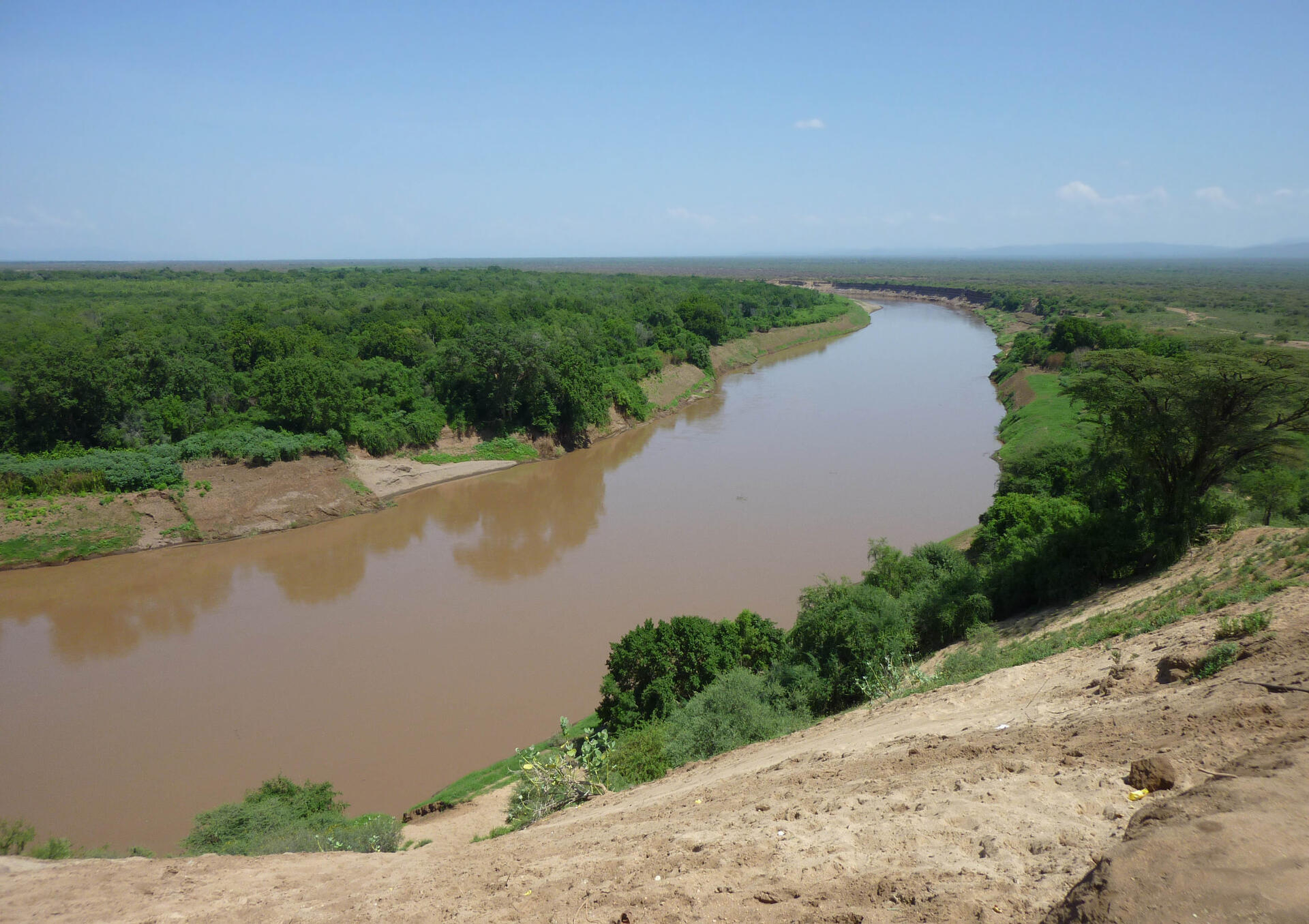
© Bernard Gagnon, CC BY-SA 3.0 Resized from original. (This derivative is under the same CC BY-SA license.)
World Heritage Research
Discover scientific research and academic studies that deepen our understanding of Lower Valley of the Omo from its history and significance to its conservation, management, and contemporary challenges.
-
“Do Our Bodies Know Their Ways?” Villagization, Food Insecurity, and Ill-Being in Ethiopia’s Lower Omo Valley
A comparative analysis of food security and well-being in Ethiopia’s Lower Omo Valley reveals stark discrepancies between quantitative survey data and qualitative ethnographic findings. While surveys suggest better household food access in newly established villagization sites than in non-villagized communities, long-term ethnographic research indicates that villagers rely heavily on food aid due to inadequate irrigated plot allocations, leading to widespread indignity, bodily discomfort, and social disconnection. This tension challenges dominant narratives of development, exposing how state-led resettlement policies may perpetuate impoverishment while claiming progress. The study underscores the limitations of methodologically divergent data in capturing complex socio-economic realities.
Stevenson, E. G. J., & Buffavand, L. (2018). “Do Our Bodies Know Their Ways?” Villagization, Food Insecurity, and Ill-Being in Ethiopia’s Lower Omo Valley. African Studies Review, 61(1), 109–133. https://doi.org/10.1017/asr.2017.100
View Publication Record | Read Publication -
Ecological change in the lower Omo Valley around 2.8 Ma
A significant ecological shift occurred in the lower Omo Valley, Ethiopia, around 2.8 million years ago (Ma), marked by a substantial increase in C4 dietary intake among herbivores, including bovids and suids. This change was unexpectedly large and simultaneous across different species, suggesting a common environmental driver despite no evidence of rapid grassland expansion. Stable isotope analysis of tooth enamel from the Shungura Formation revealed higher δ13C values post-2.8 Ma in Tragelaphus nakuae, surpassing levels observed in living tragelaphins, and similar shifts in Kolpochoerus limnetes, challenging assumptions about dietary evolution. These findings highlight a previously underappreciated ecological transformation during the late Pliocene, raising questions about the resolution of ecological proxies and the correlation between vegetation and faunal changes.
Bibi, F., Souron, A., Bocherens, H., Uno, K., & Boisserie, J.-R. (2013). Ecological change in the lower Omo Valley around 2.8 Ma. Biology Letters, 9(1), 20120890. https://doi.org/10.1098/rsbl.2012.0890
View Publication Record | Read Publication -
Landscape change in the lower Omo valley, southwestern Ethiopia: burning patterns and woody encroachment in the savanna
A study of the Lower Omo Valley, a UNESCO World Heritage Site in southwestern Ethiopia, reveals that bush encroachment in the savanna—driven by changes in fire and grazing practices—is not as directly linked to these factors as previously assumed. While Mursi agro-pastoralists attribute grassland loss over the past 30–40 years to increased human and livestock populations, more permanent settlements, and altered burning patterns (shifting from large, infrequent fires to small, frequent ones), ecological surveys found no strong causal relationship between fire, grazing, and encroachment. Additional pressures, such as state restrictions on mobility due to national park establishment, also contribute significantly to landscape change. The research underscores the complexity of savanna dynamics, suggesting that while anthropogenic factors play a role, they may not be the sole drivers of woody encroachment in this region.
Gil-Romera, G., Turton, D., & Sevilla-Callejo, M. (2011). Landscape change in the lower Omo valley, southwestern Ethiopia: burning patterns and woody encroachment in the savanna. Journal of Eastern African Studies, 5(1), 108–128. https://doi.org/10.1080/17531055.2011.544550
View Publication Record | Read Publication -
Primary identities in the lower Omo valley: migration, cataclysm, conflict and amalgamation, 1750–1910
Ethnic identities in the Lower Omo Valley emerged from two key patterns of movement between 1750 and 1910: organized pastoralist migrations and downstream river movements. These shifts, linked to East African cataclysms like floods and epidemics, reshaped local demographics, leading to assimilation and the disappearance of some primary groups. The study reveals that 'clusters' of interacting peoples in high-interaction localities were crucial nodes for cultural identity formation. By analyzing historical records and migration patterns, it demonstrates how external disruptions and ecological opportunities shaped current ethnic identities.
Bassi, M. (2011). Primary identities in the lower Omo valley: migration, cataclysm, conflict and amalgamation, 1750–1910. Journal of Eastern African Studies, 5(1), 129–157. https://doi.org/10.1080/17531055.2011.552280
View Publication Record | Read Publication -
Wilderness, wasteland or home? Three ways of imagining the Lower Omo Valley
The Lower Omo Valley is perceived differently by conservationists, state officials, and local communities. Conservationists view it as a 'wilderness' needing protection from human activity, while state officials see it as an unproductive wasteland inhabited by 'nomads,' requiring political control. Local people, however, consider it their home, integral to their livelihoods and identity. This study identifies these three competing imaginings as legitimating ideologies of place-making projects with unequal power dynamics. Conservation efforts, often linked to state coercion, have advanced the state's objectives in the region, while new developments like hydro-electric dams and commercial plantations pose challenges to wilderness protection goals.
Turton, D. (2011). Wilderness, wasteland or home? Three ways of imagining the Lower Omo Valley. Journal of Eastern African Studies, 5(1), 158–176. https://doi.org/10.1080/17531055.2011.544546
View Publication Record | Read Publication -
Ethnobotanical study of wild edible plants of Kara and Kwego semi-pastoralist people in Lower Omo River Valley, Debub Omo Zone, SNNPR, Ethiopia
A study of the Lower Omo River Valley, Ethiopia, identified 38 wild edible plant species used by Kara and Kwego semi-pastoralist communities as dietary supplements or famine foods. The plants, primarily trees (50%) and shrubs (29%), were consumed for their fruits (59%), leaves (33%), roots (8%), and seeds (3%). No significant differences in species richness, growth forms, or plant parts used were found between the two groups. Most plants were gathered during specific seasons, with 41% serving as substitutes for cultivated vegetables when scarcity struck. The research highlights the cultural significance of wild edible plants in food security strategies, while also noting gaps in nutritional and toxicological data that warrant further investigation.
Teklehaymanot, T., & Giday, M. (2010). Ethnobotanical study of wild edible plants of Kara and Kwego semi-pastoralist people in Lower Omo River Valley, Debub Omo Zone, SNNPR, Ethiopia. Journal of Ethnobiology and Ethnomedicine, 6(1). https://doi.org/10.1186/1746-4269-6-23
View Publication Record | Read Publication