World Heritage Identification Number: 959
World Heritage since: 2003
Category: Cultural Heritage
WHE Type: Historic Cities & Urban Areas
Transboundary Heritage: No
Endangered Heritage: No
Country: 🇨🇱 Chile
Continent: Americas
UNESCO World Region: Latin America and the Caribbean
Map
The Historic Quarter of the Seaport City of Valparaíso: A Unique Blend of History and Modernity
The Historic Quarter of the Seaport City of Valparaíso, located in central Chile, stands as a testament to the rich cultural and architectural heritage of Latin America. Inscribed as a UNESCO World Heritage Site in 2003, this vibrant city offers a unique blend of history, modernity, and natural beauty that captivates visitors from around the world.
More to come…UNESCO Description of the World Heritage Site
The colonial city of Valparaíso presents an excellent example of late 19th-century urban and architectural development in Latin America. In its natural amphitheatre-like setting, the city is characterized by a vernacular urban fabric adapted to the hillsides that are dotted with a great variety of church spires. It contrasts with the geometrical layout utilized in the plain. The city has well preserved its interesting early industrial infrastructures, such as the numerous ‘elevators’ on the steep hillsides.
UNESCO Justification of the World Heritage Site
Criterion (iii) Valparaíso is an exceptional testimony to the early phase of globalisation in the late 19th century, when it became the leading commercial port on the sea routes of the Pacific coast of South America.
Encyclopedia Record: Valparaíso
Valparaíso is a major city, commune, seaport, and naval base facility in the Valparaíso Region of Chile. Valparaíso was originally named after Valparaíso de Arriba, in Castile-La Mancha, Spain. With a population of 284,938, it is the 10th-largest commune in Chile.Additional Site Details
Area: 23.2 hectares
Number of Components: 1
Coordinates: -33.04063889 , -71.628
Image
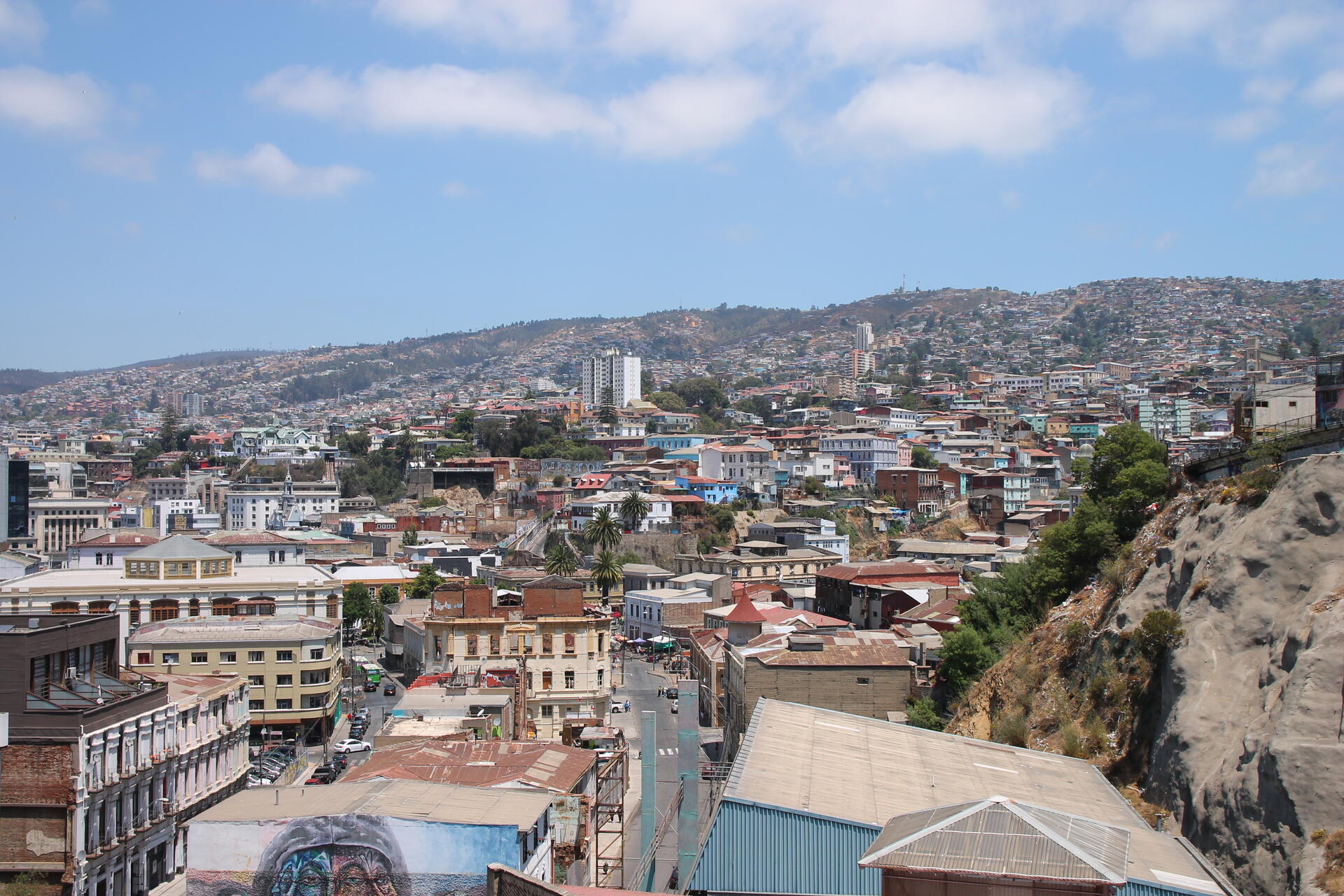
© Draceane, CC BY-SA 4.0 Resized from original. (This derivative is under the same CC BY-SA license.)
World Heritage Research
Discover scientific research and academic studies that deepen our understanding of Historic Quarter of the Seaport City of Valparaíso from its history and significance to its conservation, management, and contemporary challenges.
-
La configuración de la identidad transcultural en Rubén Darío a través de los puertos de Tánger y Valparaíso
Rubén Darío's poetic identity was profoundly shaped by his experiences in the port cities of Tánger and Valparaíso, revealing a transcultural synthesis that redefines Modernist literature. These cities, symbolizing contrasting cultural and emotional landscapes—exoticism and melancholy in Tánger versus vitality and Indo-American promise in Valparaíso—were not merely described but woven into his poetry to create a cosmopolitan vision. This study demonstrates that Darío's dual experience in these ports was pivotal in forging a literary identity that transcends nationalist or exotizing interpretations, consolidating his legacy as a poet who unified disparate traditions. The research employs textual and critical analysis of selected works by Darío, uncovering how sensory, cultural, and emotional encounters were metabolized aesthetically to enrich his poetic palette.
HIRI, A. (2026). La configuración de la identidad transcultural en Rubén Darío a través de los puertos de Tánger y Valparaíso. Traditori | Literatura - Dramaturgia - Género, 1(3), 1–30. https://doi.org/10.26752/tr.v1.n3.811
View Publication Record | Read Publication -
Study and analysis of the problem of fires during the 21st century in large heritage buildings in valparaíso, Chile
A significant number of heritage buildings in Valparaíso, Chile, face severe fire risks, with 30 properties currently in critical condition. This study highlights the persistent threat of fires to large heritage structures, despite their historical and architectural significance. The research employs a detailed analysis of fire incidents during the 21st century, examining patterns, causes, and consequences. Findings underscore the urgent need for targeted interventions to mitigate these risks, given the city's cultural syncretism reflected in its architecture and the ongoing decline of its urban fabric.
Sáez-Pérez, M. P., & Mazuela-Oyarzo, D. J. (2025). Estudio y análisis de la problemática de los incendios durante el siglo XXI en grandes edificios patrimoniales de valparaíso, Chile. Anales de Edificación, 11(1), 50–57. https://doi.org/10.20868/ade.2025.5515
View Publication Record | Read Publication -
The Potential Use of Electric Bicycles in the Historic Quarter of the Seaport City of Valparaíso, Chile, Through Participatory Mapping and Focus Groups Supported by AI Data Processing
A study on the potential use of electric bicycles (E-Bikes) in Valparaíso, Chilereveals that while E-Bikes could enhance sustainable mobility, their adoption faces significant barriers beyond infrastructure. These include deteriorated public spaces, lack of green areas, and safety concerns. The research, combining participatory mapping with AI-supported focus group analysis, identified key challenges such as topography and community engagement, emphasizing the need for improved infrastructure, educational campaigns, optimized routes, and broader public participation to integrate E-Bikes effectively into Valparaíso’s historical context. This approach offers a roadmap for modernizing mobility while preserving heritage integrity.
Aprigliano, V., Toro, C., Rojas, G., Fukushi, M., Bastías, I., Seriani, S., da Silva, W. R., Peña, Á., & López-Quijada, L. (2025). The Potential Use of Electric Bicycles in the Historic Quarter of the Seaport City of Valparaíso, Chile, Through Participatory Mapping and Focus Groups Supported by AI Data Processing. ISPRS International Journal of Geo-Information, 14(10), 405. https://doi.org/10.3390/ijgi14100405
View Publication Record | Read Publication -
Valparaíso: su silenciosa contribución a la ciencia en Chile (Tomo I): comentario al libro
A comprehensive exploration of Valparaíso's underrecognized contributions to Chilean science during the 19th century, particularly its role as a port city fostering scientific progress. The book, 'Valparaíso: su silenciosa contribución a la ciencia en Chile (Tomo I)', edited by Bravo y Allende Editores in 2025, delves into eight key chapters and an introduction, revealing how the city's strategic location facilitated scientific advancements despite its often overlooked historical narrative. The study employs a meticulous analysis of archival records, historical documents, and scholarly works to reconstruct Valparaíso's pivotal yet subtle impact on Chile's scientific landscape during this transformative period.
Díaz Céspedes, F. (2025). Valparaíso: su silenciosa contribución a la ciencia en Chile (Tomo I): comentario al libro. Trilogía, 42(53), 96–100. https://doi.org/10.58560/trilogia.v042.n53.025.03
View Publication Record | Read Publication -
Capacidad Estatal y Vulnerabilidad ante el Riesgo de Desastres: El caso del Megaincendio de 2014 en Valparaíso, Chile
A significant link between state capacity and disaster vulnerability was identified in the context of Chile's 2014 Valparaíso megafire, revealing that institutional limitations exacerbated community risk. The study found that disaster risk management (DRM) in Chile has been hindered by short-term governmental approaches, failing to develop long-lasting state capacities for DRM. This highlights the critical role of 'institutional continuity' in building resilient systems. Researchers analyzed documents and conducted semi-structured interviews with key stakeholders involved in DRM, offering a novel perspective on how broader social frameworks influence disaster outcomes beyond individual or community-level vulnerabilities.
Rivas, R., Maldonado, L., Campos, K., & Ojeda, L. (2024). Capacidad Estatal y Vulnerabilidad ante el Riesgo de Desastres: El caso del Megaincendio de 2014 en Valparaíso, Chile. Revista de Estudios Latinoamericanos Sobre Reducción Del Riesgo de Desastres REDER, 8(2), 214. https://doi.org/10.55467/reder.v8i2.168
View Publication Record | Read Publication -
Puertos latinoamericanos en la Gran Guerra y su vinculación con Europa: los casos de Valparaíso, Buenos Aires y Río de Janeiro
During World War I, Latin American port cities emerged as pivotal hubs for socioeconomic and cultural transformations, particularly evident in the Southern Cone. Valparaíso, Buenos Aires, and Río de Janeiro became focal points where global disruptions reshaped local dynamics, fostering a newfound Latin American identity within the international system. This study reveals that these cities, despite their shared experiences, exhibited distinct responses influenced by their Atlantic or Pacific positioning. Analyzing historical press, it demonstrates how economic upheavals and social shifts during the war fueled a more assertive Latin American perspective, challenging traditional dependencies on Europe.
Rinke, S. (2024). Puertos latinoamericanos en la Gran Guerra y su vinculación con Europa: los casos de Valparaíso, Buenos Aires y Río de Janeiro. Anuario Del Instituto de Historia Argentina, 24(2), e215. https://doi.org/10.24215/2314257xe215
View Publication Record | Read Publication -
Escenario regional difuso y segregación socio territorial: el caso de Valparaíso
Valparaíso's urban evolution over 200 years reveals a stark pattern of socio-territorial segregation, primarily driven by economic liberalization policies in the last five decades. The study highlights how Valparaíso transitioned from an attractive central area due to its port and financial significance into a fragmented metropolitan area marked by market-driven development rather than planned urban growth. Using Luis Ainstein's systemic approach, researchers analyzed two key sub-stages: exogenous growth, fueled by mineral exports and immigration, and endogenous growth during mid-20th century industrialization and rural-to-urban migration. The work underscores the consequences of economic liberalization since 1973, leading to a discontinuous urban landscape in Valparaíso's metropolitan area.
Valdés San Martín, I. A. (2023). Escenario regional difuso y segregación socio territorial: el caso de Valparaíso. XV Seminario Internacional de Investigación En Urbanismo, Lisboa-Recife, Junio-Septiembre 2023. https://doi.org/10.5821/siiu.12754
View Publication Record | Read Publication