World Heritage Identification Number: 747
World Heritage since: 1995
Category: Cultural Heritage
WHE Type: Historic Cities & Urban Areas
Transboundary Heritage: No
Endangered Heritage: No
Country: 🇺🇾 Uruguay
Continent: Americas
UNESCO World Region: Latin America and the Caribbean
Map
Historic Quarter of the City of Colonia del Sacramento: A Fusion of Cultures and History
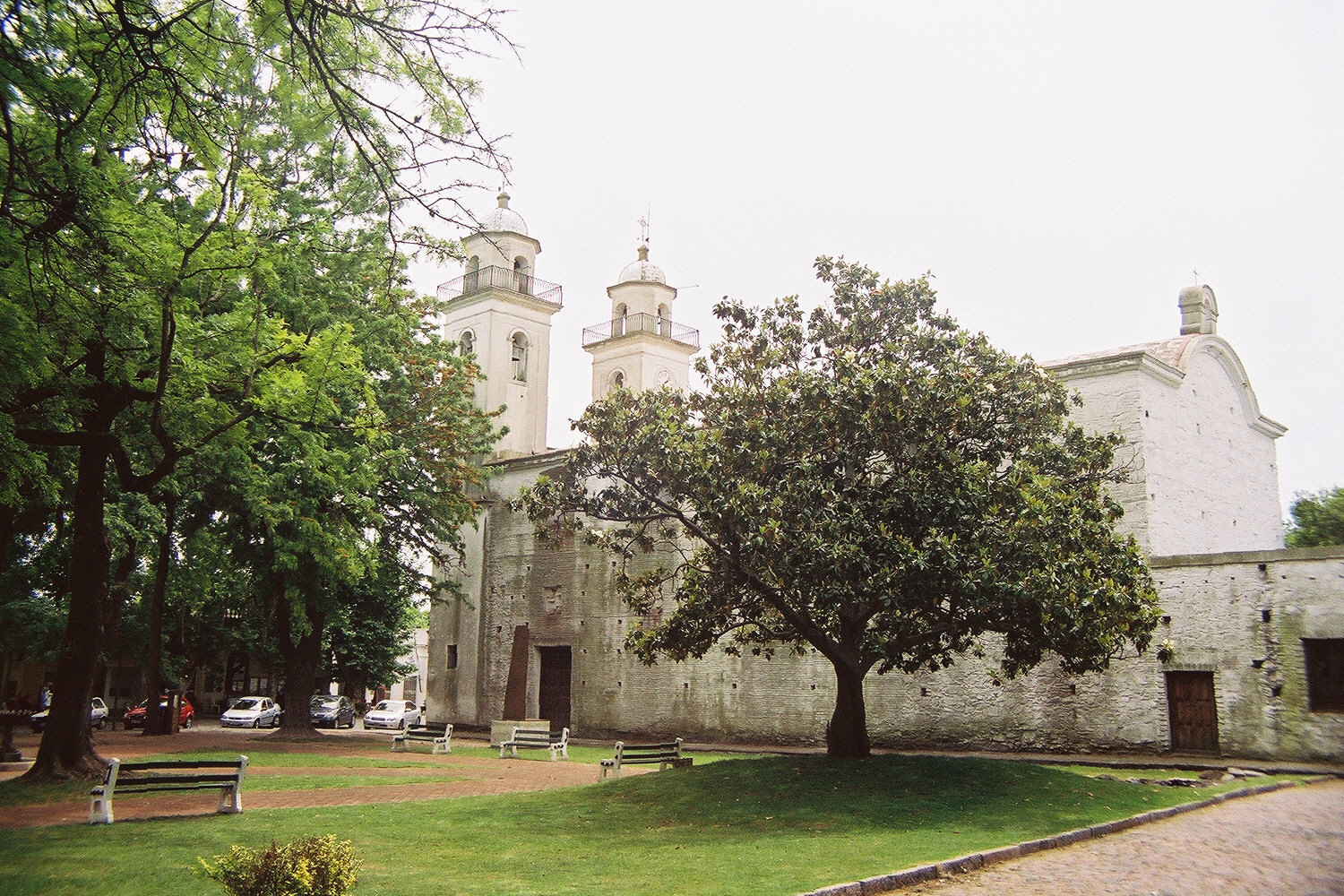
The Historic Quarter of the City of Colonia del Sacramento, located in southwestern Uruguay, is a testament to the rich cultural and historical heritage that spans over four centuries. Inscribed as a UNESCO World Heritage Site in 1995, this quarter offers a unique blend of architectural styles that reflect the city's tumultuous past.
More to come…UNESCO Description of the World Heritage Site
Founded by the Portuguese in 1680 on the Río de la Plata, the city was of strategic importance in resisting the Spanish. After being disputed for a century, it was finally lost by its founders. The well-preserved urban landscape illustrates the successful fusion of the Portuguese, Spanish and post-colonial styles.
UNESCO Justification of the World Heritage Site
Criterion (iv): The Historic Quarter of the City of Colonia del Sacramento bears remarkable testimony in its layout and its buildings to the nature and objectives of European colonial settlement, in particular during the seminal period at the end of the 17th century.
Encyclopedia Record: Colonia del Sacramento
Colonia del Sacramento is a city in southwestern Uruguay, by the Río de la Plata, facing Buenos Aires, Argentina. It is one of the oldest towns in Uruguay and the capital of the Colonia Department. As of the 2023 census, it has a population of around 32,174.Additional Site Details
Area: 19 hectares
Number of Components: 1
Coordinates: -34.47119 , -57.849898
World Heritage Research
Discover scientific research and academic studies that deepen our understanding of Historic Quarter of the City of Colonia del Sacramento from its history and significance to its conservation, management, and contemporary challenges.
-
Spatial governance and planning in Uruguay
Uruguay's decentralized spatial planning framework, established by the Land Use Planning and Sustainable Development Law of 2008, shows mixed success across its departments. A case study of Colonia del Sacramento reveals that while guidelines like the 2013 Departmental Guidelines and the 2018 Management Plan for the Historic Quarter effectively regulate urban growth and protect UNESCO-listed heritage, the prolonged delay in approving a Local Plan since 2011 has left land-use decisions vulnerable to private negotiations. This highlights the need for streamlined governance to balance heritage preservation with development pressures.
Casanova, R., & Saravia, M. (2025). Spatial governance and planning in Uruguay. Spatial Governance and Planning in Latin America, 188–202. https://doi.org/10.4324/9781003389309-12
View Publication Record | Read Publication -
Colonial Kinship: Guaraní, Spaniards, and Africans in Paraguay
Colonial Kinship: Guaraní, Spaniards, and Africans in Paraguay reveals that the term 'tovajá,' initially denoting gift exchanges between Guaraní women and Spanish men, evolved into a foundational system of colonial governance. This system facilitated the encomienda, subjecting Indigenous peoples to labor while also integrating African descendants into colonial structures through kinship ties. Austin's innovative use of judicial files uncovers how female litigants, Africans, and their descendants navigated these relationships, demonstrating that 'tovajá' ties were not merely symbolic but central to colonial expansion, trade, and even warfare. The study highlights the unequal reciprocity in this system, where Spaniards exploited Guaraní cultural practices for labor and provisions while also establishing a complex social hierarchy involving free Black men and women. Additionally, it explores Indigenous resistance and the formation of Guaraní militias, which played significant roles in regional politics, including during Spanish sieges of Portuguese Colonia del Sacramento.
Borucki, A. (2021). Colonial Kinship: Guaraní, Spaniards, and Africans in Paraguay. Hispanic American Historical Review, 101(4), 697–698. https://doi.org/10.1215/00182168-9366675
View Publication Record | Read Publication -
Ruptura e integração: o caso da intervenção do paseo de la brecha no casco fundacional de Colônia do Sacramento, Uruguai
The intervention of the Paseo de La Brecha in Colonia del Sacramento's Historic Quarter disrupts traditional urban structures while integrating contemporary architecture, creating tension with its UNESCO-listed patrimonial landscape. This study reveals how such interventions impact daily life and cultural tourism within a territory once defined by its strategic military significance during the 17th and 18th centuries. Using bibliographic and iconographic research alongside testimonies from stakeholders, the project examines the broader implications of urban transformations on heritage perception and value.
Rios, M. I. T., & Teixeira, L. E. F. (2018). Ruptura e integração: o caso da intervenção do paseo de la brecha no casco fundacional de Colônia do Sacramento, Uruguai. X Seminario Internacional de Investigación En Urbanismo, Barcelona-Córdoba, Junio 2018. https://doi.org/10.5821/siiu.9134
View Publication Record | Read Publication -
Relevamiento con drones; el caso Real de San Carlos
A novel method using unmanned aerial vehicles (UAVs or drones) has been developed to survey and document the historic bullring 'Real de San Carlos' in Colonia del Sacramento. This approach enables detailed mapping of the building's current condition without requiring direct access, addressing risks posed by illegal entry and long-term neglect. The study yields three key outputs: mapped photographs, 3D models, and an interactive aerial view platform, providing essential documentation for conservation efforts, potential restoration competitions, or adaptive reuse. The research highlights the potential of drone technology to mitigate challenges in heritage preservation while offering a comprehensive, multidisciplinary perspective on cultural landscapes.
Alvarez, M. P. (2014). Relevamiento con drones; el caso Real de San Carlos. Proceedings of the XVIII Conference of the Iberoamerican Society of Digital Graphics - SIGraDi: Design in Freedom, 649–652. https://doi.org/10.5151/despro-sigradi2014-0134
View Publication Record | Read Publication -
Towards sustainable Latin American agglomerations
A decade-and-a-half study across ten Latin American cities and metropolitan regions reveals that urban gardening and periurban farming, rooted in traditional healing practices and ethno-botanical knowledge, significantly contribute to the social, cultural, economic, and environmental sustainability of these agglomerations. The research, based on 1,254 inquiries—70% of which were urban gardeners and periurban farmers—highlighted that native species and indigenous prescriptions dominate these practices, except in regions like Cuba and Argentina where native ethnic groups have been eradicated, or Uruguay, with stronger European influence. Qualitative data, including video records of traditional healers and gardeners, along with photographed plant species, underscored the importance of these practices as legacies for future generations, offering a paradoxical solution to global challenges while benefiting both society and the environment.
Madaleno, I. M. (2013). Towards sustainable Latin American agglomerations. The Sustainable City VIII, 1, 605–616. https://doi.org/10.2495/sc130511
View Publication Record | Read Publication -
Cultivating our cities
Urban green spaces, including native trees and medicinal herb species, significantly enhance the quality of life for city dwellers while serving as vital resources for low-income communities. These plants, found in gardens, balconies, vacant lots, and markets, provide alternative medicine for mild to chronic diseases and contribute to urban resilience through traditional healing practices and ethno-botanical knowledge. A decade-long comparative study across eight Latin American cities—Lima (Peru), Santiago (Chile), Río Cuarto (Argentina), Colonia del Sacramento (Uruguay), Belén and São Luis (Brazil), Havana (Cuba), San José (Costa Rica), and Mexico City (Mexico)—revealed that cultivated front and backyards act as paradoxes of globalization, fostering sustainable urban development. This research underscores the importance of preserving such practices for future generations.
Madaleno, I. M. (2012). Cultivating our cities. Environmental Impact, 1, 183–192. https://doi.org/10.2495/eid120171
View Publication Record | Read Publication