World Heritage Identification Number: 688
World Heritage since: 1994
Category: Cultural Heritage
WHE Type: Historic Cities & Urban Areas
Transboundary Heritage: No
Endangered Heritage: No
Country: 🇯🇵 Japan
Continent: Asia
UNESCO World Region: Asia and the Pacific
Map
Exploring the Historic Monuments of Ancient Kyoto: A Journey Through Time
The Historic Monuments of Ancient Kyoto, inscribed as a UNESCO World Heritage Site in 1994, offers a captivating glimpse into the rich cultural history of Japan. This extensive site spans across three cities: Kyoto, Uji, and Otsu, each contributing unique architectural, artistic, and spiritual elements that have shaped the nation's identity for over a millennium.
Founded in 794, Kyoto—then known as Heian-kyō—served as the imperial capital of Japan until the mid-19th century. Its establishment followed the Chinese model of city planning, reflecting the profound influence of ancient China on Japanese civilization. The city's layout, characterized by a grid pattern of streets and wide avenues, still reflects this original design, although it has evolved over time.
The Historic Monuments of Ancient Kyoto encompasses 17 significant locations, primarily Buddhist temples, Shinto shrines, and a castle. These sites showcase the evolution of Japanese wooden architecture, particularly religious structures, and the art of Japanese gardens, which has had a lasting influence on landscape design worldwide.
A key reason for the inscription of the Historic Monuments of Ancient Kyoto lies in its outstanding universal value as a testament to the development of Japanese architecture and landscape design. The monuments collectively illustrate the refinement of wooden construction techniques and the evolution of garden aesthetics, from the dry rock compositions of Ryōan-ji to the Pure Land-inspired garden of Byōdō-in. They also reflect the long-standing coexistence and interplay of Shinto and Buddhist traditions, which have shaped Japan’s spiritual and cultural landscape.
Among the most notable temples included in the site are Kiyomizu-dera, Kinkaku-ji, and Ginkaku-ji. Kiyomizu-dera, perched on a hillside, features a famous wooden stage supported by massive pillars and offers breathtaking views of the city. Kinkaku-ji (the Golden Pavilion) is renowned for its striking gold-leaf-covered exterior set beside a reflective pond, while Ginkaku-ji (the Silver Pavilion), represents the refined aesthetics of the Higashiyama culture.
While many famous shrines exist in the city, the UNESCO-recognized Shinto sanctuaries include Shimogamo and Kamigamo Shrines, which are among the oldest in Japan, and Ujigami Shrine in Uji. Other pivotal sites include Byōdō-in, with its elegant Phoenix Hall, and Nijō Castle, which exemplifies the architecture and political power of the Tokugawa shogunate.
The gardens associated with these monuments further enhance their allure and cultural significance. Zen gardens like that of Ryōan-ji and the landscaped grounds of Tenryū-ji provide tranquil spaces for contemplation, embodying the harmony between human design and the natural world that is central to Japanese aesthetics.
Another important aspect of Kyoto’s heritage is its remarkable state of preservation. Unlike many other historic cities, Kyoto was largely spared from the widespread destruction of World War II, allowing an exceptional concentration of premodern buildings to survive. Moreover, these sites are not merely historical relics but remain active centers of worship and cultural practice, as seen in places like Kiyomizu-dera. This continuity of use adds a living dimension to the monuments, reinforcing their significance as both historical treasures and vibrant elements of contemporary Japanese society.
Overall, the Historic Monuments of Ancient Kyoto provide an unparalleled opportunity to immerse oneself in Japan’s cultural, historical, and spiritual heritage. Each monument tells a story, offering insights into the evolution of Japanese society and the enduring influence of its traditions on contemporary life. Whether one seeks solace in a Zen garden, marvels at the intricate craftsmanship of a temple or shrine, or delves into the mysteries of Shinto and Buddhism, the Historic Monuments of Ancient Kyoto promise an enriching journey through time.
UNESCO Description of the World Heritage Site
Built in A.D. 794 on the model of the capitals of ancient China, Kyoto was the imperial capital of Japan from its foundation until the middle of the 19th century. As the centre of Japanese culture for more than 1,000 years, Kyoto illustrates the development of Japanese wooden architecture, particularly religious architecture, and the art of Japanese gardens, which has influenced landscape gardening the world over.
Encyclopedia Record: Historic Monuments of Ancient Kyoto (Kyoto, Uji and Otsu Cities)
The UNESCO World Heritage Site Historic Monuments of Ancient Kyoto encompasses 17 locations in Japan within the city of Kyoto and its immediate vicinity. In 794, the Japanese imperial family moved the capital to Heian-kyō. The locations are in three cities: Kyoto and Uji in Kyoto Prefecture; and Ōtsu in Shiga Prefecture; Uji and Ōtsu border Kyoto to the south and north, respectively. Of the monuments, 13 are Buddhist temples, three are Shinto shrines, and one is a castle. The properties include 38 buildings designated by the Japanese government as National Treasures, 160 properties designated as Important Cultural Properties, eight gardens designated as Special Places of Scenic Beauty, and four designated as Places of Scenic Beauty. UNESCO listed the site as World Heritage in 1994.Additional Site Details
Area: 1,056 hectares
(iv) — Outstanding example of a type of building or landscape
Coordinates: 34.98055556 , 135.7694444
Image
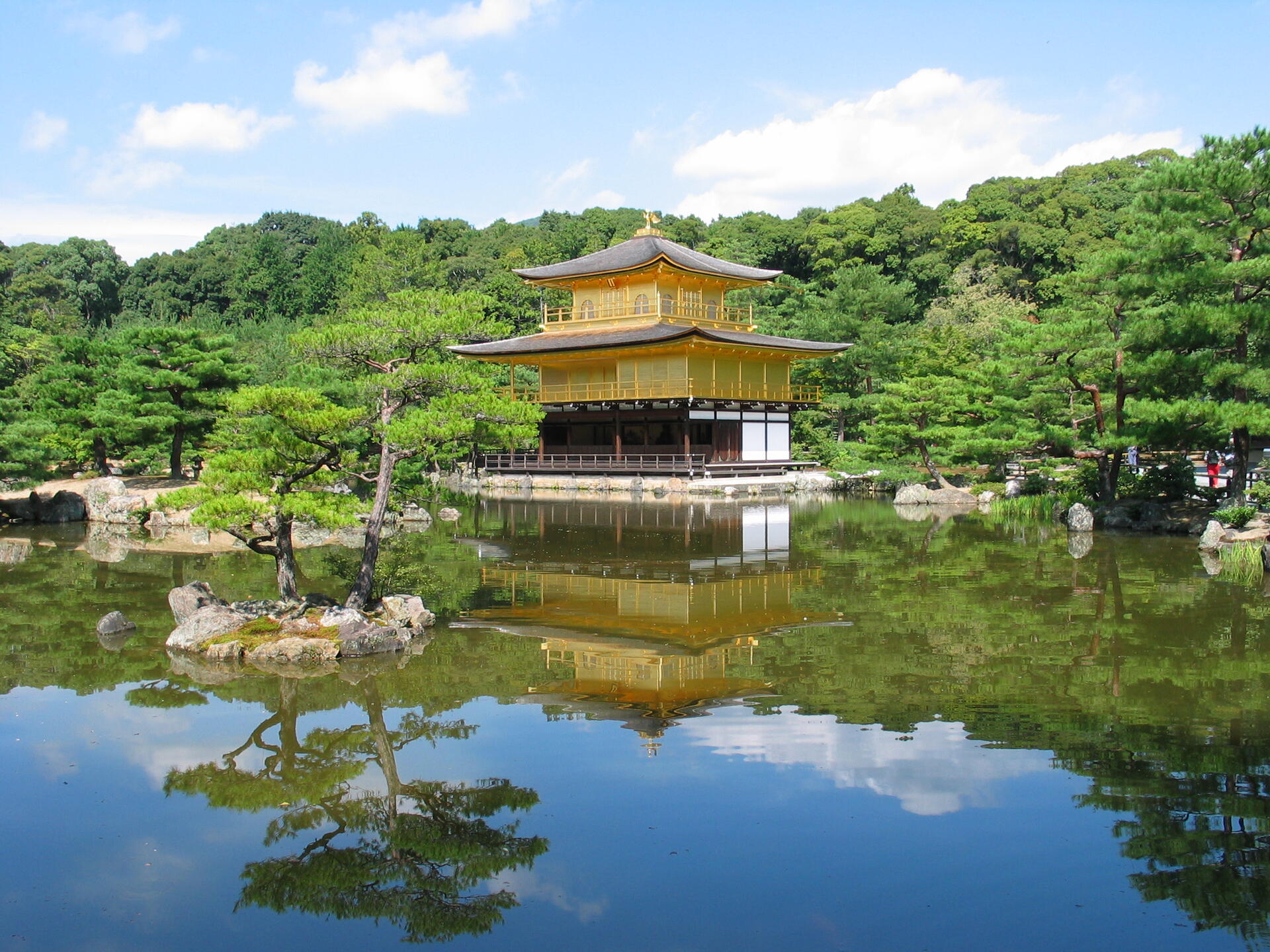
© Keith Pomakis, CC BY-SA 2.5 Resized from original. (This derivative is under the same CC BY-SA license.)