World Heritage Identification Number: 300
World Heritage since: 1985
Category: Cultural Heritage
WHE Type: Historic Cities & Urban Areas
Transboundary Heritage: No
Endangered Heritage: No
Country: 🇨🇦 Canada
Continent: Americas
UNESCO World Region: Europe and North America
Map
Exploring the Historic District of Old Québec: A Unique Blend of History and Culture
The Historic District of Old Québec, located in Quebec City, Quebec, Canada, stands as a testament to the rich history and cultural heritage that defines this North American city. Inscribed as a UNESCO World Heritage Site in 1985, Old Québec offers visitors a unique blend of architectural wonders, historical landmarks, and vibrant cultural experiences. The designation recognizes Old Québec as the only fortified colonial city north of Mexico whose defensive walls remain largely intact, as well as its exceptional testimony to both French and British colonial urban planning.
Old Québec is divided into two distinct sections: the Upper Town and Lower Town. The Upper Town, built upon a cliff, serves as the religious and administrative center of the city and historically functioned as the seat of colonial government under both French and British rule. Notable structures within the Upper Town include the Dauphine Redoubt, the Citadel, and Château Frontenac—a grand hotel that dominates the skyline with its distinctive copper roof and towering spires.
The Citadel, a star-shaped fortress, is a symbol of the city's military past. It continues to serve as an active military installation, houses the Royal 22e Régiment Museum, and functions as the official residence of the Governor General of Canada in Québec City. Also located in the Upper Town is the Basilica-Cathedral of Notre-Dame de Québec, established as a parish in 1664 and recognized as the oldest Catholic parish north of Mexico.
Just beyond the historic walls lie the Plains of Abraham, site of the pivotal 1759 battle between French and British forces that ultimately led to the British conquest of New France. This decisive event reshaped the political and cultural landscape of North America and marked a turning point in the city’s history.
The Lower Town, situated along the Saint Lawrence River, boasts narrow, winding streets lined with historic buildings dating back to the 17th and 18th centuries. This area is home to the iconic Place Royale, where Samuel de Champlain founded Quebec City in 1608. The Petit Champlain district, known for its charming boutiques, art galleries, and cafés, is also located in the Lower Town and remains one of the most picturesque areas of the city. Many of the buildings in both the Upper and Lower Town feature thick stone walls, steeply pitched roofs designed for heavy snowfall, and narrow façades reflecting French colonial traditions, later complemented by elements of British military and Georgian architectural influence.
Linking these two levels is the Old Québec Funicular, a cable railway operating since 1879. For those preferring to walk, the Breakneck Steps (L’Escalier Casse-Cou), whose origins date to the 17th century, provide a steep but scenic route. Overlooking the St. Lawrence River, Dufferin Terrace stretches along the cliff below Château Frontenac, offering sweeping panoramic views and serving as one of the city’s most iconic gathering places.
One of the most striking features of Old Québec is the preservation of its original ramparts, bastions, gates, and defensive works. Québec City is the only fortified city north of Mexico with largely intact fortifications. These defensive structures played a crucial role in protecting the city from various threats throughout its history. Today, they offer visitors a glimpse into the past, providing an opportunity to walk along the walls and imagine life in a fortified colonial city.
In addition to its historical significance, Old Québec also showcases the rich cultural tapestry of Quebec City. The district hosts numerous festivals throughout the year, including the Québec Winter Carnival, the Festival d’été de Québec (Québec City Summer Festival), and the Festival de cinéma de la ville de Québec. Visitors can immerse themselves in the local culture by sampling traditional Québécois cuisine, attending live performances, or exploring the city's many museums and art galleries.
The predominance of the French language and the district’s strong preservation ethos contribute to an atmosphere often described as distinctly European, setting Old Québec apart from other historic cities in the northern part of the Americas. As a living, inhabited historic district where centuries-old streets continue to shape daily life, Old Québec offers not merely a glimpse into the past, but an enduring connection to the cultural foundations of North America.
Overall, the Historic District of Old Québec offers a captivating blend of history, culture, and natural beauty. From the grandeur of Château Frontenac to the charm of the Lower Town streets, there is something for everyone to enjoy in this remarkable UNESCO World Heritage Site. Whether you are a history buff, a foodie, or simply seeking a unique travel experience, Old Québec promises an unforgettable journey through time.
UNESCO Description of the World Heritage Site
Québec was founded by the French explorer Champlain in the early 17th century. It is the only North American city to have preserved its ramparts, together with the numerous bastions, gates and defensive works which still surround Old Québec. The Upper Town, built on the cliff, has remained the religious and administrative centre, with its churches, convents and other monuments like the Dauphine Redoubt, the Citadel and Château Frontenac. Together with the Lower Town and its ancient districts, it forms an urban ensemble which is one of the best examples of a fortified colonial city.
UNESCO Justification of the World Heritage Site
Criterion (iv) : A coherent and well-preserved urban ensemble, the Historic District of Old Québec is an exceptional example of a fortified colonial town and by far the most complete north of Mexico.
Criterion (vi) : Québec, the former capital of New France, illustrates one of the major stages in the European settlement of the colonization of the Americas by Europeans.
Encyclopedia Record: Old Quebec
Old Quebec is a historic neighbourhood of Quebec City, Quebec, Canada. Comprising the Upper Town and Lower Town, the area is a UNESCO World Heritage Site. Administratively, Old Quebec is part of the Vieux-Québec–Cap-Blanc–colline Parlementaire district in the borough of La Cité-Limoilou.Additional Site Details
Area: 135 hectares
Number of Components: 1
(vi) — Directly associated with events or living traditions
Coordinates: 46.80944444 , -71.21055556
Image
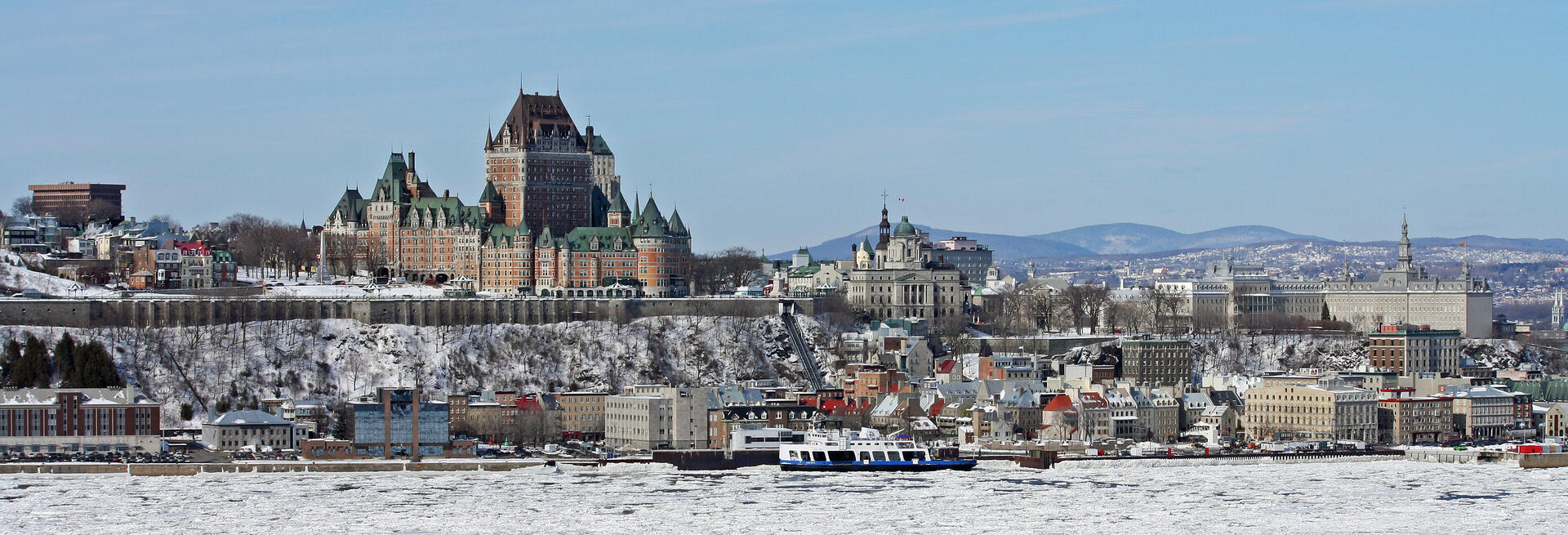
© Bernard Gagnon, CC BY-SA 4.0 Resized from original. (This derivative is under the same CC BY-SA license.)