World Heritage Identification Number: 993
World Heritage since: 2001
Category: Cultural Heritage
WHE Type: Historic Cities & Urban Areas
Transboundary Heritage: No
Endangered Heritage: No
Country: 🇧🇷 Brazil
Continent: Americas
UNESCO World Region: Latin America and the Caribbean
Map
The Historic Centre of the Town of Goiás: A Testimony to Colonial Brazil
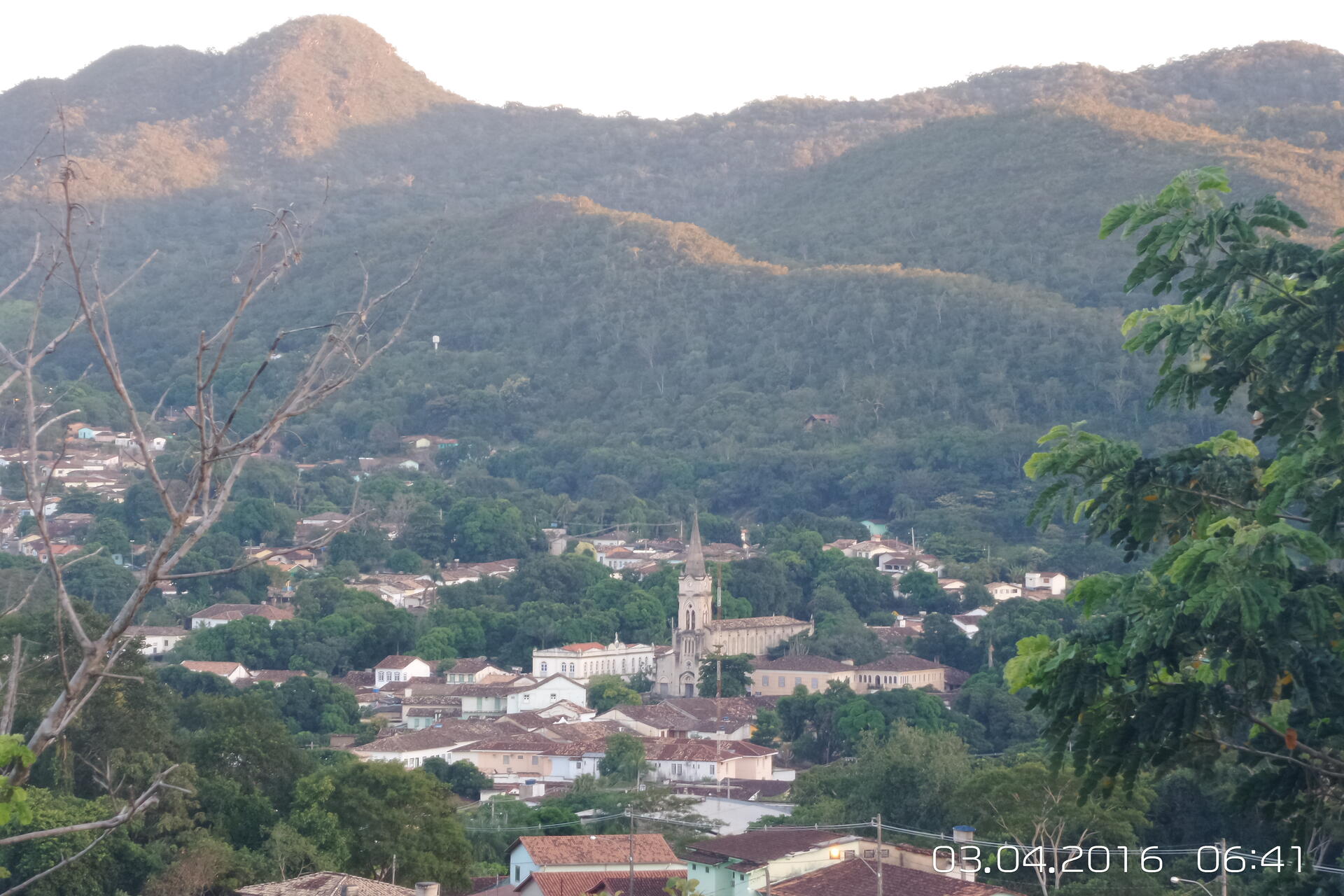
The Historic Centre of the Town of Goiás, located in the state of Goiás in Brazil, stands as a significant reminder of the colonization and settlement of central Brazil during the 18th and 19th centuries. This historic town center was inscribed as a UNESCO World Heritage Site in 2001, acknowledging its unique architectural, cultural, and historical value.
More to come…UNESCO Description of the World Heritage Site
Goiás testifies to the occupation and colonization of the lands of central Brazil in the 18th and 19th centuries. The urban layout is an example of the organic development of a mining town, adapted to the conditions of the site. Although modest, both public and private architecture form a harmonious whole, thanks to the coherent use of local materials and vernacular techniques.
UNESCO Justification of the World Heritage Site
Criterion (ii): In its layout and architecture the Historic Center of the Town of Goiás is an outstanding example of a European town admirably adapted to the climatic, geographical and cultural constraints of central South America. This is demonstrated by the urban plan adapted to the topography either side of the river, the architectural features and layouts, materials and building techniques.
Criterion (iv): The Historic Center of the Town of Goiás represents the evolution of a form of urban structure and architecture characteristic of the colonial settlement of South America, making full use of local materials and techniques and conserving its exceptional setting. It is the last remaining example of the occupation of the interior of Brazil, as it was practiced in the 18th and 19th centuries. The Historic Center of the Town of Goiás is characterized by the harmony of its architecture, due to the proportions and types of buildings.
Encyclopedia Record: Goiás, Goiás
Goiás is a municipality in the state of Goiás in Brazil. Its population was 22,381 and its area is 3,108 km2. It is the former capital of the state and preserves much of its colonial heritage. In 2002, it became a UNESCO World Heritage Site.Additional Site Details
Area: 40.3 hectares
Number of Components: 1
(iv) — Outstanding example of a type of building or landscape
Coordinates: -15.934231 , -50.140164
World Heritage Research
Discover scientific research and academic studies that deepen our understanding of Historic Centre of the Town of Goiás from its history and significance to its conservation, management, and contemporary challenges.
-
Cidade de Goiás: Sociomaterialidade, História e Formação no Ensino de Ciências
A UNESCO World Heritage Site, the Historic Centre of the Town of Goiás, emerges as a promising interdisciplinary research and pedagogical tool for science education. This study reveals its potential to foster deep learning by integrating sociomateriality—how spaces, artifacts, and narratives interact with human subjects—in teacher training contexts. Through qualitative analysis of five academic texts from 2026, the research demonstrates how encounters with historical sites (e.g., an old jail), objects, and local communities (including Quilombola groups) can mediate complex scientific inquiries without conflating them with measurable learning outcomes. The findings highlight Goiás's unique role in bridging traditional knowledge, historical inquiry, and modern pedagogy when approached with intentional design, offering a framework for future interdisciplinary studies.
Cordeiro, E. M., & Santos, W. B. (2026). CIDADE DE GOIÁS: SOCIOMATERIALIDADE, HISTÓRIA E FORMAÇÃO NO ENSINO DE CIÊNCIAS. Revista DCS, 23(99), 1–23. https://doi.org/10.54899/dcs.v23i99.045
View Publication Record | Read Publication -
Fazer turismo em tempos de guerra. As viagens pelo Brasil do galego José Casais entre 1937 e 1939
A study reveals that the Galician scholar José Casais, exiled in Brazil during World War II, subtly integrated Santiago de Compostela—a symbol of tradition and prestige—as a reference point to promote Goiás as a tourist destination. Through his travelogue Un turista en el Brasil (1940), Casais applied modern tourism frameworks while navigating political constraints under the Estado Novo regime. The research, based on documentary analysis, examines how his itineraries drew parallels between Compostela and Goiás, positioning the latter in emerging tourism narratives despite Brazil's neutrality during the early war years.
Corbacho Quintela, A., & Fernandes de Paula, L. (2025). Fazer turismo em tempos de guerra. As viagens pelo Brasil do galego José Casais entre 1937 e 1939. Diacrítica, 39(2). https://doi.org/10.21814/diacritica.6269
View Publication Record | Read Publication -
“Culture-touristification” of colonial towns in the interior of Brazil
Small and medium-sized colonial towns in Brazil's interior undergo a distinct form of touristification driven by culture, termed 'culture-touristification.' This process is shaped by interacting sub-processes such as patrimonialization, culturalization, festivalization, landscape adventuring, telenovelaization, and counter-culturalization. While these processes vary in prominence and articulation depending on societal significance, stakeholder strategies, local resistance, or geographical location, they collectively transform these towns. The study illustrates this through case studies of Cidade de Goiás and Pirenópolis, employing methods like interviews, building use mappings, participant observation, analysis of telenovelas and Instagram hashtags, and document research.
Karner, M. J., Husseini de Araújo, S., Escher, A. J., Soares, S. B. V., Ribeiro, Z. L., Pöschl, S. N., Ramos, J. O., Rocha e Silva, G. R., & Schneider, K. (2024). “Culture-touristification” of colonial towns in the interior of Brazil. Erdkunde, 78(3), 225–244. https://doi.org/10.3112/erdkunde.2024.03.04
View Publication Record | Read Publication -
Lutas de representações no ritual tapuio na Festa do Espírito Santo na cidade de Goiás no início do século XXI
Research reveals that the ritual of the Tapuios, integrated into the Festa do Espírito Santo in Goiás, Brazil, serves as a form of resistance for marginalized communities. The study, rooted in doctoral research, employs an interdisciplinary approach to analyze representations within music and dance, grounded in principles of complexity theory. By examining the interplay between individuals, society, and species, the findings underscore the ritual's dual nature—rational and passionate—as a means for excluded groups to assert their identity and challenge societal norms. This perspective challenges conventional understandings of human behavior by integrating insights from both homo sapiens and homo demens, offering a nuanced interpretation of cultural practices in early 21st-century Goiás.
Albernaz, F. (2020). Lutas de representações no ritual tapuio na Festa do Espírito Santo na cidade de Goiás no início do século XXI. Revista Música Hodie, 20. https://doi.org/10.5216/mh.v20.52838
View Publication Record | Read Publication -
Tourists’ Perspective on Products and Services in the Town of Goiás, Goias
Tourists visiting the UNESCO-listed Historic Centre of the Town of Goiás, Brazil, generally perceive local hospitality as positive and suitable. However, significant challenges persist, particularly regarding lodging availability, payment options (credit/debit cards), and the lack of online information about the city. Conducted through qualitative surveys at key events like the International Environmental Film Festival and Gastronomy Festival, this study highlights the need for improved tourism infrastructure and services to enhance visitor experiences in this historic destination.
Pinto, E. D. C., Barbosa, O. X., Silva, L. G. d., Santos, J. C. V.,. (2019). Tourists’ Perspective on Products and Services in the Town of Goiás, Goias. Revista Rosa Dos Ventos - Turismo E Hospitalidade, 11(3), 695–708. https://doi.org/10.18226/21789061.v11i3p695
View Publication Record | Read Publication -
O Ecoturismo, o Meio Ambiente e o Parque Estadual da Serra dos Pirineus na percepção dos visitantes e moradores de Pirenópolis (GO)
Visitors to the Pirineus State Park (PESP) in Pirenópolis, Brazil, demonstrate strong environmental awareness and support for conservation principles, while local residents feel valued and engaged with ecoturism activities. However, the park's ecotouristic potential remains underutilized due to a lack of structured educational programs that interpret the environment and promote sustainable tourism practices. The study used structured questionnaires to analyze perceptions among 203 visitors and 150 residents, revealing high visitor concern for environmental protection but highlighting gaps in resident involvement through formal education initiatives. Statistical analysis confirmed significant differences in perception between groups, underscoring the need for targeted ecotourism development that integrates both conservation messaging and community participation.
De Sousa, R. G., Nunes, V. H. A., & Santos, M. L. d. (2015). O Ecoturismo, o Meio Ambiente e o Parque Estadual da Serra dos Pirineus na percepção dos visitantes e moradores de Pirenópolis (GO). Revista Brasileira de Ecoturismo (RBEcotur), 8(2). https://doi.org/10.34024/rbecotur.2015.v8.6436
View Publication Record | Read Publication