
World Heritage Identification Number: 1029
World Heritage since: 2001
Category: Natural Heritage
WHE Type: Natural Landscapes & Geographic Features
Transboundary Heritage: No
Endangered Heritage: No
Country: 🇬🇧 United Kingdom of Great Britain and Northern Ireland
Continent: Europe
UNESCO World Region: Europe and North America
Map
Jurassic Coast: A Geological Time Capsule Along the English Channel
The Jurassic Coast, officially recognized as the Dorset and East Devon Coast, is a unique stretch of coastline that runs for approximately 96 miles (154 km) along the English Channel in southern England. This World Heritage Site, inscribed in 2001, offers a remarkable glimpse into Earth's history, spanning nearly 185 million years from the Triassic through the Jurassic and into the Cretaceous periods.
The Jurassic Coast derives its name from the geological period it primarily represents—the Jurassic Period. However, the rocks exposed here span beyond the Jurassic, extending back to the Triassic Period and forward to the Cretaceous Period. This extensive geological record makes the Jurassic Coast a treasure trove for paleontologists and geologists alike.
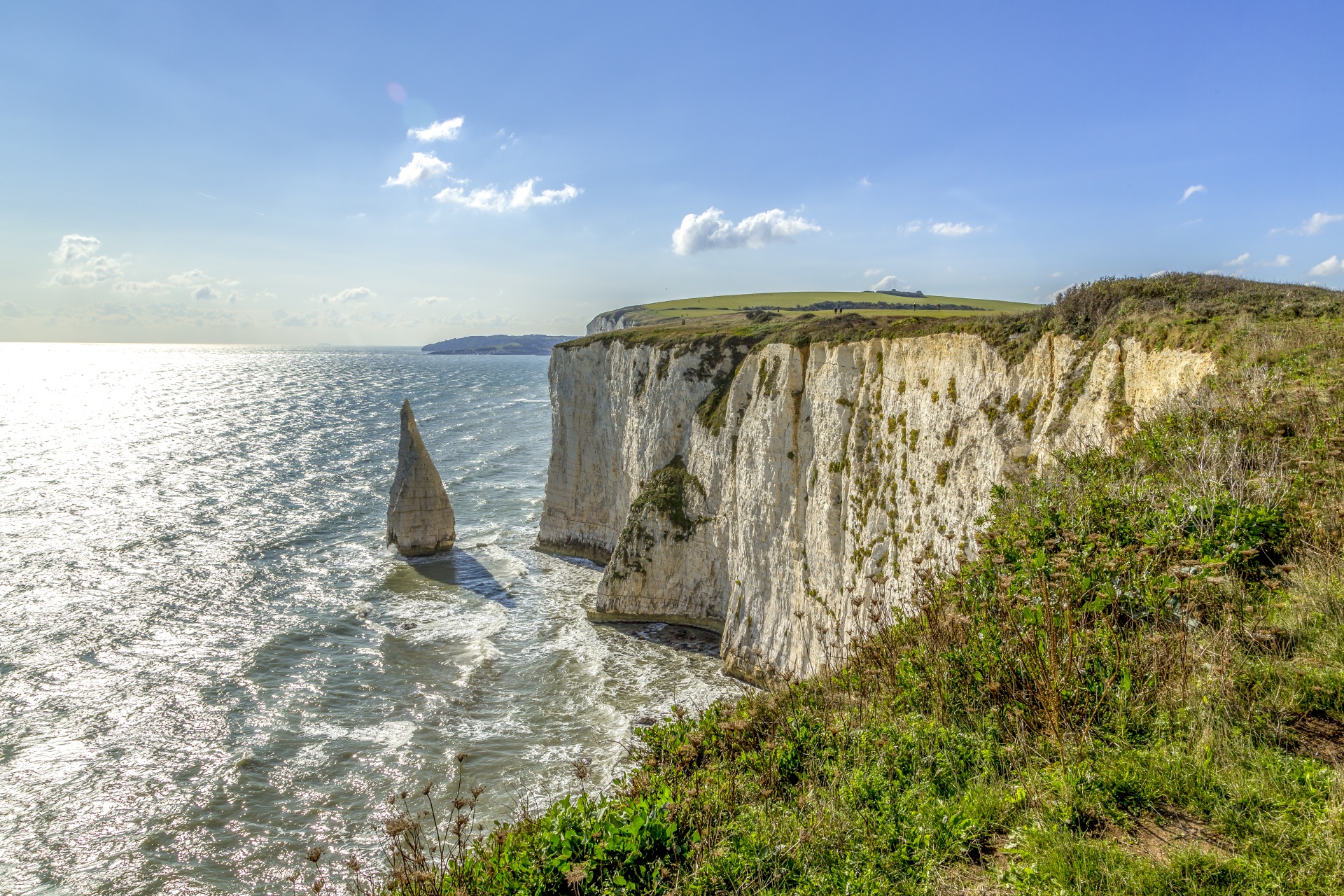
The coastline is characterized by dramatic cliffs, beaches, and landforms that showcase the diverse geology of the region. These include the iconic Durdle Door, a natural limestone arch, and Lulworth Cove, a sheltered bay formed by the sea breaching hard limestone to erode the softer clays behind it. The cliffs themselves offer a visual timeline of Earth's history, with each layer representing a different time period.
Fossils found along the Jurassic Coast have played a significant role in the development of paleontology. Fossils of prehistoric reptiles, marine creatures, and early dinosaurs can be found at numerous locations along the coast. Among the most famous finds are the early plesiosaur skeletons discovered by Mary Anning at Lyme Regis, as well as ammonites and other marine fossils that helped shape modern paleontology.
The Jurassic Coast has been a site of scientific interest for over 300 years. Early naturalists and geologists visited the area, laying the groundwork for later scientific study. Today, the coast continues to contribute to our understanding of Earth sciences, with ongoing research conducted by institutions such as the British Geological Survey and the University of Southampton.
In addition to its geological significance, the Jurassic Coast is also rich in cultural heritage. The area has been inhabited for thousands of years, with evidence of Neolithic, Roman, and Saxon settlements found throughout the region. The picturesque towns and villages along the coast, such as Lyme Regis and Sidmouth, offer visitors a chance to experience this history firsthand.
The Jurassic Coast was inscribed as a UNESCO World Heritage Site for its outstanding universal value in illustrating major stages of Earth’s history and for its contribution to the understanding of geological processes and fossil records. It serves as a living classroom, offering insights into the Earth’s past while inspiring future generations of scientists and explorers.
This World Heritage Site is not only a testament to Earth's past but also a reminder of the importance of preserving our natural and cultural heritage. As we walk along the coastline, we are walking through time, witnessing the slow yet profound changes that have shaped our planet.
UNESCO Description of the World Heritage Site
The cliff exposures along the Dorset and East Devon coast provide an almost continuous sequence of rock formations spanning the Mesozoic Era, or some 185 million years of the earth's history. The area's important fossil sites and classic coastal geomorphologic features have contributed to the study of earth sciences for over 300 years.
UNESCO Justification of the World Heritage Site
Criterion (viii): The coastal exposures along the Dorset and East Devon coast provide an almost continuous sequence of Triassic, Jurassic and Cretaceous rock formations spanning the Mesozoic Era and document approximately 185 million years of Earth's history. The property includes a range of globally significant fossil localities - both vertebrate and invertebrate, marine and terrestrial - which have produced well preserved and diverse evidence of life during Mesozoic times. It also contains textbook exemplars of coastal geomorphological features, landforms and processes. Renowned for its contribution to Earth science investigations for over 300 years, the Dorset and East Devon coast has helped foster major contributions to many aspects of geology, palaeontology and geomorphology and has continuing significance as a high quality teaching, training and research resource for the Earth sciences.
Encyclopedia Record: Jurassic Coast
The Jurassic Coast, also known as the Dorset and East Devon Coast, is a World Heritage Site on the English Channel coast of southern England. It stretches from Exmouth in East Devon to Studland Bay in Dorset, a distance of about 96 miles (154 km), and was inscribed on the World Heritage List in mid-December 2001.Additional Site Details
Area: 2,550 hectares
Number of Components: 8
Coordinates: 50.70555556 , -2.989888889
IUCN World Heritage Outlook
The 2025 Conservation Outlook on Dorset and East Devon Coast reports the following assessment:
Source: International Union for Conservation of Nature (IUCN) · View assessment
Image
George Hodan, Public domain